


Best Sustainable Skincare for Families in 2026
Table of Contents
- What Makes Skincare Sustainable for a Whole Family?
- Quick Comparison: Top Family-Friendly Sustainable Cleansers
- SheaX Bar Soaps: Certified Organic Care for Kids and Adults
- Gentle Towels: Hygienic Cleansing for Reactive Skin
- Ingredients to Avoid and Allergy-Safe Alternatives
- How to Transition to Sustainable Skincare Without Waste
- How We Evaluated: Certifications, Safety, and Cost Per Use
- Which Family Routine Should You Pick?
- Frequently Asked Questions
Last Updated: September 9, 2026
Choosing the best sustainable skincare for families means finding products that protect both delicate skin and the planet. Most "green" beauty lines focus on individual adults, leaving parents to guess what is safe for a child with eczema or sensitive skin. At Gently Radiant Skin, we evaluate every product against three standards: dermatological safety, certified organic ingredients, and packaging that does not end up in a landfill. Sustainable skincare is a system of sourcing, formulation, and disposal choices that minimize environmental harm while prioritizing skin health for every age group.
What Makes Skincare Sustainable for a Whole Family?
A product cannot claim to be family-friendly if it only meets adult safety standards. True sustainability for a household requires formulas gentle enough for children, effective enough for adults, and packaged in materials that support a circular economy.
The core pillars include certified organic plant-based ingredients, fragrance-free formulations for reactive skin, and packaging that is either refillable, compostable, or made from post-consumer recycled content. Many eco-conscious brands also pursue third-party verification. The National Eczema Association's ingredient guidelines offer a useful baseline for identifying triggers, while the USDA BioPreferred Program certifies products with significant bio-based content. When a single product line serves a child with eczema, a parent with acne-prone skin, and a grandparent with reactive skin, you eliminate the need for multiple bottles, reducing waste and simplifying the routine.
Quick Comparison: Top Family-Friendly Sustainable Cleansers
The market splits into two camps: traditional liquid cleansers in plastic pumps and solid bar soaps with minimal packaging. For families, the bar format usually wins because it eliminates plastic waste and concentrates the formula.
| Product | Format | Key Certifications | Price | Best For |
|---|---|---|---|---|
| SheaX Bar Soaps | Solid bar | Certified Organic, Dermatologist & Pediatrician Approved | $20.00 | Whole-family cleansing, eczema-prone skin |
| Gentle Towels | Single-use cloth | USDA Bio-based, National Eczema Association Accepted | $18.00 | Hygienic facial cleansing, makeup removal |
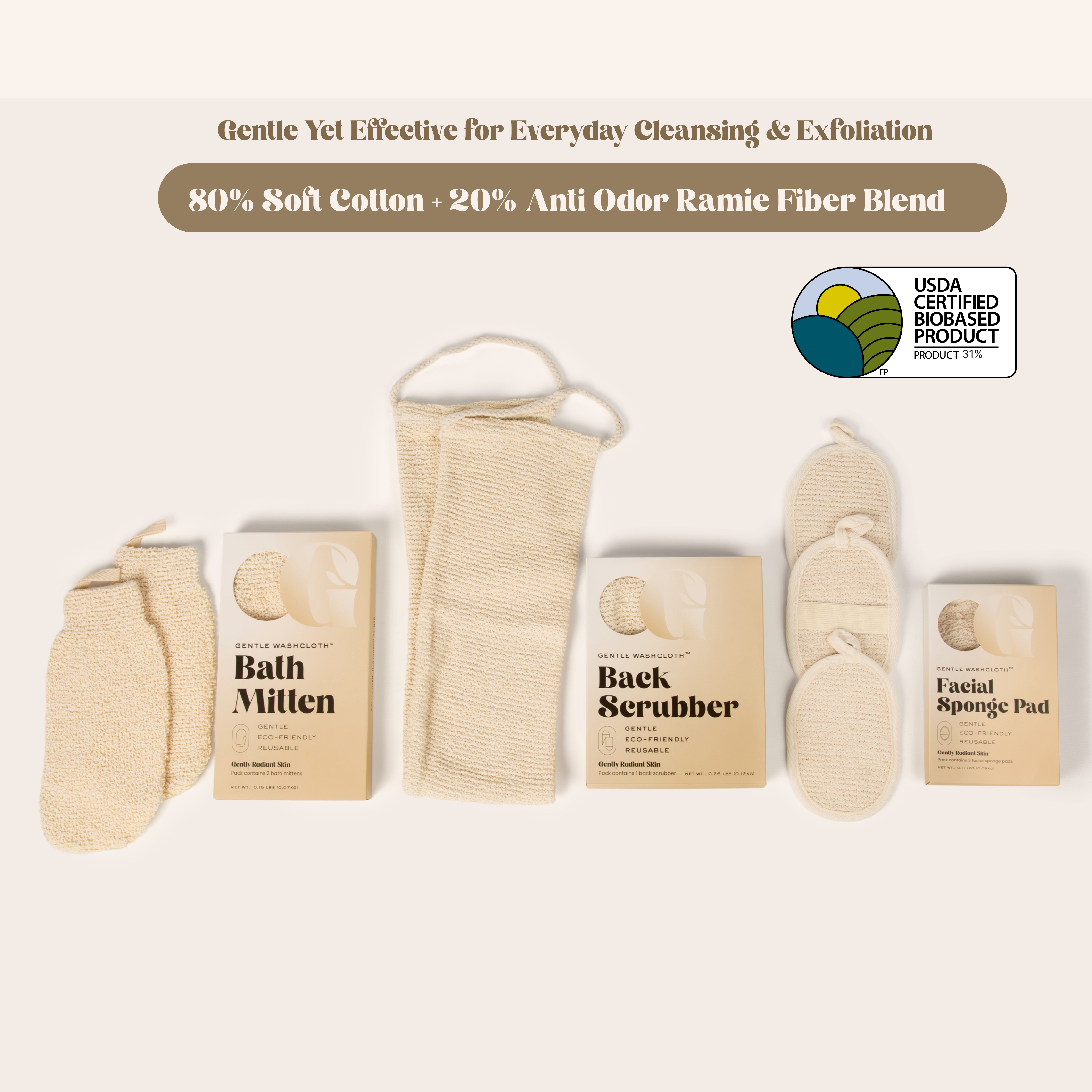
| Gentle Washcloth Collection | Reusable cloth | USDA Bio-based | $50.00 | Everyday face and body cleansing |
| Self-Draining Bamboo Soap Dish | Accessory | FSC-Certified bamboo | $12.00 | Extending bar soap life |
SheaX Bar Soaps: Certified Organic Care for Kids and Adults
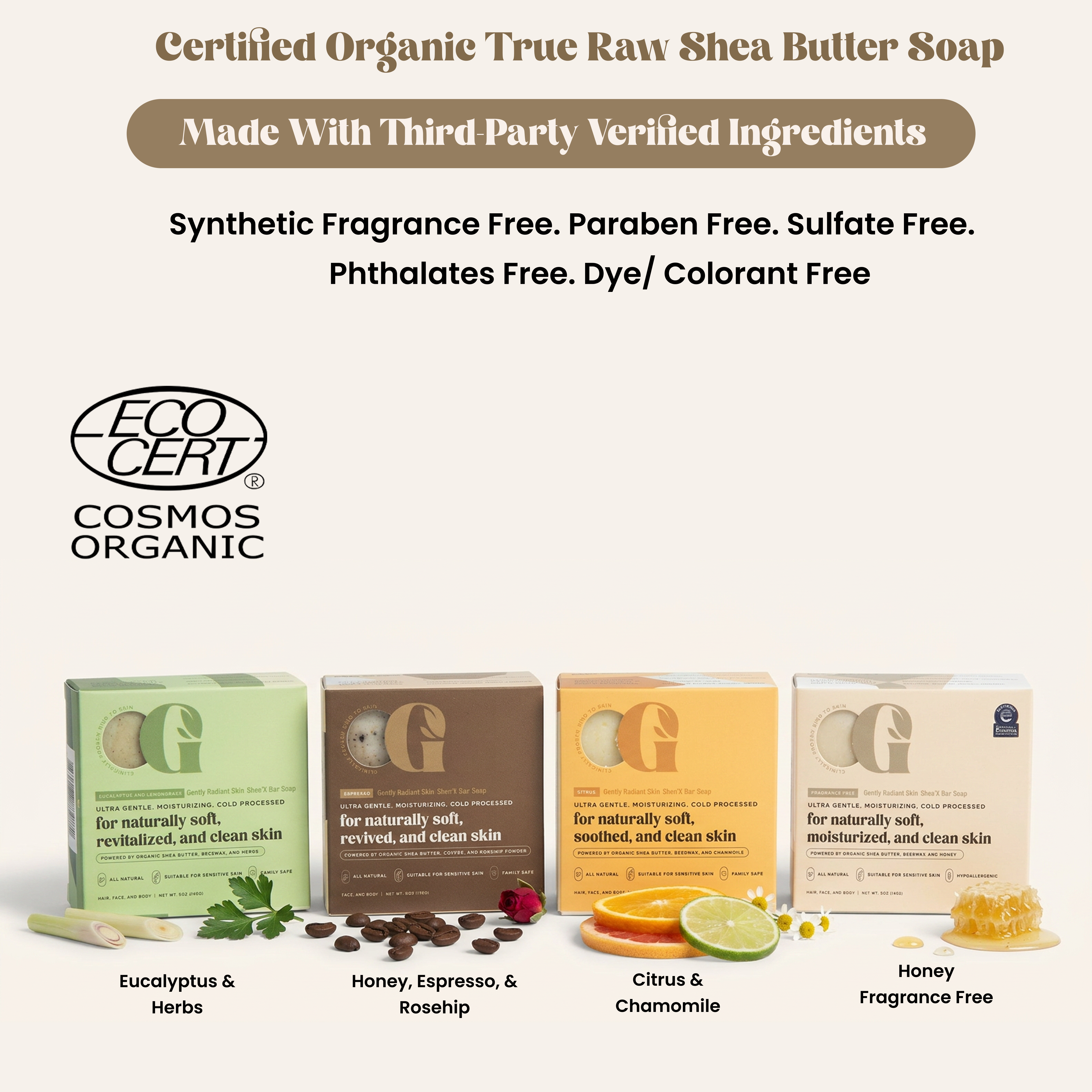
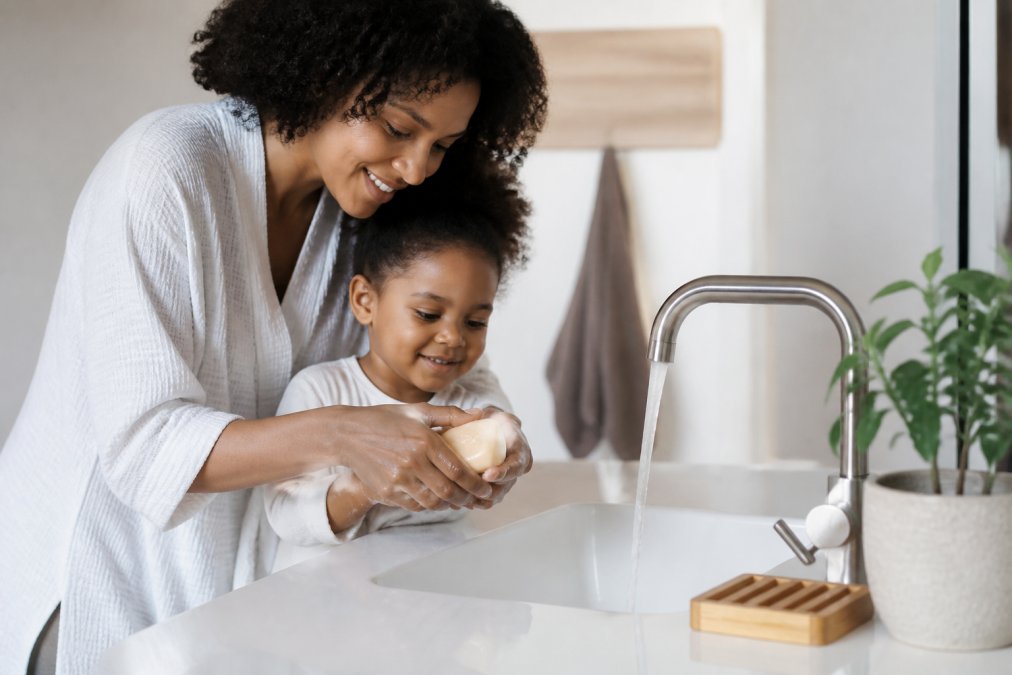
Our top pick for the best sustainable skincare for families is the SheaX line from Gently Radiant Skin, and the reason comes down to versatility. The 5oz SheaX Bar Soap uses cold-processed, unrefined raw shea butter that softens and cleanses without stripping the skin barrier. Both the standard bar and the Honey Fragrance Free version carry Dermatologist and Pediatrician approval.

The Fragrance Free bar is the one to choose if anyone in the house deals with eczema. One customer, Fey E., noted that it "helped my daughter's eczema, and I'm genuinely amazed." At $20.00 per bar, the upfront cost is higher than a drugstore option, but the formula lasts longer and eliminates the need for separate body lotions.
Gentle Towels: Hygienic Cleansing for Reactive Skin
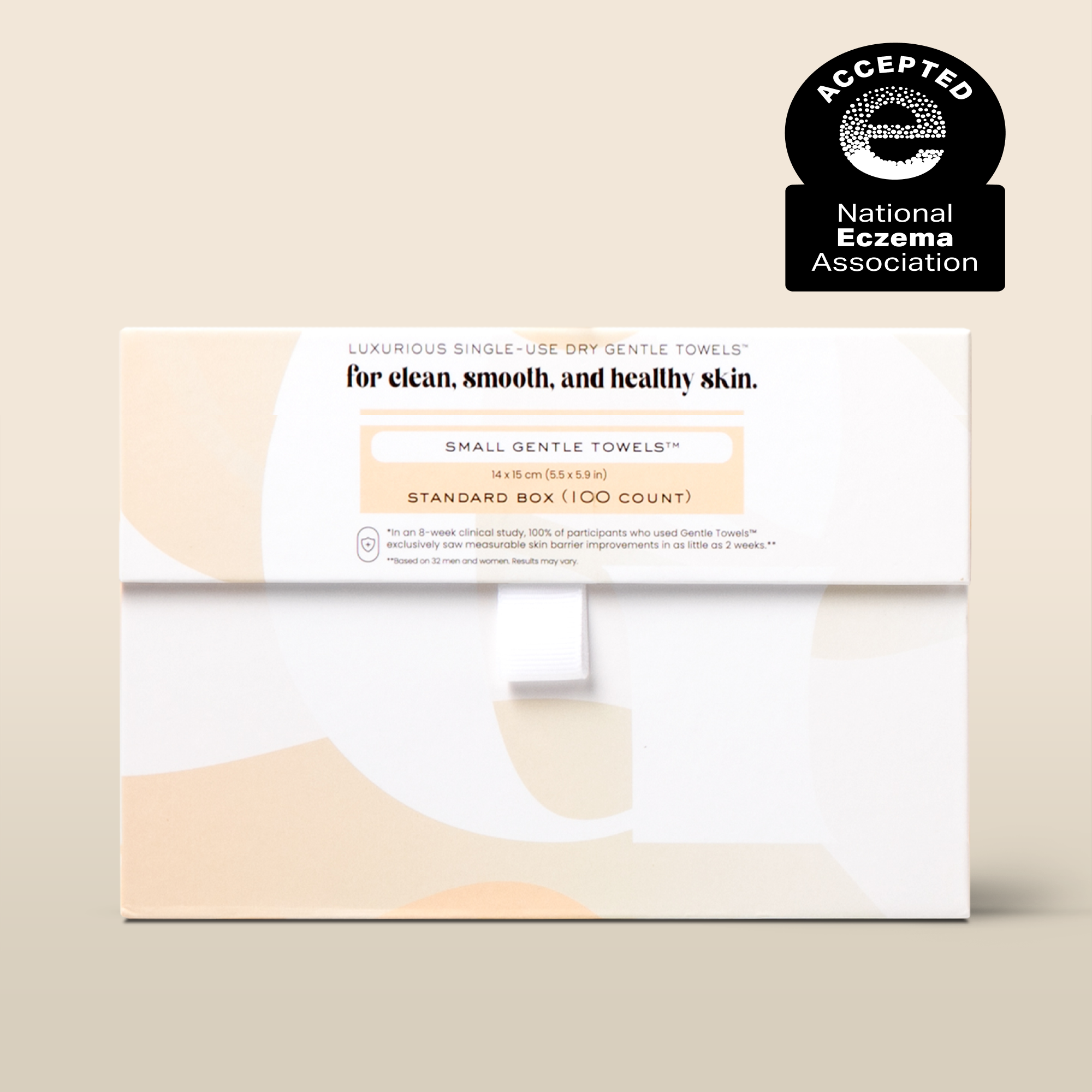
For facial cleansing, sharing a cloth across family members can transfer bacteria and trigger breakouts. The Gentle Towels line solves this with ultra-soft, single-use towels that are clinically tested to improve the skin barrier in two weeks and reduce blemishes by week eight. Each towel is fragrance-free, pediatrician approved, and made with USDA Bio-based materials.

Use them wet to remove sunscreen or makeup without harsh scrubbing, or dry to gently exfoliate. The refillable magnetic flap box keeps remaining towels clean and reduces packaging waste. For a teenager with acne and a parent with reactive skin sharing one bathroom, these prevent cross-contamination entirely.
Ingredients to Avoid and Allergy-Safe Alternatives
The fastest way to identify greenwashing in family skincare is to read the ingredient list rather than the label claims. Synthetic fragrances are the most common irritant, often listed simply as "parfum" or "fragrance." Sulfates, phthalates, and parabens also appear frequently in conventional cleansers.
What to avoid: synthetic fragrance, sulfates (SLS/SLES), parabens, phthalates, and drying alcohols. What to look for: shea butter, glycerin, chamomile, and other plant-based emollients that support the skin barrier.
For allergy-safe routines, stick to single-ingredient or minimally processed formulas. Cold-processed shea butter is naturally hypoallergenic and rich in vitamins, making it a safer base than petroleum-derived alternatives. Patch test on the inner forearm for 24 hours before full use.
How to Transition to Sustainable Skincare Without Waste
Switching to eco-friendly products does not require throwing away half-empty bottles. A gradual transition protects your budget and prevents waste.
- Finish current products unless they actively irritate the skin.
- Replace one item at a time, starting with the most frequently used cleanser.
- Repurpose glass bottles for storage or travel.
- Compost or recycle packaging according to local municipal guidelines.
When you do replace a cleanser, choose a bar format to eliminate plastic entirely. Pair it with the Self-Draining Bamboo Soap Dish, which keeps the bar dry between uses and extends its lifespan.

The End-of-Life Problem Most Guides Ignore
Most sustainable skincare guides stop at “recycle it,” but the reality of multi-material packaging is far more complex. A typical pump bottle combines a polypropylene (PP) trigger, a polyethylene (PE) bottle, and a metal spring inside the pump. These components require separation before recycling, and most municipal curbside programs in the United States do not accept the pump mechanism at all. The Association of Plastic Recyclers guidelines note that pumps and triggers are often classified as contaminants because their mixed materials cannot be processed in standard single-stream facilities.
Here is what works for families committed to zero-waste routines:
- Remove and discard the pump spring. The metal spring is too small for most recycling sorters to capture. Pop it out with a flathead screwdriver and place it in your household metal recycling bin if your program accepts small scrap metal; otherwise, it goes to landfill.
- Rinse and dry the bottle and pump housing separately. Residual product contaminates entire bales of recyclables. A quick rinse with warm water and a drop of dish soap is sufficient.
- Check your local municipality’s specific rules. Programs vary widely by state and even by county. Use the Earth911 recycling database to search for drop-off locations that accept mixed-material personal care packaging.
- Look for brand take-back programs. Some retailers and brands now partner with specialized recyclers like TerraCycle to accept empty beauty packaging that curbside programs reject. These programs often ship prepaid labels, making them a practical option for families accumulating empty bottles.
A Cost-Per-Use Framework for Value-Conscious Families
The “budget-friendly” conversation in most sustainable skincare articles stops at shelf price. But for a family of four, the real question is cost per use, not cost per bottle. A high-quality cold-processed bar used daily by two people typically lasts six to eight weeks, bringing the cost per use below most liquid cleansers.
Consider this comparison for a family of four:
| Product Format | Shelf Price | Typical Uses per Unit | Cost per Use | Waste Output |
|---|---|---|---|---|
| Liquid cleanser (16 oz) | $12.00 | ~120 pumps (1 pump per wash) | $0.10 | 1 plastic bottle + 1 pump mechanism |
| Bar soap (5 oz) | $20.00 | ~180 washes (shared by 2 people) | $0.11 | 1 paper wrapper (compostable) |
| Gentle Towels (50 count) | $18.00 | 50 uses | $0.36 | 50 compostable/biobased towels |
When you factor in that a bar soap eliminates the need for a separate body lotion for many users, the effective cost per use drops further. For families managing eczema, a single bar that cleanses and moisturizes replaces two products, halving both cost and packaging waste.
Building a Zero-Waste Bathroom Routine
A sustainable transition also means rethinking the bathroom itself. Swap plastic toothbrush holders for bamboo, replace single-use cotton rounds with reusable washcloths, and store bar soap on a self-draining dish. These small changes compound: a family that switches from liquid body wash to bar soap for one year eliminates approximately 12 plastic bottles per person from the waste stream.
For families with young children, involve them in the process. Let them help compost the paper wrapper from a new bar of soap or sort the recyclable components of an empty bottle. Building these habits early teaches environmental stewardship alongside skincare literacy.
How We Evaluated: Certifications, Safety, and Cost Per Use
Most “best of” lists rank products by marketing claims. We ranked ours by three measurable criteria: third-party certification, clinical safety data, and true cost per use. For a family-focused guide, we added a fourth criterion: multi-generational safety compatibility.
Criterion 1: Third-Party Certifications That Actually Mean Something
Not all certifications carry equal weight. Here is how we interpret the most common labels found on sustainable skincare products in the United States:
- USDA Organic or Certified Organic: Requires that at least 95% of the ingredients (excluding water and salt) are organically produced. This certification is enforced by the USDA National Organic Program and involves annual on-site inspections. For families, this means fewer pesticide residues and synthetic additives.
- National Eczema Association (NEA) Acceptance: Products bearing this seal have been reviewed by a panel of dermatologists and scientists to ensure they are free of known irritants and allergens. The NEA does not test products itself; it reviews ingredient lists and available clinical data. This is particularly valuable for families managing eczema or sensitive skin.
- USDA BioPreferred: This program certifies that a product contains a significant percentage of bio-based content (derived from plants or other renewable materials). It does not assess safety or efficacy, so we treat it as a sustainability indicator, not a safety one.
- Cruelty-Free (Leaping Bunny or PETA): These certifications confirm that no animal testing occurred at any stage of product development. They do not address ingredient safety or environmental impact.
- Vegan: Indicates no animal-derived ingredients. Useful for families with ethical preferences, but does not guarantee hypoallergenic properties. In fact, some vegan alternatives use synthetic substitutes that can be more irritating than natural animal-derived ingredients like lanolin.
Criterion 2: Clinical Safety Data for Every Age Group
A product that is safe for an adult is not automatically safe for a child. Children have thinner skin, a higher surface-area-to-body-weight ratio, and less developed metabolic pathways. Our evaluation requires that a product be:
- Pediatrician approved or formulated specifically with pediatric safety data.
- Fragrance-free (not just “unscented,” which can still contain masking fragrances).
- Free of known endocrine disruptors like phthalates and parabens, which are particularly concerning for prepubescent children.
- Patch-test friendly for families with reactive skin.
We also consider the “shared bottle” problem. If a product is used by a child with eczema and a parent with acne-prone skin, it must be non-comedogenic and non-irritating. This dual requirement eliminates many popular “natural” brands that rely on essential oils for fragrance.
Criterion 3: True Cost Per Use for a Multi-Person Household
A high-quality cold-processed bar used daily by two people typically lasts six to eight weeks, bringing the cost per use below most liquid cleansers. The Gentle Towels at $18.00 for 50 uses breaks down to roughly 36 cents per cleansing event.
But cost per use is only half the equation. For families, we also calculate cost per family member per month:
| Product | Price | Family Size | Duration | Cost per Person per Month |
|---|---|---|---|---|
| SheaX Bar Soap (5 oz) | $20.00 | 2 people | 6-8 weeks | $5.00-$6.67 |
| Liquid body wash (16 oz) | $12.00 | 2 people | 3-4 weeks | $6.00-$8.00 |
| Gentle Towels (50 count) | $18.00 | 1 person (face only) | ~7 weeks | $10.29 |
| Drugstore makeup wipes (25 count) | $6.00 | 1 person (face only) | ~2 weeks | $12.00 |
When you factor in that the SheaX bar eliminates the need for a separate body lotion for many users, the savings increase. A family of four switching from liquid body wash plus lotion to a single bar soap can reduce plastic waste.
Criterion 4: Multi-Generational Safety Compatibility (Our Unique Angle)
This criterion separates a true family product from an adult product marketed to families. We ask four questions:
- Can a child under 5 use this safely? This requires no essential oils, no drying alcohols, and no exfoliating acids.
- Can a teenager with acne use this without triggering breakouts? This requires non-comedogenic ingredients.
- Can a grandparent with thinning, fragile skin use this without irritation? This requires gentle surfactants and moisturizing agents.
- Can a parent with reactive skin or eczema use this during a flare? This requires fragrance-free, minimally processed ingredients.
Few products pass all four tests. Most “clean beauty” brands formulate for adult concerns using active ingredients like retinol or salicylic acid that are inappropriate for children. Conversely, pediatric brands often lack the efficacy that adults need. The SheaX line passes because cold-processed shea butter is naturally hypoallergenic, non-comedogenic, and rich in vitamins.
This four-part framework, certification integrity, age-specific safety data, cost per use, and multi-generational compatibility, separates our recommendations from generic “best of” lists. We prioritize products that serve the whole household, reducing both the number of bottles in your bathroom and the risk of adverse reactions.
Which Family Routine Should You Pick?
The right routine depends on your household's specific skin concerns. For families managing eczema or general sensitivity, the SheaX Fragrance Free Bar Soap combined with the Gentle Washcloth Collection offers the gentlest full-body cleanse. For families with acne-prone teenagers or adults who wear makeup daily, the Gentle Towels provide the hygienic facial cleansing step that prevents bacterial transfer.
The best sustainable skincare for families in 2026 is not the trendiest brand on social media. It is the certified organic, dermatologist-tested formula that calms a child's eczema, clears an adult's blemishes, and arrives in packaging that does not burden the next generation. Gently Radiant Skin was built around this exact standard, with cold-processed shea soaps and USDA Bio-based cleansing cloths that are accepted by the National Eczema Association and approved by pediatricians.
Building a family skincare routine that is both gentle and sustainable requires looking past marketing language and checking certifications, ingredient lists, and true cost per use. Gently Radiant Skin simplifies that decision with cleansing essentials designed for sensitive, reactive skin across every age group, from certified organic shea butter bars to clinically tested facial towels. Get started with Gently Radiant Skin and give your family a routine that restores the skin barrier while respecting the planet.
Frequently Asked Questions
What is the most sustainable skincare brand for families?
The most sustainable family brands prioritize certified organic ingredients, plastic-free or refillable packaging, and transparent sourcing. Look for third-party seals like USDA Bio-based, the National Eczema Association stamp, and dermatologist approval. For families, the brand also needs pediatrician-approved formulas. Gently Radiant Skin meets these criteria with cold-processed shea butter bars and USDA-certified towels, so one routine can serve both kids and adults without compromising safety or environmental standards.
What ingredients should families avoid in sustainable skincare?
Families should avoid synthetic fragrances, parabens, phthalates, and sulfates, even in products labeled natural. These common irritants trigger eczema flares and reactive skin in children. Dyes and essential oils can also cause reactions in sensitive kids. Check the full ingredient list, not just the front label. Fragrance-free bars like the SheaX Honey option eliminate the most common allergen while still using certified organic shea butter for gentle cleansing.
Are organic skincare products better for reactive skin?
Organic ingredients reduce exposure to pesticides and synthetic processing agents, which helps reactive skin. However, organic does not automatically mean hypoallergenic. Plant botanicals can still trigger sensitivities. The safest approach for reactive skin in 2026 is combining organic bases with fragrance-free, dermatologist-tested formulas. Clinical testing matters: products proven to improve the skin barrier in two weeks, like Gentle Towels, offer measurable benefits.
How can I transition to sustainable skincare without wasting my current products?
Start by using up your current cleansers for body care, then replace them with sustainable bars as they run out. Swap your most-used product first, usually facial cleanser, to see how your skin responds. When you buy, choose packaging you can refill or compost. Gently Radiant Skin uses a refillable magnetic box for facial towels and plastic-free soap packaging, so your switch creates minimal landfill waste.