


How to Manage Baby Eczema Naturally at Home
Table of Contents
- Understanding Baby Eczema and Natural Management
- Build Your Baby Eczema Bath Routine
- Choose the Best Moisturizer for Baby Eczema
- Identify and Avoid Common Eczema Triggers
- Apply the 3-Minute Rule for Eczema Flare Relief
- When to See a Doctor for Baby Eczema
- Managing the Emotional Impact on Parents
- Frequently Asked Questions
Last Updated: October 6, 2026
Understanding Baby Eczema and Natural Management
Eczema in babies often appears as red, inflamed patches on the cheeks, arms, legs, or behind the ears.
The key to managing baby eczema naturally lies in three pillars: a gentle bath routine, immediate moisturizing, and trigger identification. We'll walk you through each one.
Build Your Baby Eczema Bath Routine
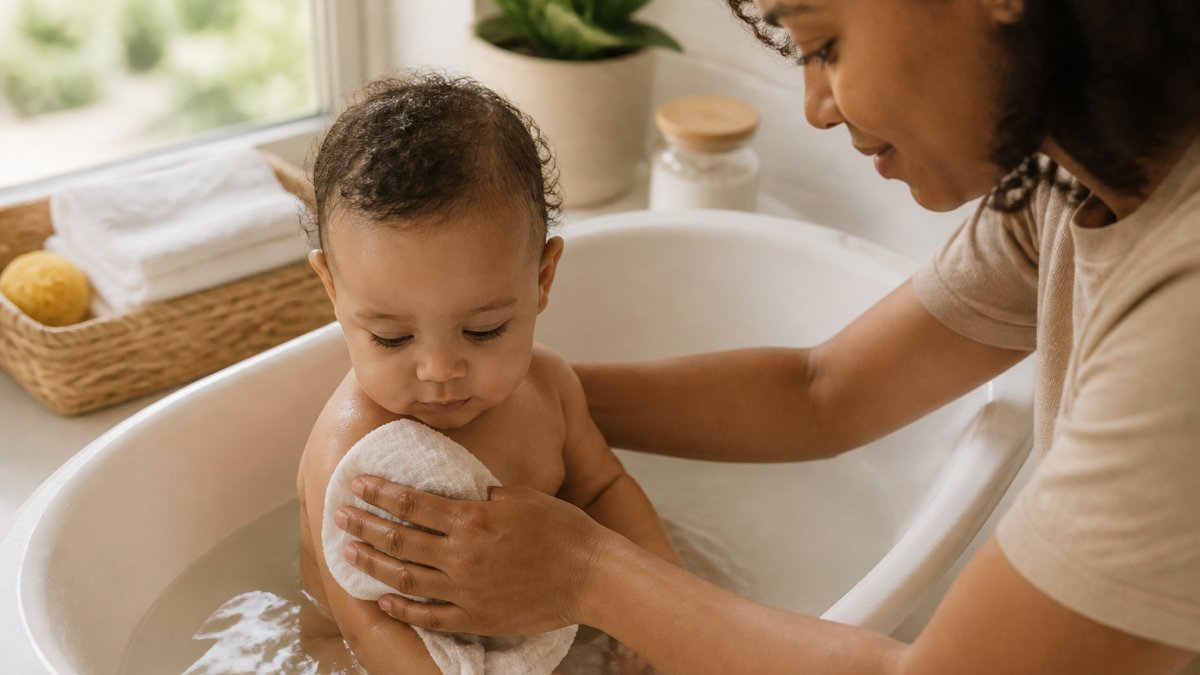
A proper bath routine is the foundation of managing baby eczema naturally at home, but the details matter more than most parents realize. Frequency, water temperature, water quality, and the order you do things in all affect whether bath time calms the skin or strips it.
How often to bathe a baby with eczema
The old advice to bathe eczema-prone babies as little as possible has largely been replaced. Most pediatric dermatologists now recommend once-daily bathing for babies with active eczema, because a short bath is the most efficient way to hydrate the outer skin layer before you seal it.
The exception is a baby in the middle of a severe flare with broken or oozing skin, in that case, ask your pediatrician whether to reduce frequency until the skin settles.
Lukewarm water and gentle cleansing
Lukewarm water, around 85-90°F, is ideal for babies with eczema. Hot water strips away natural oils and worsens irritation. Test the temperature with your inner wrist or elbow, or use a baby bath thermometer, your hand adapts to heat faster than you think, so it is an unreliable gauge.
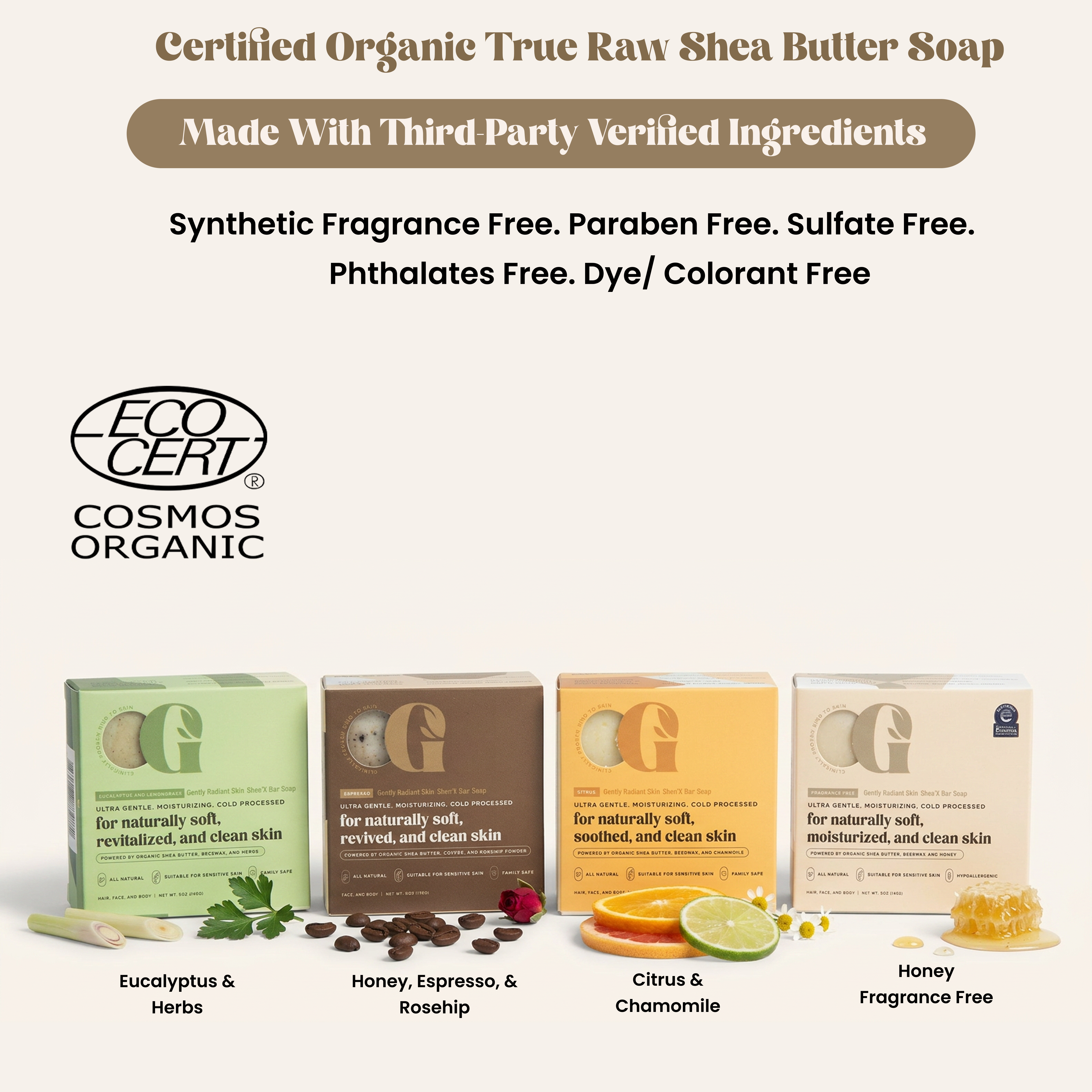
For cleansing, choose a fragrance-free, gentle cleanser designed for sensitive skin. Our SheaX™ Honey Fragrance Free Bar Soap is cold-processed with unrefined raw shea butter and accepted by the National Eczema Association. It cleanses without stripping the skin barrier.

A few technique notes that make a measurable difference:
- Cleanse last. Let your baby soak in plain lukewarm water for the first 1-2 minutes, then use cleanser only on the diaper area, folds, and any visibly soiled spots. Most of a baby's body does not need soap every day.
- Skip bubble bath entirely. Bubbling agents and fragrances are among the most common contact irritants in babies.
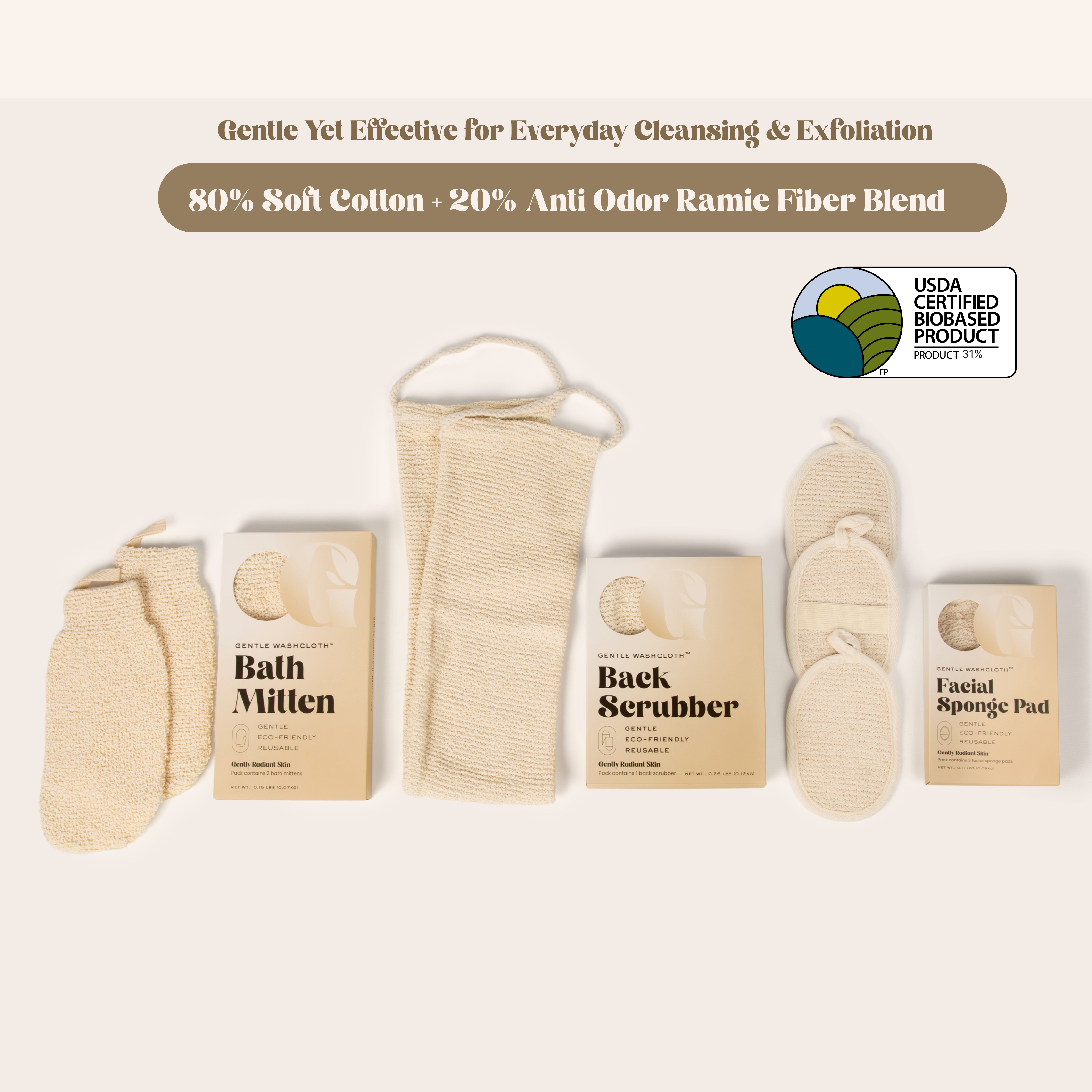
- Use your hands or a soft cotton washcloth. Avoid loofahs, sponges, and anything abrasive.
- Pat, don't rub. Rubbing wet skin damages the already-compromised barrier.
Water quality: the trigger most guides skip
If your baby's eczema flares after every bath no matter what you change, water quality may be the culprit. Hard water, common in many U.S. municipal and well-water supplies, contains dissolved calcium and magnesium that can raise skin pH and irritate a compromised barrier. A few practical options:
- Test your water with an inexpensive hardness test strip.
- Consider a shower or bath filter if hardness or chlorine is high.
- Add a colloidal oatmeal packet to the bathwater to buffer irritation (see the moisturizer section for why oatmeal works).
This is one of the most overlooked environmental factors, and it is worth ruling out before you spend money cycling through cleansers.
The 3-minute rule for eczema
The 3-minute rule for eczema is simple: keep baths short. Limit bath time to 3-5 minutes for babies under 6 months and no more than 10 minutes for older babies. Longer baths, even in lukewarm water, dry out the skin.
After the bath, pat your baby's skin gently with a soft towel. Don't let the skin dry completely, you want it damp but not dripping before you apply moisturizer.
Choose the Best Moisturizer for Baby Eczema
The best moisturizer for baby eczema is one that locks in hydration without irritating the skin. But "best" depends on your baby's skin, the season, and where on the body you are applying it. Here is how to actually choose. Beyond topical treatments, the fabric touching your baby's skin plays a significant role in managing flare-ups, making the right choice of clothing for eczema an essential part of a holistic care routine.
Ointment vs. cream vs. lotion: pick by water content
Moisturizers are ranked by how much water they contain, and that single fact determines how well they hold moisture in:
- Ointments (petrolatum, shea-butter-based balms), highest oil content, lowest water. Best barrier protection, especially for overnight and for very dry or cracked patches. Trade-off: greasy, can feel occlusive in summer.
- Creams, a middle ground of oil and water. Good all-purpose choice for daytime and for most babies with mild-to-moderate eczema.
- Lotions, mostly water. Feel light and absorb fast, but evaporate quickly and often contain more preservatives. Usually the weakest choice for eczema-prone skin.
A common pattern is to use a cream during the day and a thicker ointment or balm at night, when you can afford the greasiness and want maximum overnight barrier support.
Soak and seal technique
The soak and seal technique is the gold standard for managing baby eczema naturally. Here's how it works:
- Bathe your baby in lukewarm water for 3-5 minutes
- Pat skin gently, leaving it slightly damp
- Apply moisturizer immediately while skin is still moist
- The dampness helps the moisturizer penetrate deeper
Apply moisturizer within 3 minutes of bathing for best results. Use enough that the skin looks slightly shiny, a thin film is not enough. For a full-body application on an infant, that is roughly a quarter-size dollop per limb and a nickel-size amount for the face and neck, adjusted to your baby's size.
Reapply at least twice a day on calm skin, and every 4-6 hours during a flare. Keep a tube in the diaper bag and one at the changing table so you actually do it.
Why colloidal oatmeal works
Colloidal oatmeal, finely ground oat that suspends in water, is one of the few natural ingredients with a clear mechanism. It contains avenanthramides, compounds that calm itch signaling, and beta-glucans, which help hold water at the skin surface. The FDA recognizes colloidal oatmeal as a skin protectant, which is why you see it in so many eczema products.
You can use it two ways:
- In the bath: add a packet or a few tablespoons of finely ground oats to lukewarm water and soak for 5-10 minutes.
- As a cream: look for colloidal oatmeal listed in the first few ingredients of a fragrance-free moisturizer.
Natural oils and emollients
Natural oils and plant-based emollients support your baby's skin barrier. Shea butter is particularly effective, it is rich in fatty acids that nourish and soothe inflamed skin. Our SheaX™ bar soaps contain cold-processed shea butter that leaves skin soft and hydrated.

Look for these natural ingredients:
- Shea butter, emollient and anti-inflammatory; good for dry patches
- Coconut oil, moisturizing and gentle; well tolerated by most babies
- Jojoba oil, mimics skin's natural sebum; light and non-greasy
- Ceramides, lipids that restore barrier function; often in drugstore creams
- Petrolatum, the most studied occlusive for eczema; boring but effective
What to avoid
Skip products with fragrance, essential oils, alcohol, or "natural" botanical extracts like citrus, lavender, and tea tree, these are common contact irritants even when marketed as gentle. "Fragrance-free" is not the same as "unscented"; unscented products may contain masking fragrance.
5oz SheaX™ Honey Fragrance Free Bar Soap →
Identify and Avoid Common Eczema Triggers
Identifying triggers is essential for managing baby eczema naturally. Triggers vary by baby, but common culprits include laundry products, certain fabrics, and foods.
Laundry detergent and fabric softener impact
Laundry detergent and fabric softener are frequent eczema triggers. Residue left on clothing irritates your baby's delicate skin throughout the day.
Switch to a fragrance-free, hypoallergenic detergent. Wash baby's clothes, bedding, and towels separately from the rest of the family. Use half the recommended amount of detergent.
Avoid fabric softeners entirely. They coat fabrics with chemicals that irritate eczema-prone skin. Wool dryer balls are a gentler alternative.
Choose soft, breathable fabrics:
- 100% organic cotton
- Bamboo blends
- Linen
- Avoid synthetic materials and wool
Dietary elimination and breastfeeding links
For breastfed babies, maternal diet can influence eczema. Common food triggers include dairy, eggs, peanuts, tree nuts, soy, wheat, and fish. If your baby's eczema worsens after you eat certain foods, consider eliminating them temporarily.
Keep a food diary for one week. Note what you eat and any changes in your baby's skin.
For formula-fed babies, discuss hypoallergenic formulas with your pediatrician. Some babies benefit from hydrolyzed protein formulas that reduce allergic reactions.
Apply the 3-Minute Rule for Eczema Flare Relief
When your baby experiences an eczema flare, the 3-minute rule for eczema becomes even more critical. Act quickly to soothe inflammation and restore the skin barrier.
During a flare:
- Bathe in lukewarm water for 3 minutes maximum
- Use only a gentle, fragrance-free cleanser
- Pat skin gently and apply moisturizer within 3 minutes
- Avoid any known triggers
- Keep your baby's nails short to prevent scratching and infection
If itching is severe, speak with your pediatrician about appropriate itch relief options. Scratching damages the skin barrier and can lead to infection, so prevention is key.
When to See a Doctor for Baby Eczema
Most cases of baby eczema respond well to natural home management. However, certain signs warrant professional evaluation.
See your pediatrician or dermatologist if:
- The rash spreads rapidly or covers large areas of skin
- Your baby shows signs of infection (oozing, crusting, warmth, swelling)
- The eczema doesn't improve after 2-3 weeks of consistent home care
- Your baby has severe itching that prevents sleep
- The rash appears infected or painful
- Your baby is very young (under 3 months) and develops eczema
Your pediatrician can confirm the diagnosis and recommend prescription treatments if needed. Early professional intervention prevents complications and helps your baby feel better faster.
Managing the Emotional Impact on Parents
Caring for a baby with eczema is emotionally taxing. Watching your baby itch and suffer is stressful.
It's important to acknowledge these feelings. Connect with other parents managing baby eczema.
Remember that managing baby eczema naturally takes time. Improvements often appear within 2-3 weeks of consistent care, but full healing may take longer.
Practice self-compassion. You're doing everything right by learning about natural management strategies and choosing gentle products.
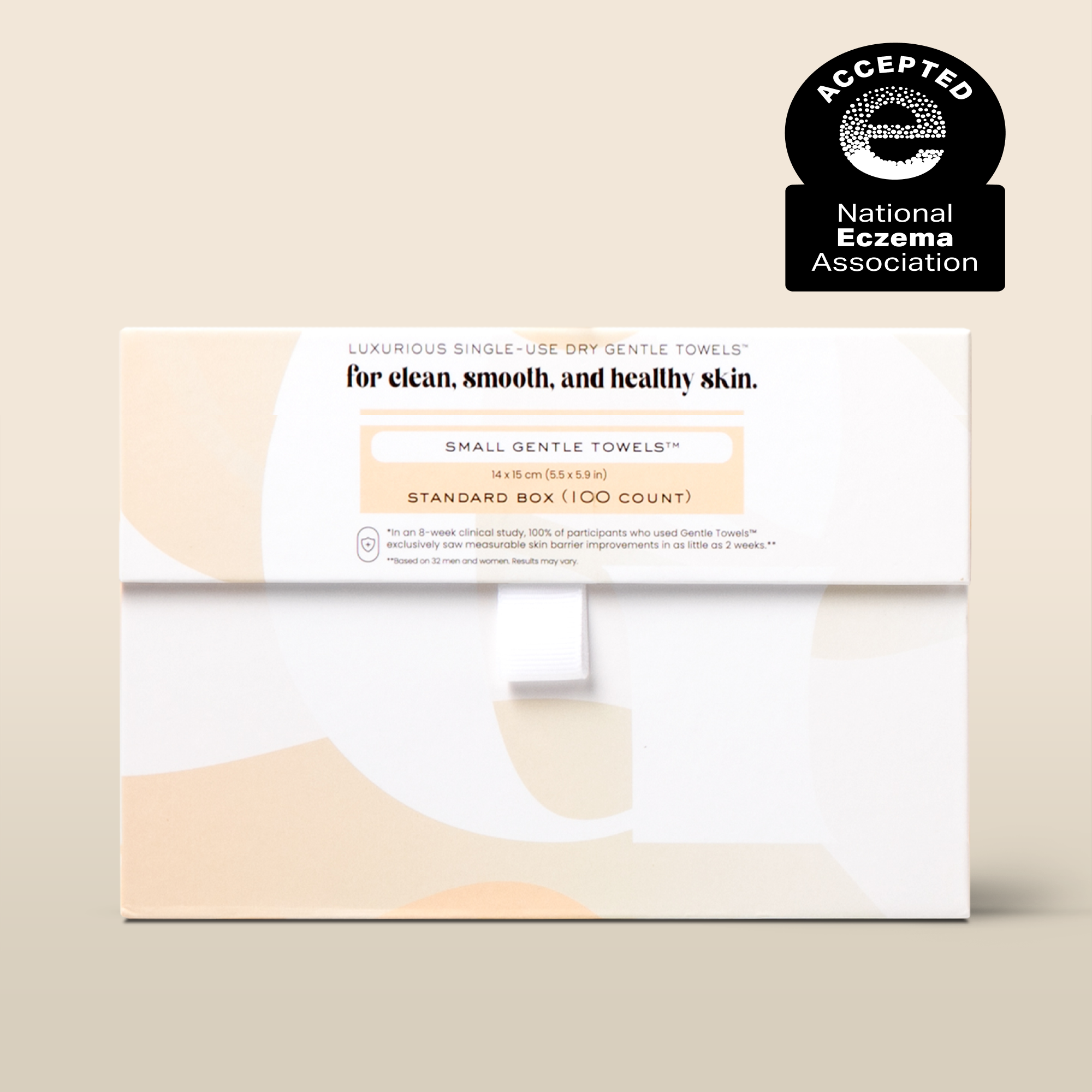
Managing baby eczema naturally requires patience, consistency, and the right approach. At Gently Radiant Skin, we've helped families soothe their babies' sensitive skin with our cold-processed organic shea butter soaps and ultra-soft Gentle Towels. Start with our proven soak and seal technique using products specifically engineered for eczema-prone skin. The National Eczema Association provides additional resources and product recommendations.

Frequently Asked Questions
What is the 3-minute rule for eczema?
The 3-minute rule for eczema means limiting bath time to 3 minutes or less with lukewarm water, then immediately applying moisturizer while skin is still damp. This prevents excessive water loss from the skin barrier. Longer baths can strip natural oils and worsen inflammation, while quick bathing followed by immediate moisturizing helps lock in hydration and soothe irritated skin.
How often should you bathe a baby with eczema?
Bathe your baby with eczema once daily, preferably in the evening before bed. Daily bathing with gentle cleansing helps remove irritants and bacteria while the lukewarm water hydrates the skin. Use a fragrance-free cleanser like SheaX bar soap to avoid triggering flare-ups. Always pat skin dry gently and moisturize immediately.
When should you call a pediatrician about baby eczema?
Contact your pediatrician if your baby's eczema shows signs of infection (oozing, crusting, warmth, increased swelling), spreads rapidly despite home care, causes severe itching that disrupts sleep, or doesn't improve after 2-3 weeks of consistent natural management. Also reach out if you suspect food allergies triggering flare-ups or if your baby develops a fever alongside eczema symptoms.
Which natural moisturizers are safe for babies with eczema?
Safe natural moisturizers for baby eczema include unrefined shea butter, coconut oil, and jojoba oil applied to damp skin immediately after bathing. Look for fragrance-free, hypoallergenic products accepted by the National Eczema Association. Avoid products with added fragrances, essential oils, or common irritants. SheaX bar soap provides gentle cleansing with natural shea butter without harsh additives.