


How to Transition to Organic Soap for Eczema
Table of Contents
- Why Switching to Organic Soap Helps Eczema-Prone Skin
- Ingredients to Avoid for Eczema in Commercial Soap
- What Makes the Best Organic Soap for Sensitive Skin
- Shea Butter Benefits for Eczema and the Skin Barrier
- How to Transition to Organic Soap for Eczema: A Step-by-Step Plan
- Common Mistakes to Avoid During the Switch
- Frequently Asked Questions
Last Updated: September 23, 2026
Why Switching to Organic Soap Helps Eczema-Prone Skin
The skin barrier keeps moisture in and irritants out. Eczema weakens that barrier, so harsh cleansers strip what little protection is left, which is why learning how to transition to organic soap for eczema matters more than most people expect.
At Gently Radiant Skin, we hear the same story from parents and adults with reactive skin. A "gentle" drugstore cleanser still leaves skin tight, itchy, and flaring within hours. The problem is usually the formula, not the person.
Eczema is a chronic condition in which the skin's protective barrier is compromised, leading to dryness, itching, and inflammation. When that barrier is already weak, strong surfactants and synthetic detergents pull out the lipids that hold skin together.
Here's the part most guides skip: the goal isn't just "natural" soap, it's soap that cleans without stripping, fewer harsh surfactants, more emollients, and a formula that respects your acid mantle.
National Eczema Association guidance on bathing and moisturizing
Below, we'll show you exactly how to make the switch, week by week, so your skin has time to adjust instead of rebelling.
Ingredients to Avoid for Eczema in Commercial Soap
The fastest way to calm flare-ups is to remove obvious triggers first. Read the label before you buy, because "gentle" and "hypoallergenic" on the front of a bottle mean very little.
Watch for these:
- Synthetic detergents like sodium lauryl sulfate and sodium laureth sulfate, which strip oils fast
- Added fragrance and "parfum", a common trigger for sensitive skin
- Essential oils in high amounts, even "natural" ones like citrus or peppermint
- Dyes and additives that serve no cleansing purpose
- Preservatives such as methylisothiazolinone, a known irritant
- Alcohol and other drying agents that leave skin tight
A common mistake is trusting the word "natural." Botanical ingredients can still irritate. What matters is the full formula, not the marketing.
What Makes the Best Organic Soap for Sensitive Skin
The best organic soap for sensitive skin balances three things: mild cleansing, real moisture, and a skin-friendly pH. Miss one and you'll feel it.
Look for a short ingredient list you can actually read. Cold process soap made with olive oil, shea butter, and other plant oils is gentler than mass-produced bars, and it keeps glycerine, a natural humectant that holds water in the skin. Most commercial bars extract glycerine and sell it separately, cold process soap leaves it in.
A few things to check:
- Certified organic ingredients, not just "made with organic"
- Fragrance-free labeling, not "unscented"
- Accepted by the National Eczema Association, a useful third-party filter
- Dermatologist and pediatrician approved formulas when kids are involved
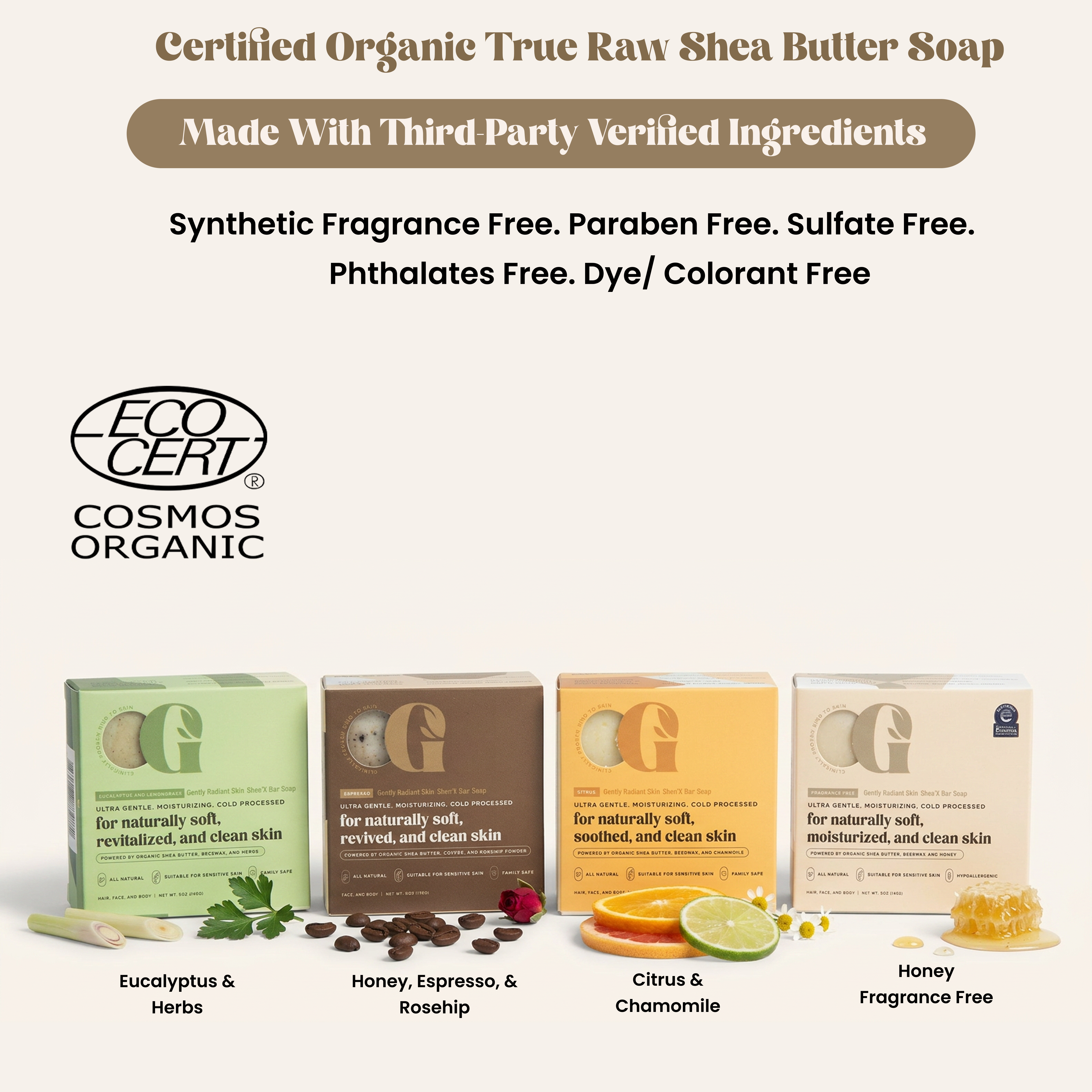
Gently Radiant Skin's cold-process bars are built around this idea: the SheaX line is accepted by the National Eczema Association and approved by dermatologists and pediatricians, taking the guesswork out of label reading.
Superfat Levels and pH Balance Explained
Superfat is the unreacted oil left in a finished bar. A higher superfat level leaves more oil on your skin after washing, supporting moisture retention and protecting the lipid barrier.
Here's the part most guides skip.
- True soap (cold process, hot process, any saponified fat) is alkaline, typically around pH 9 to 10. Each wash pushes skin pH upward. Healthy skin rebounds within about an hour; a compromised barrier can take longer.
- Syndet bars (synthetic detergent bars, often labeled "cleansing bars" or "beauty bars") are formulated closer to skin pH, often around 5.5. They don't disrupt the mantle the same way, but they also don't leave the same emollients behind, and many contain the surfactants and fragrance that trigger eczema in the first place.
Fragrance-Free vs. Essential Oil-Free
These two terms are not the same, and the difference matters for reactive skin.
- Fragrance-free means no added scent, natural or synthetic
- Essential oil-free means no plant oils used for scent either
- A bar can be fragrance-free but still contain essential oils
Shea Butter Benefits for Eczema and the Skin Barrier
Shea butter benefits for eczema come down to one thing: it's rich in fatty acids and triglycerides that mimic the lipids your skin already makes, rebuilding the barrier instead of just coating it.
American Academy of Dermatology guidance on eczema skin care
How to Transition to Organic Soap for Eczema: A Step-by-Step Plan
Switching cold turkey can backfire, your skin needs time to adjust. Here's how to transition to organic soap for eczema without triggering a flare.
5oz SheaX™ Honey Fragrance Free Bar Soap →
- Pick one fragrance-free bar to start. Don't overhaul everything at once.
- Use it on one area first. Try your arms or legs for three to four days.
- Watch for reactions. Note any redness, itching, or tightness.
- Swap your body wash, then your face. Move slowly, one product at a time.
- Keep showers short and lukewarm. Hot water strips the barrier further.
- Pat dry, don't rub. Then moisturize within three minutes.
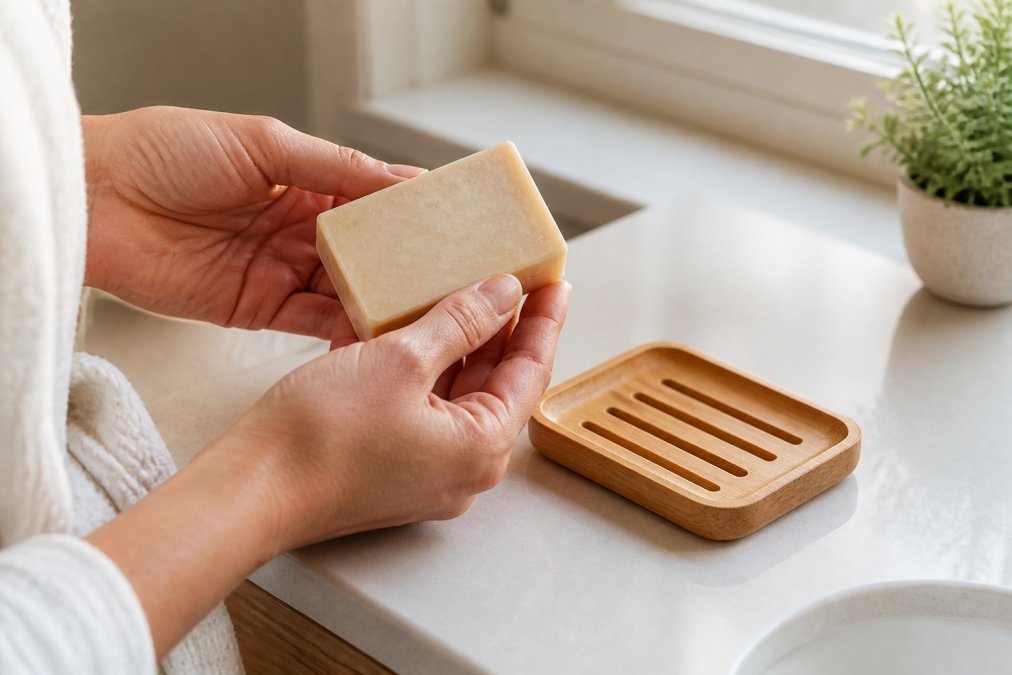
- Store your bar on a draining dish. Wet soap breaks down faster and grows bacteria.
The Adjustment Period: What to Expect Week by Week
Most guides stop at "give it time." That's not useful when your skin is stinging on day three. Here's the mechanism behind the adjustment phase, so you can tell normal transition from a true reaction.
| Week | What You May Notice | What's Happening | What to Do |
|---|---|---|---|
| Week 1 | Mild dryness, tightness, or a faint "squeaky" feel | Loss of the syndet film; acid mantle still rebounding after each wash | Moisturize within three minutes of patting dry; keep showers under 10 minutes |
| Week 2 | Less itching, calmer skin between washes | Barrier lipids stabilizing; less surfactant stripping per wash | Keep the routine steady; don't add new products yet |
| Week 3 | Fewer flare-ups, less need for mid-day lotion | Emollients from the bar's superfat are staying on the skin | Introduce the next product swap if skin is stable |
| Week 4 | Softer, more balanced skin | Barrier function and pH rebound are closer to baseline | Continue and adjust as needed |
How Water Hardness Affects Your Results
Hard water is the variable most soap guides ignore, and it's often why two people use the same bar and get opposite results. Its dissolved calcium and magnesium meet the fatty acids in true soap to form an insoluble compound, soap scum, that doesn't rinse cleanly. It deposits on skin as a thin, waxy film that traps irritants, blocks moisturizer absorption, and can trigger itching on its own.
How to tell if hardness is working against you:
-
White chalky residue on the soap dish, shower door, or faucet
-
A slippery, never-quite-rinsed feeling after washing
-
Soap that seems to disappear fast because it's binding to minerals instead of lathering
-
Skin that feels tight or itchy within minutes of toweling off
-
Use a higher-superfat bar. More unreacted oil means more emollient left on skin to offset the residue.
-
Rinse longer than feels necessary. The film takes more water to lift than a syndet does.
-
Wipe down the shower so scum doesn't redeposit on skin during the next wash.
-
Consider a shower filter rated for hardness if your area runs high. Filters vary widely in what they actually remove, so check the spec rather than the marketing.
-
Follow with moisturizer within three minutes. This is non-negotiable in hard water because the film interferes with absorption the longer you wait.
Common Mistakes to Avoid During the Switch
Most failed transitions come down to speed and impatience. Change too many products at once and you won't know what helped or hurt.
Avoid these:
- Switching everything in one day, which makes reactions impossible to trace
- Trusting "natural" labels without reading the full ingredient list
- Skipping moisturizer because the soap feels gentle
- Using hot water, which undoes the barrier benefits of a good bar
- Letting soap sit in water, which wastes the bar and breeds bacteria
- Giving up after three days, before the adjustment period plays out
CDC guidance on handwashing and skin protection
Frequently Asked Questions
Is organic soap better for eczema than commercial soap?
Organic soap is often gentler because it skips synthetic detergents, sulfates, and artificial fragrances that strip the skin barrier. A cold process soap with a high superfat level leaves more oils behind to support moisture retention. That said, not all organic bars suit every person. Look for one accepted by the National Eczema Association, like the SheaX Honey Fragrance Free Bar, and patch test before full use.
How long does it take for skin to adjust to organic soap?
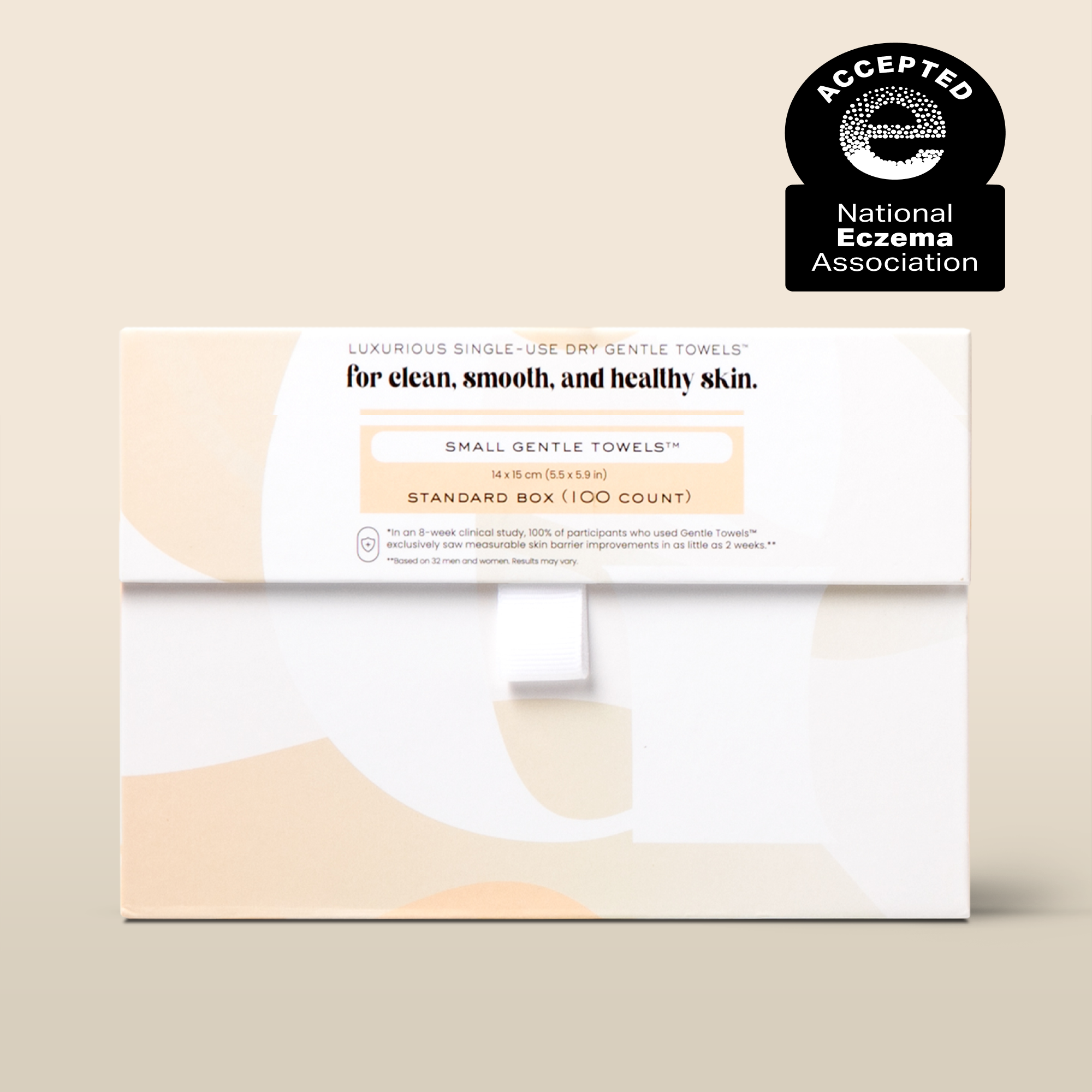
Most people notice their skin settling within two to four weeks. The first week can bring temporary dryness or mild flaking as your acid mantle rebalances. By week two, moisture retention usually improves. Gentle Towels are clinically tested to improve the skin barrier in two weeks, which pairs well with a soap switch. If irritation lasts past four weeks, stop and check with a dermatologist.
Can switching to natural soap cause an eczema flare-up?
It can if the new bar contains essential oils, dyes, or additives your skin reacts to. That is why fragrance-free and essential oil-free options matter during the transition. Introduce one product at a time and keep the rest of your routine unchanged so you can tell what caused a reaction. A flare-up during week one is often the adjustment phase, not a true allergy, but persistent flares need medical attention.
What are the benefits of shea butter for eczema-prone skin?
Shea butter is rich in triglycerides and fatty acids that act as emollients, helping to soften rough patches and support the lipid barrier. It also adds moisture retention without clogging pores, so it suits acne-prone skin too. Cold process soaps made with unrefined raw shea butter, like SheaX bars, keep more of those natural properties intact compared to highly processed alternatives.