


Is Organic Fragrance-Free Skincare Good for Eczema?
Table of Contents
- Why Fragrance-Free Skincare Matters for Eczema-Prone Skin
- Fragrance-Free vs. Unscented: What the Label Really Means
- The Natural vs. Synthetic Fallacy in Organic Skincare
- Skincare Ingredients to Avoid for Eczema
- How to Find the Best Fragrance-Free Moisturizer for Eczema
- Building an Eczema-Safe Organic Skincare Routine
- Medical-Grade vs. Drugstore Options: What You're Paying For
- Frequently Asked Questions
Last Updated: October 1, 2026
Why Fragrance-Free Skincare Matters for Eczema-Prone Skin
Fragrance is the leading cause of allergic contact dermatitis in skincare, and for eczema-prone skin it can trigger flare-ups even when the product claims to be gentle. This guide from Gently Radiant Skin explains why fragrance-free skincare is the foundation of any routine built for atopic dermatitis.
Eczema compromises skin barrier function, the outer layer that normally keeps irritants out and moisture in. When that barrier is weakened, fragrance chemicals penetrate more easily and provoke inflammation. The result is itch, redness, and the start of another flare-up. According to the National Eczema Association, fragrance is one of the most common triggers reported by people managing eczema, which is why dermatologists routinely recommend eliminating it before adjusting anything else in a routine.
Most people don't realize how much fragrance hides in products marketed as gentle. That's the part most guides skip.
Fragrance-Free vs. Unscented: What the Label Really Means
Fragrance-free means no fragrance has been added to the formula. Unscented means the product may contain fragrance chemicals used to mask the natural smell of other ingredients, without adding a noticeable scent.
That distinction matters more than most shoppers realize. A product labeled "unscented" can legally contain synthetic fragrance or masking agents, and those are exactly the ingredients that provoke contact dermatitis in sensitive skin. If you're managing atopic dermatitis, treat "unscented" as a marketing term, not a safety claim.
- Fragrance-free: no fragrance added, no masking agents
- Unscented: may contain fragrance to neutralize other odors
- Hypoallergenic: a marketing term with no legal definition in the U.S.
- Dermatologist-tested: tested on skin, but not necessarily on eczema-prone skin
Read the ingredient list, not the front of the package. That's where the truth sits.
The Natural vs. Synthetic Fallacy in Organic Skincare
Natural does not mean safe for eczema-prone skin. Essential oils like lavender, citrus, and peppermint are natural, and they're also among the most common contact allergens in botanical skincare.
This is the biggest gap in most organic skincare advice. A product can be certified organic and still contain essential oils that trigger flare-ups in dermatitis-prone skin. Conversely, some synthetic ingredients, like ceramides and pH-balanced humectants, are among the most skin-friendly options available.
What matters is the specific ingredient, not its origin.
Skincare Ingredients to Avoid for Eczema
The skincare ingredients to avoid for eczema fall into a short, well-documented list. But the harder skill, and the one most guides skip, is spotting fragrance derivatives that never use the word "fragrance" on the label. Scan every ingredient list for both categories before you buy.
Obvious offenders:
- Synthetic fragrance and parfum: the top trigger for allergic contact dermatitis
- Essential oils: lavender, citrus, eucalyptus, peppermint, tea tree
- Masking agents: added to hide the smell of other ingredients
- Sulfates: strip the skin barrier and worsen transepidermal water loss
- Parabens and harsh preservatives: can irritate compromised skin
- Alcohol denat: dries and disrupts barrier function
- Physical exfoliants: scrub away the skin's natural protection
Hidden fragrance derivatives (the part most labels hide):
Under U.S. labeling rules, a single word, "fragrance" or "parfum", can legally stand in for a blend of dozens of undisclosed chemicals (the FDA). That means a product can be labeled fragrance-free on the front and still carry fragrance-derived compounds in the ingredient list. Watch for these INCI names, which are common fragrance components or masking agents:
- Linalool, limonene, citronellol, geraniol, eugenol, citral, naturally occurring scent compounds that are also among the most frequently reported contact allergens
- Benzyl salicylate, benzyl benzoate, benzyl alcohol, fragrance fixatives and preservative-scent hybrids
- Coumarin, hexyl cinnamal, butylphenyl methylpropional (Lilial), synthetic scent chemicals
- Parfum, aroma, fragrance, catch-all terms that disclose nothing about what's inside
A useful rule: if a botanical-sounding name ends in "-ol," "-al," or "-one" and appears near the bottom of the list, treat it as a potential fragrance until you confirm otherwise. Linalool and limonene are the two most common, they appear in everything from "unscented" lotions to organic balms.
Preservatives are a separate question. Some preservatives are necessary to keep water-based products safe from bacteria. The goal isn't preservative-free, it's preservatives that are well-tolerated. Phenoxyethanol and sodium benzoate are common choices in formulas designed for sensitive skin. Parabens and formaldehyde-releasing preservatives (like DMDM hydantoin and quaternium-15) are the ones most often flagged for eczema-prone skin.
When in doubt, cross-check the ingredient list against the National Eczema Association's ingredient guidance. If a product's full INCI list isn't published online, that's a reason to skip it.
How to Find the Best Fragrance-Free Moisturizer for Eczema
The best fragrance-free moisturizer for eczema is one that combines emollients, humectants, and ceramides with zero added fragrance. Look for glycerin, shea butter, colloidal oatmeal, and ceramides near the top of the ingredient list.
Patch testing is non-negotiable. Apply a small amount to the inner forearm and wait 48 hours before using it on a flare-prone area. A common mistake is testing on the face first, where reactions are more visible and harder to calm.
| Ingredient Type | What It Does | Examples |
|---|---|---|
| Emollients | Soften and smooth the skin surface | Shea butter, squalane |
| Humectants | Pull water into the skin | Glycerin, hyaluronic acid |
| Ceramides | Rebuild barrier lipids | Ceramide NP, ceramide AP |
| Soothing agents | Calm visible redness | Colloidal oatmeal, allantoin |
Building an Eczema-Safe Organic Skincare Routine
An eczema-safe organic skincare routine is short, fragrance-free, and consistent. The goal is not to add products, it's to remove variables until you find a small set that works, then stop changing it. Most dermatologists recommend a three-step framework: cleanse, moisturize, protect. Everything else is optional.
5oz SheaX™ Honey Fragrance Free Bar Soap →
Step 1, Cleanse gently, once or twice a day.
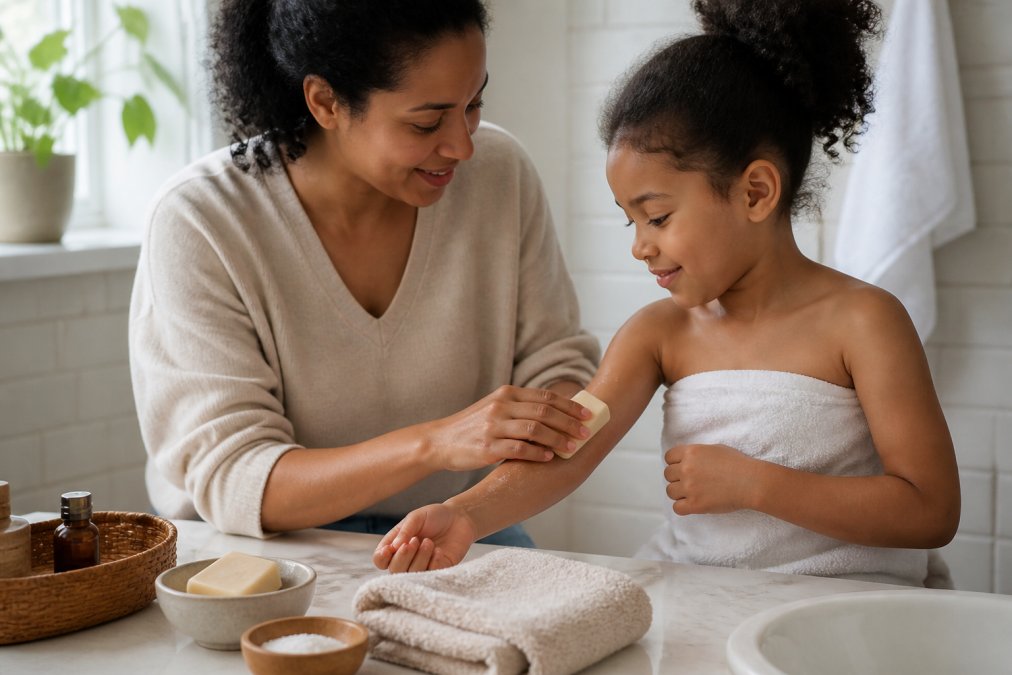
Use lukewarm water, not hot. Hot water strips lipids from the skin barrier and worsens transepidermal water loss. Choose a fragrance-free, non-soap cleanser or a cold-processed bar formulated for sensitive skin. Avoid anything with sulfates (sodium lauryl sulfate, sodium laureth sulfate) or essential oils. Pat dry with a soft towel, don't rub.

Step 2, Moisturize within three minutes.
This is the single biggest routine change most people miss. Applying moisturizer to damp skin traps water before it evaporates. Look for a formula that combines all three moisturizer categories:
- Humectants (glycerin, hyaluronic acid) pull water into the skin
- Emollients (shea butter, squalane) soften and smooth the surface
- Occlusives and ceramides (petrolatum, ceramide NP) seal moisture in and rebuild barrier lipids
A thick cream or ointment generally outperforms a lotion for eczema-prone skin, because it holds the barrier longer. Reapply after every hand wash and any time skin feels tight.
Step 3, Protect the barrier between washes.
Keep showers under 10 minutes. Use a fragrance-free laundry detergent and skip fabric softener, which leaves fragrance residue on clothing that contacts skin all day. Wear soft, breathable fabrics, cotton over wool. In dry indoor air, a humidifier can reduce the frequency of flare-ups.
What to leave out.
Skip toners, essences, serums, exfoliants, and anything with "anti-aging" actives until the skin is stable. Retinoids, alpha-hydroxy acids, and vitamin C can all provoke flares on compromised skin. Introduce one new product at a time, and wait at least a week before adding another.
Patch testing is non-negotiable.
Apply a small amount to the inner forearm and wait 48 hours before using it on a flare-prone area.
Once a routine is working, resist the urge to add a new product. For chronic eczema, consistency beats variety every time.
Medical-Grade vs. Drugstore Options: What You're Paying For
Drugstore options can work, but you're often paying for fragrance, filler, and packaging instead of the ingredients that help.
Frequently Asked Questions
What is the best skincare for eczema-prone skin?
The best skincare for eczema-prone skin is fragrance-free, hypoallergenic, and designed to support skin barrier function. Look for products accepted by the National Eczema Association and clinically tested for sensitive skin. A gentle cleanser like the SheaX Honey Fragrance Free Bar Soap paired with a fragrance-free moisturizer helps reduce flare-ups. Avoid products containing synthetic fragrance, essential oils, and harsh sulfates, which can trigger irritation and increase transepidermal water loss.
What skincare ingredients should I avoid with eczema?
Avoid synthetic fragrance, essential oils, masking agents, parabens, sulfates, and alcohol-based formulas. These ingredients can disrupt skin barrier function and trigger contact dermatitis. Also watch for botanical extracts that contain natural allergens. Check labels for terms like 'parfum' and 'fragrance,' which often hide multiple irritants. Patch testing new products on a small area before full use helps identify reactions early.
What is the difference between fragrance-free and unscented?
Fragrance-free means no fragrance has been added to the product. Unscented means a product may contain masking agents to neutralize the scent of other ingredients, but those masking agents can still trigger irritation. For eczema-prone skin, fragrance-free is the safer choice. Always read the full ingredient list rather than relying on front-of-label claims, since 'unscented' does not guarantee the absence of fragrance chemicals.
Can natural oils trigger eczema flare-ups?
Yes. Essential oils like lavender, citrus, and peppermint contain natural allergens that can trigger contact dermatitis and worsen eczema flare-ups. Even botanical extracts marketed as soothing may cause reactions in dermatitis-prone skin. Cold-processed shea butter, however, is generally well tolerated because it is rich in emollients and ceramides that support skin hydration without added fragrance. Always patch test any new oil before applying it to larger areas.
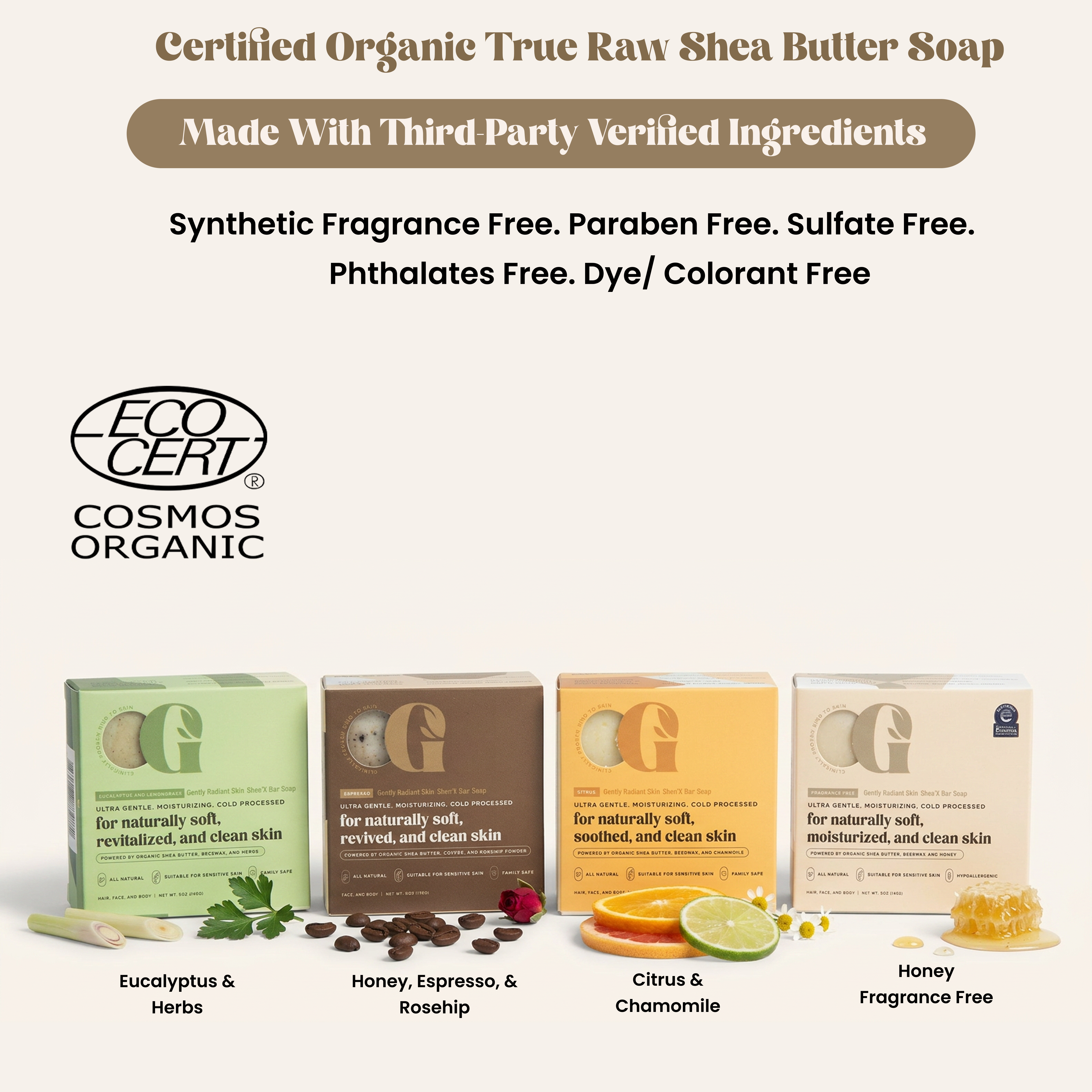
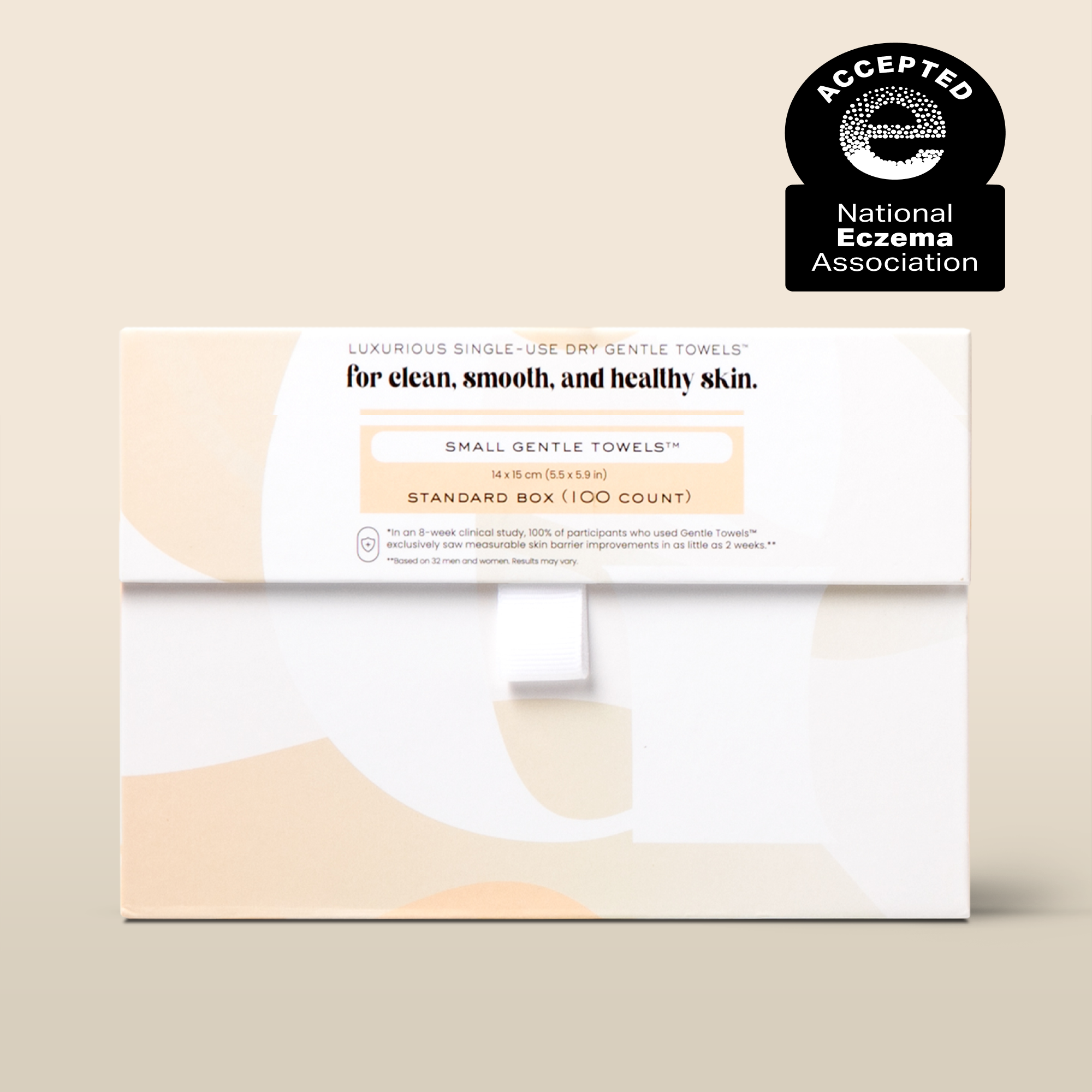
Managing eczema-prone skin means committing to a routine built on fragrance-free skincare, patience, and consistency. Gently Radiant Skin makes that easier with cold-processed organic shea butter soaps and clinically tested facial towels, all dermatologist and pediatrician approved, accepted by the National Eczema Association, and made with certified organic ingredients. Get started with Gently Radiant Skin and give your skin the gentle, barrier-supporting care it needs.