


Benefits of Cold Processed Shea Soap for Skin
Table of Contents
- What Is Cold Processed Shea Soap?
- Cold Process Soap vs Melt and Pour: What's the Difference?
- Skin Benefits of Shea Butter for Skin
- Why Cold Processed Shea Soap Is the Best Organic Soap for Sensitive Skin
- Superfatting, Lather Quality, and the Fatty Acid Profile
- Sustainability and Sourcing in Shea Soap Production
- Frequently Asked Questions
Last Updated: September 16, 2026
What Is Cold Processed Shea Soap?
Cold processed shea soap is a bar soap made by mixing oils, including shea butter, with lye at low temperatures, allowing saponification to occur slowly without external heat. This method preserves the natural glycerin and unsaponifiables that give shea soap its gentle, moisturizing character. This guide breaks down what sets cold processed shea soap apart from mass-market bars, and why it matters for reactive, sensitive, and eczema-prone skin.

The difference starts with what stays in the bar. Commercial soap makers often extract glycerin to sell separately, leaving a bar that cleans well but strips the skin. Cold process soap makers leave it in. Shea butter also brings a fatty acid profile rich in stearic and oleic acids, which translates to a harder bar and a creamier lather.
How Saponification Works
Saponification is the chemical reaction between a fat (triglycerides) and a base (sodium hydroxide) that produces soap and glycerin. In cold process soap making, this reaction happens over 24 to 48 hours in an insulated mold, then the bars cure for four to six weeks.
That curing window matters more than most beginners expect. As water evaporates, the bar hardens, the pH drops toward skin-friendly levels, and the lather improves. Skip the cure and you get a soft, short-lived bar that can feel harsh. The FDA's guidance on cosmetic versus soap labeling is worth reading if you plan to sell, because the legal definition of "soap" depends on how the product is made and marketed.
Cold Process Soap vs Melt and Pour: What's the Difference?
The core difference is that cold process soap is made from scratch, while melt and pour soap is a pre-made base that you remelt and reshape. Melt and pour is faster, safer for beginners, and doesn't require handling lye. Cold process takes weeks, but you control every ingredient and the final bar tends to be gentler.
Here's how the two compare in practice:
| Factor | Cold Process | Melt and Pour |
|---|---|---|
| Time to make | 1-2 hours + 4-6 week cure | 30 minutes |
| Lye handling | Required | Not required |
| Glycerin content | Naturally retained | Varies by base |
| Ingredient control | Full | Limited to base |
| Best for | Sensitive skin, custom formulas | Gifts, beginners, quick batches |
For anyone dealing with reactive skin, cold process wins on ingredient control alone. You know exactly what goes in, including the quality of the shea butter.
Skin Benefits of Shea Butter for Skin
Shea butter earns its place in a cold process bar for reasons that are specific to its chemistry, not just because it sounds luxurious on a label. Roughly 3 to 11 percent of shea butter by weight is unsaponifiable matter, the fraction that lye cannot turn into soap. That residue includes phytosterols, triterpene alcohols, vitamin E tocopherols, and a small amount of vitamin A. In a cold process bar, a meaningful share of that fraction stays intact in the finished soap and deposits on skin during washing. In a hot process or industrially boiled bar, much more of it is degraded or driven off by sustained heat.
That is the mechanism behind the three benefits people actually notice:
- Emolliency without heaviness. Shea's stearic and oleic acids form a soft, occlusive film that slows water loss without the greasy drag of heavier butters like cocoa at high percentages.
- Barrier support. The phytosterols in the unsaponifiable fraction are the same class of compounds studied for supporting the skin's lipid barrier, which is why shea-heavy bars tend to feel less tight after rinsing than coconut-dominant ones.
- Mild anti-inflammatory and antioxidant activity. Vitamins A and E and the triterpene alcohols are the source. The effect is modest and cumulative, not a treatment.
Moisture Barrier Support and Transepidermal Water Loss
Transepidermal water loss is the passive evaporation of water through the skin's surface, measured in grams per square meter per hour. When the barrier is compromised, that number climbs and skin feels tight, itchy, and reactive within minutes of toweling off. Emollients like shea butter help by reinforcing the lipid layer so water stays where it belongs.
This is where a gentle cleanser earns its place. If your soap strips lipids every time you wash, you are fighting your own routine.
Anti-Inflammatory and Antioxidant Properties
Shea butter contains vitamins A and E, both of which support skin repair and help neutralize free radicals. The anti-inflammatory effect is mild but real, which is why shea-based products are common in formulas for dry, irritated, or eczema-prone skin.
Why Cold Processed Shea Soap Is the Best Organic Soap for Sensitive Skin
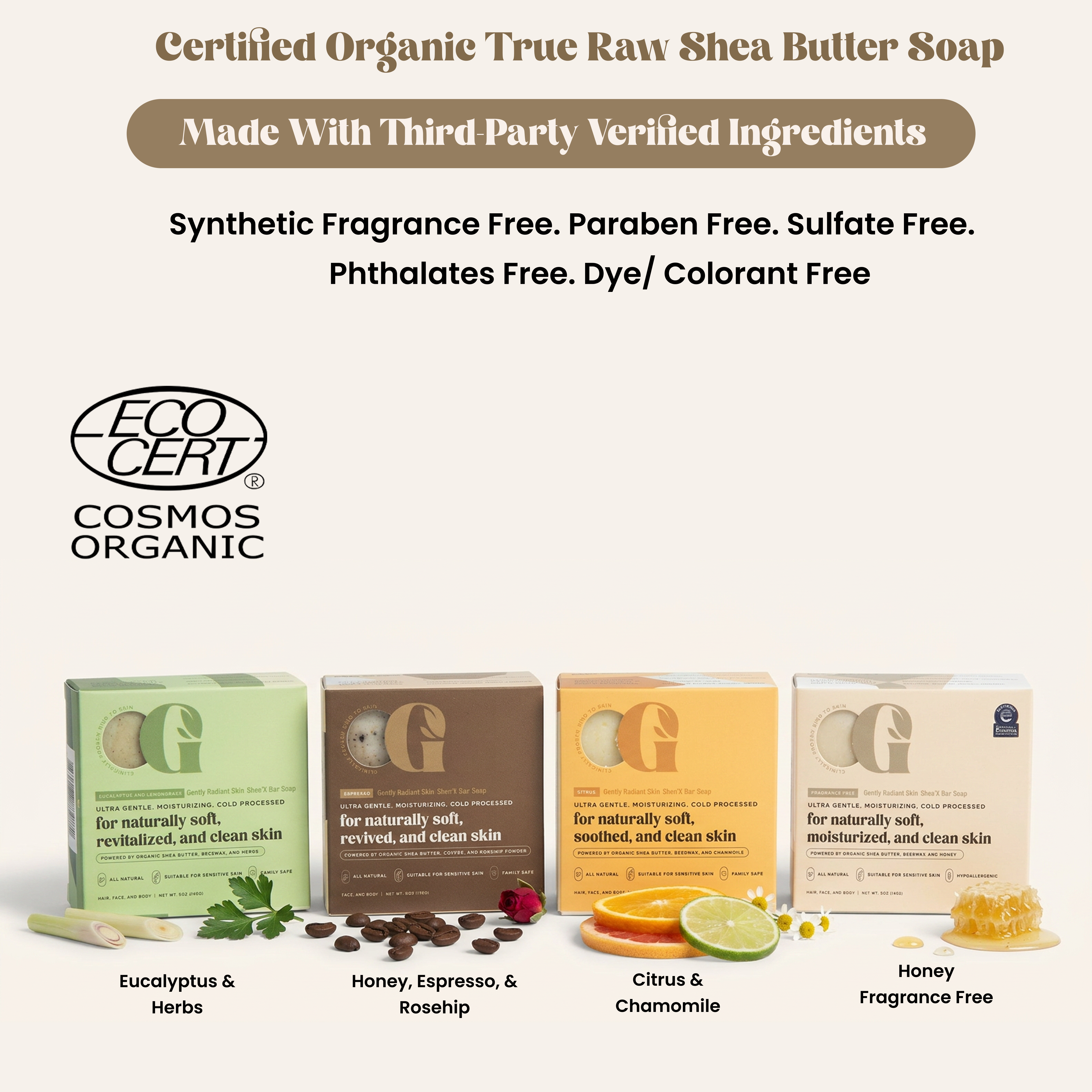
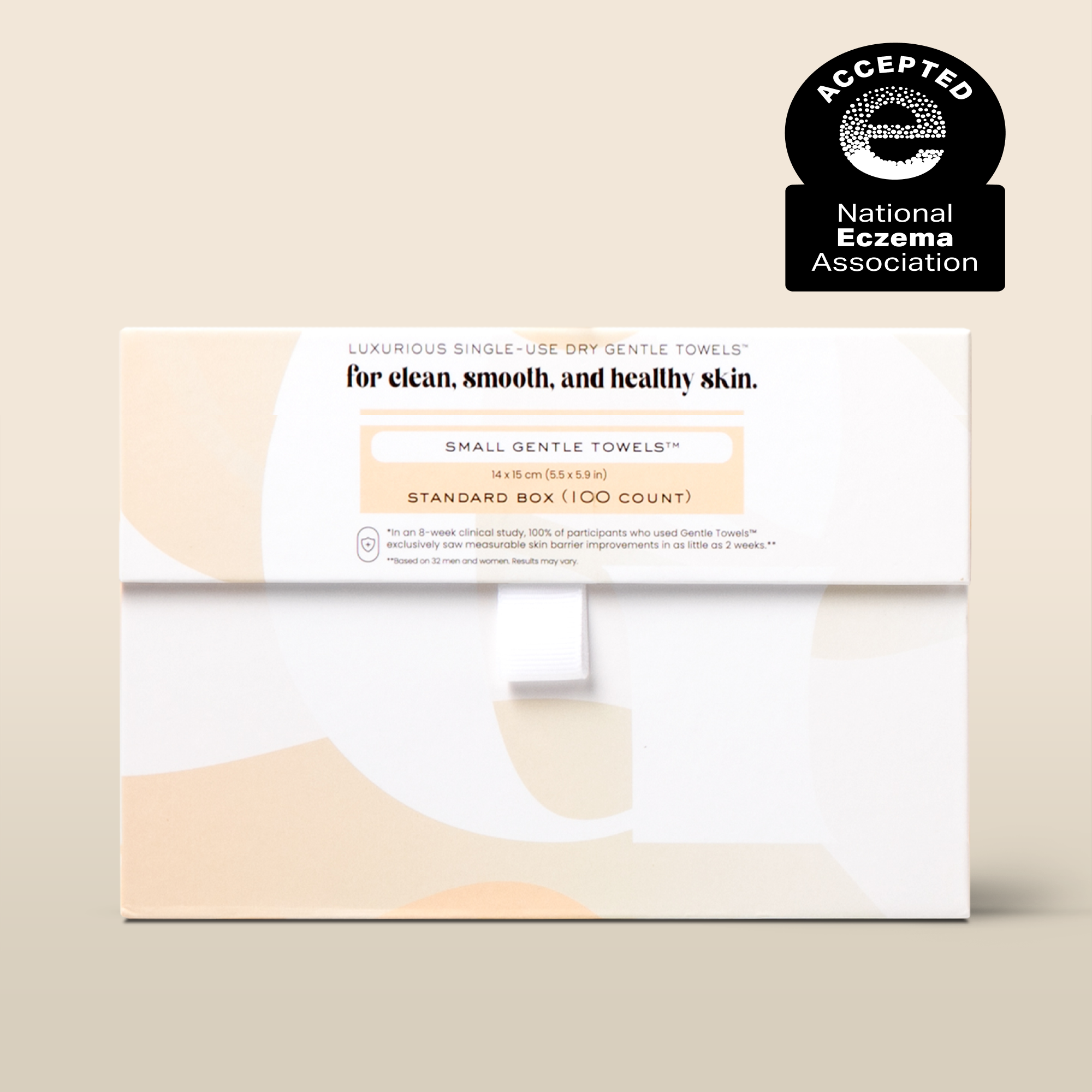
For families managing both eczema and acne-prone skin, one well-formulated bar can usually serve everyone. The catch is fragrance. If anyone in the house has reactive skin, start with a fragrance-free option and introduce scented bars one at a time. Gently Radiant Skin's SheaX Honey Fragrance Free Bar is accepted by the National Eczema Association, dermatologist and pediatrician approved, and certified organic.
Superfatting, Lather Quality, and the Fatty Acid Profile
Superfatting is the practice of adding more oils than the lye can fully saponify, leaving a percentage of free oil in the finished bar. Most cold process soap makers superfat between 5% and 8%.
The SAP Value Math Most Guides Skip
Every oil has a saponification value (SAP), the amount of sodium hydroxide, in milligrams, needed to saponify one gram of that oil. Shea butter's SAP sits around 0.128 for NaOH (roughly 0.179 for KOH). That is lower than coconut oil (about 0.190 NaOH) and close to olive oil (about 0.134 NaOH), which is why swapping shea in for coconut at the same weight requires less lye, not more.
Why Cold Process Beats Hot Process for Shea
Hot process soap forces saponification with sustained heat, often 150°F to 200°F for an hour or more. That heat accelerates the reaction but also degrades heat-sensitive unsaponifiables, the phytosterols and tocopherols that make shea worth using. Cold process lets the reaction run at ambient temperature over 24 to 48 hours, so more of that fraction survives into the cured bar.
Fatty Acid Profile and What It Does to the Bar
The fatty acid profile of your oil blend determines how the bar behaves:
- Stearic acid (shea, cocoa butter): hardness and a stable, creamy lather
- Oleic acid (olive, shea): conditioning, gentle cleansing
- Lauric and myristic acids (coconut, palm kernel): big bubbles and strong cleansing, but potentially drying
- Linoleic acid (sunflower, sweet almond): light conditioning, shorter shelf life
Troubleshooting Shea Soap
High-shea formulas have two predictable failure modes:
- Stearic spots. White, waxy flecks that appear in the finished bar. They happen when shea isn't fully melted or when the batch cools too fast in the mold. Fix: melt shea completely and keep your oils and lye within 10°F of each other.
- Seizing. Shea can accelerate trace when combined with certain fragrance oils or when soaped too hot. Fix: soap cooler (around 90°F to 100°F), add fragrance at light trace, and avoid floral or spice accords known to accelerate.
Sustainability and Sourcing in Shea Soap Production
Shea butter comes from the nuts of the shea tree, which grows wild across West Africa and is traditionally harvested and processed by women's cooperatives. Sourcing matters because the supply chain is long and opaque, and "natural" on a label says nothing about how the butter was produced. Look for certified organic and fair-trade sourcing.

Frequently Asked Questions
What are the primary skin benefits of cold processed shea soap?
Cold processed shea soap delivers lasting hydration through unsaponifiables like vitamin A and vitamin E, which survive the gentler cold process method. The fatty acids in shea butter, including stearic and oleic acid, support the moisture barrier and reduce transepidermal water loss. Superfatting leaves free oils in the bar for an emollient feel. Many users with sensitive or reactive skin find it non-comedogenic and calming for eczema-prone areas.
Is cold processed shea soap suitable for reactive or sensitive skin?
Yes, when formulated without fragrance and with a balanced pH. Cold process soap retains natural glycerin, which draws moisture to the skin instead of stripping it. The anti-inflammatory properties of shea butter help calm redness. Look for bars accepted by the National Eczema Association and clinically tested for sensitive skin, such as the SheaX Honey Fragrance Free Bar Soap, which is dermatologist and pediatrician approved.
How does cold processed soap differ from mass-produced commercial bars?
Mass-produced bars often use heat-intensive methods that remove glycerin, then add synthetic detergents and fragrances. Cold process soap undergoes saponification at lower temperatures, preserving shea butter's vitamin A, vitamin E, and unsaponifiables. The result is a hard bar with lotion-like lather that cleanses without disrupting the skin barrier. Cold process bars also require a curing time of 4-6 weeks for a milder, longer-lasting soap.
Can I use shea butter in cold process soap, and if so, how much?
Shea butter is a popular cold process soap ingredient, typically used at 5-20% of the total oil weight. Higher percentages increase the emollient and hardness of the bar but can reduce lather density if not balanced with oils like coconut or castor. A common formulation uses 10% shea butter for a hard bar with creamy lather. Always run a saponification calculator to determine the correct lye amount based on the SAP value of each oil.