


Does Shea Butter Help Sensitive Skin? A 2026 Guide
Table of Contents
- What Makes Shea Butter Different From Other Moisturizers
- How Shea Butter Calms Redness, Eczema, and Irritation
- Is Shea Butter Non-Comedogenic? What Acne-Prone Skin Needs to Know
- Shea Butter for Skin Barrier Repair: How Fast It Works
- How to Choose Organic Soap for Sensitive Skin
- Patch Testing and Spotting a Shea Butter Allergy
- Frequently Asked Questions
Last Updated: September 14, 2026
What Makes Shea Butter Different From Other Moisturizers
Does shea butter help sensitive skin? Yes, for most people it does, because shea butter is an emollient rich in fatty acids that softens skin and supports the skin barrier without the perfumes and preservatives that trigger reactions in sensitive skin. This guide from Gently Radiant Skin explains when it works, when it does not, and how to test it safely.
Shea butter is a fat extracted from the nuts of the African shea tree, used topically as a moisturizer and cleanser ingredient. Unlike water-based lotions that evaporate quickly, shea butter stays on the surface and slows transepidermal water loss, the process by which moisture escapes through the skin.
Fatty Acids, Vitamins, and the Emollient Effect
The fatty acid profile is what sets shea butter apart. It contains oleic acid, which absorbs readily, alongside linoleic acid, which supports the lipid barrier. It also carries vitamin A, vitamin E, and antioxidant compounds that help calm oxidative stress on the skin.
That combination makes shea butter an occlusive and emollient ingredient at once. It seals in hydration while softening rough texture, which is why many people with dry or reactive skin find it more comfortable than lightweight lotions.
A common mistake is assuming all shea butter products behave the same way. Cold-processed, unrefined shea butter retains more of its natural fatty acids and vitamins than heavily refined versions, so the formulation matters as much as the ingredient.
How Shea Butter Calms Redness, Eczema, and Irritation
Shea butter helps calm redness and irritation because its anti-inflammatory compounds can reduce the cytokine response that drives visible inflammation. For people managing eczema or dermatitis, that means less itch and less reactivity when the skin is already compromised.
The mechanism is straightforward. When the skin barrier is damaged, irritants penetrate more easily and trigger immune signaling. An emollient layer of shea butter reduces that penetration while the fatty acids help rebuild the lipid barrier.
Many dermatologists recommend fragrance-free, dye-free moisturizers as part of an eczema routine, and shea butter fits that profile when it is not heavily scented. The National Eczema Association guidance on moisturizers notes that keeping skin hydrated is a core part of managing flare-prone skin.
Is Shea Butter Non-Comedogenic? What Acne-Prone Skin Needs to Know
Shea butter sits low on the comedogenic scale, most published ratings place it around 0 to 2 on a 0-to-5 scale, where 0 means "will not clog pores" and 5 means "highly likely to." That is a genuinely favorable number. But "low" is not "zero," and for sensitive skin that is also acne-prone, the difference between a 0 and a 2 is the difference between a product that calms your skin and one that trades irritation for congestion.
The reason shea butter is not rated 0 comes down to its fatty acid ratio. Shea is roughly 40 to 55 percent oleic acid, a monounsaturated fat that is heavier and more occlusive, and about 3 to 9 percent linoleic acid, which is lighter and supports the barrier. Oleic acid is the same fatty acid that makes olive oil and coconut oil feel rich, and it is also the one most often linked to congestion in acne-prone skin. Linoleic acid does the opposite: it is the fatty acid that acne-prone skin tends to be deficient in, and it helps keep sebum flowing rather than plugging. Shea's ratio leans oleic, which is why it lands at 0 to 2 rather than 0.
Three variables move that number up or down in real life:
- Concentration. A cleanser with shea butter as the fourth or fifth ingredient rinses off before it can sit in a pore. A leave-on balm that is 100 percent shea butter is a different product entirely. The comedogenic rating applies to the raw ingredient, not to every formulation that contains it.
- Carrier and occlusives. Shea butter combined with coconut oil, cocoa butter, or heavy waxes pushes the finished product toward the higher end of the scale. Shea butter combined with jojoba, squalane, or a lightweight gel base keeps it lower.
- Your own sebum profile. Oily, acne-prone skin produces more sebum, so an occlusive layer has more to trap. Dry, reactive skin produces less, so the same balm rarely causes congestion.
| Skin Type | Comedogenic Risk | Best Approach |
|---|---|---|
| Dry, reactive | Low | Leave-on shea butter is usually well tolerated |
| Normal | Low | Daily use is fine |
| Oily | Moderate | Use in cleansing, not as a leave-on |
| Acne-prone | Moderate to high | Patch test on the jawline first; avoid heavy balms |
If you are acne-prone, the practical move is to start with shea in a rinse-off cleanser rather than a leave-on cream, and to test on the jawline, not the cheek or forehead, for three to five nights before committing to full-face use. The jawline is where hormonal acne most often appears, so it is the most honest test site you have.
Shea Butter for Skin Barrier Repair: How Fast It Works
Skin barrier repair with shea butter typically shows visible improvement within one to two weeks of consistent use, though full barrier recovery takes longer. The fatty acids and vitamins support the lipid barrier, and the occlusive layer reduces moisture loss while the skin rebuilds.
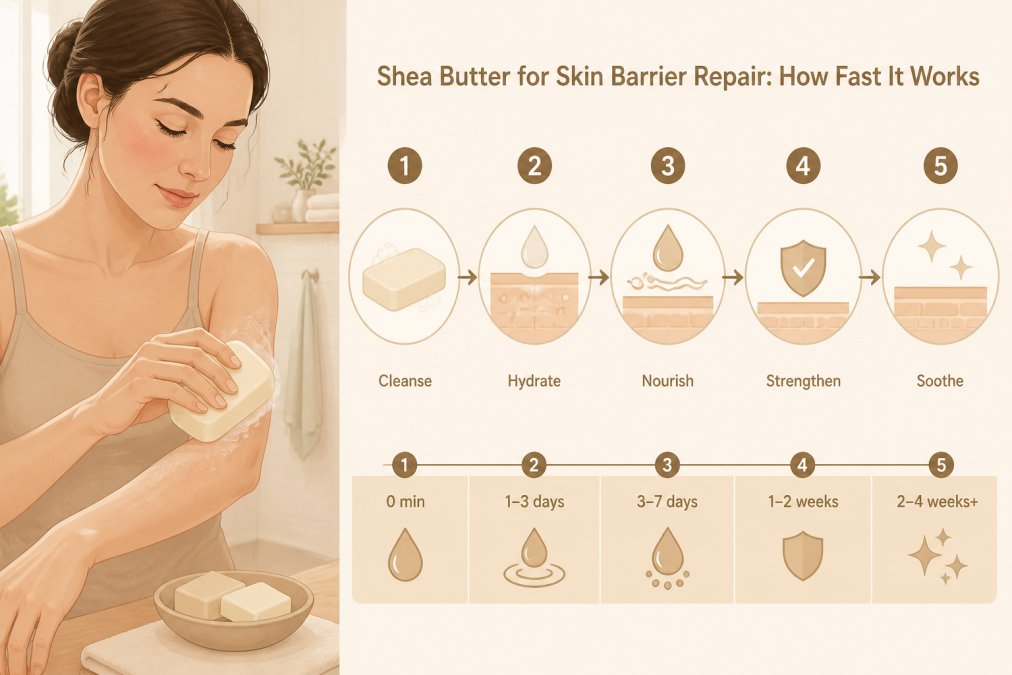
Consistency matters more than concentration. Applying a gentle shea butter cleanser daily and following with a fragrance-free moisturizer produces steadier results than occasional heavy application.
In practice, this means swapping harsh surfactants for a cold-process bar, then giving your skin two weeks before judging results. Most people who react badly to shea butter are reacting to added fragrance or preservatives, not the butter itself.
How to Choose Organic Soap for Sensitive Skin
Choosing organic soap for sensitive skin comes down to four checks: a short ingredient list, no synthetic fragrance, certified organic shea butter, and third-party testing for sensitive skin. Skip anything with essential oil blends marketed as "natural" if your skin is reactive.
Here is the checklist I use:
- Shea butter appears in the first three ingredients
- No "fragrance" or "parfum" on the label
- Certified organic or USDA Bio-based ingredients
- Dermatologist or pediatrician tested
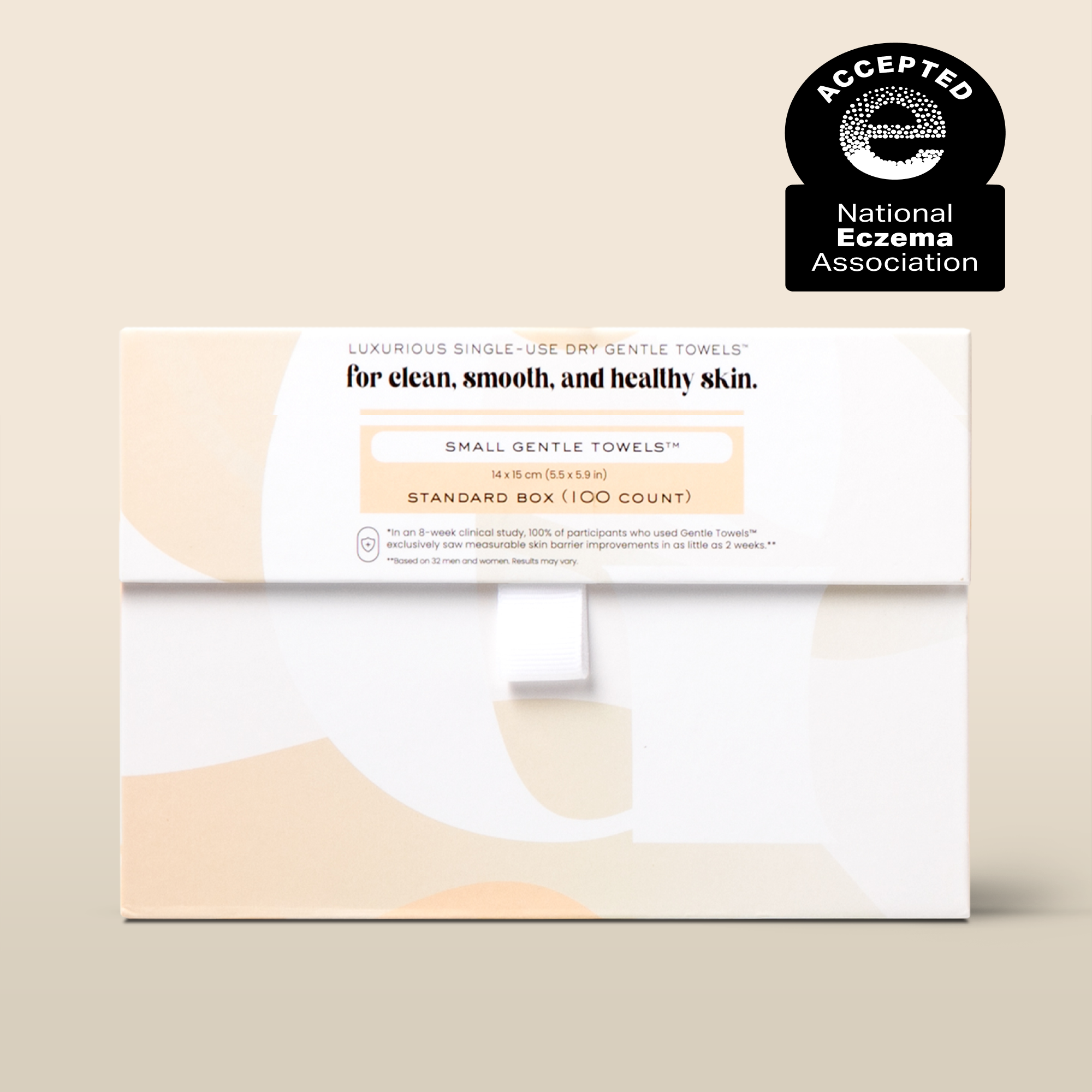
- Accepted by the National Eczema Association where relevant
- Cold-process rather than mass-produced
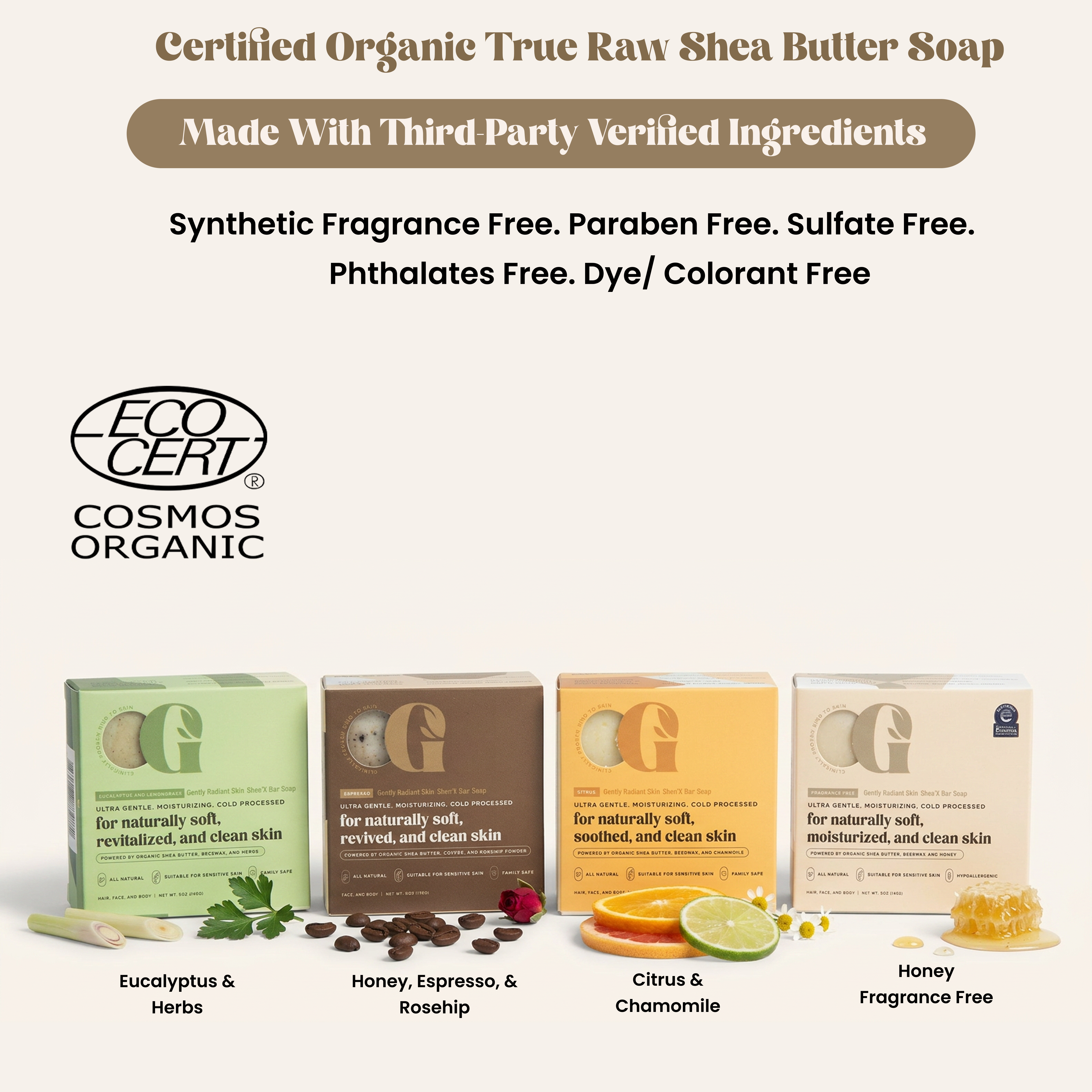
Gently Radiant Skin's SheaX bars are built around exactly this standard: cold-process unrefined raw shea butter, certified organic ingredients, and formulas accepted by the National Eczema Association. The USDA BioPreferred program explains what Bio-based certification actually verifies, which is a useful filter when comparing labels.
Patch Testing and Spotting a Shea Butter Allergy
A true shea butter allergy is uncommon, but it is real, and it usually shows up as contact dermatitis, localized redness, itching, small bumps, or a burning sensation, rather than a systemic reaction. The tricky part for sensitive skin is that a mild reaction and a normal adjustment period can look similar for the first day or two. Patch testing is how you tell them apart before you commit your whole face.
The Patch Test Protocol
- Pick the right site. The inner forearm is the standard test area because the skin there is thin, relatively protected from friction, and easy to photograph or check in a mirror. If you have ever reacted to a product on your face but not your arm, repeat the test on the side of your jaw or behind your ear, those areas are closer in sensitivity to facial skin.
- Wash and dry the area. No lotion, no sunscreen, no other product on the test spot for at least an hour beforehand. You want a clean baseline.
- Apply a small, measured amount. A pea-sized amount, roughly the size of a pencil eraser, is enough. Rub it in gently. Do not cover it with a bandage unless you are specifically testing for a delayed reaction under occlusion.
- Wait 24 hours. Check the spot in natural light. Look for redness, swelling, itching, or a raised, bumpy texture. A faint pink flush that fades within an hour is usually just friction from rubbing, not a reaction.
- Repeat for two more days. Reapply to the same spot each morning and check each evening. Many contact reactions are delayed, they show up on day two or three, not day one. A product that passes a single 24-hour test can still fail on day three.
- Stop at the first sign of a reaction. Persistent redness, burning, hives, or swelling means stop. Wash the area with cool water and a gentle, fragrance-free cleanser. If the reaction spreads or does not fade within a few days, contact a healthcare provider.
What a Reaction Actually Looks Like
A positive patch test is not just "my skin felt a little warm." It is visible: a defined patch of redness that matches where you applied the product, sometimes with small bumps or a raised border. Itching that persists after you wash the area off is another signal. A negative test looks like nothing, the skin returns to its normal color and texture within an hour of application.
Shea Butter and Tree Nut Allergy
Shea butter is derived from the nut of the shea tree, so people with a known tree nut allergy are often told to be cautious. In practice, shea butter is not a true nut, botanically it is a fruit seed, and most published guidance notes that reactions in tree-nut-allergic individuals are rare. That said, "rare" is not "never." If you carry an epinephrine auto-injector for a tree nut allergy, talk to your allergist before patch testing shea butter at home, and do not test it on your face first.
What Most People Are Actually Reacting To
When someone reacts badly to a shea butter product, the culprit is usually not the shea. It is more often one of these:
- Added fragrance or "parfum", the single most common trigger in leave-on products.
- Essential oils marketed as natural, especially citrus, lavender, and peppermint.
- Preservatives such as methylisothiazolinone or formaldehyde releasers in water-based formulas.
- Masking fragrances hidden in products labeled "unscented."
That is why a patch test on a raw, unrefined shea butter is not the same as a patch test on a finished product. If you want to know whether shea itself is the problem, test the raw butter first, then test the finished product separately. If the raw butter passes and the finished product fails, the shea is not your trigger.
The American Academy of Dermatology's guidance on patch testing recommends testing any new product on a small area first, especially for reactive skin. If you want a starting point that is already formulated for sensitive skin, the 5oz SheaX™ Honey Fragrance Free Bar Soap is fragrance-free, dermatologist and pediatrician approved, and designed to cleanse without stripping the barrier.

Frequently Asked Questions
Is shea butter safe for extremely sensitive skin?
Yes, for most people. Shea butter is an emollient rich in oleic and linoleic acid that supports the lipid barrier without stripping it. It is generally well tolerated because it contains no synthetic fragrance or preservatives on its own. However, extremely reactive skin should still patch test first. Apply a small amount to the inner forearm and wait 24 to 48 hours. If you see redness, itching, or swelling, stop using it. Look for unrefined, fragrance-free products accepted by the National Eczema Association.
Can shea butter cause breakouts on sensitive skin?
Shea butter has a comedogenic rating around 0 to 2, which means it is unlikely to clog pores for most people. The higher oleic acid content can feel heavy on very oily or acne-prone skin, so use it sparingly on the face. If you are prone to breakouts, choose a non-comedogenic, fragrance-free shea butter soap and avoid layering it with heavy oils. Watch for congestion along the jawline and hairline, and scale back if you notice it.
Does shea butter help with eczema and redness?
Shea butter can reduce redness and soothe eczema flare-ups by restoring moisture and calming inflammation. Its anti-inflammatory compounds may help quiet cytokine activity that drives irritation. It also slows transepidermal water loss, which keeps the skin barrier from cracking. Many people with eczema use it as part of a gentle routine. For children with eczema, a fragrance-free, dermatologist-approved shea butter bar is a practical starting point, but always patch test and consult a pediatrician if symptoms persist.
How do you know if you are allergic to shea butter?
A true shea butter allergy is rare, but it can happen. Signs include itching, hives, swelling, or a rash that appears within minutes to hours of application. To check, do a patch test: apply a small amount to your inner forearm, cover it, and wait 48 hours. If you react, stop using the product. If you have a known tree nut allergy, talk to your doctor before trying shea butter. Most reactions are irritation from added fragrance or preservatives, not the shea itself.