


How to Clean Skin Without Irritation: 7 Gentle Steps
Table of Contents
- Why Your Skin Stings, Tightens, or Flares After Washing
- Signs of a Damaged Skin Barrier (And What Causes It)
- How to Remove Makeup Without Scrubbing
- Build a Gentle Face Cleansing Routine That Works
- Water Temperature, Hard Water, and pH Balance: The Variables Most People Ignore
- Ingredients to Avoid and Ingredients That Help Sensitive Skin
- Common Mistakes That Cause Irritation (and How to Fix Them)
- Frequently Asked Questions
Last Updated: September 25, 2026
Why Your Skin Stings, Tightens, or Flares After Washing
If your face feels tight, hot, or itchy minutes after cleansing, the problem is usually the wash itself, not your skin, and the goal of clean skin without irritation starts with fixing the wash. That stinging sensation is a signal that your skin barrier has been stripped. Learning how to clean skin without irritation starts with understanding why your current routine backfires.
Here is what happens during a harsh wash:
- Cleansers lift dirt and oil, but strong ones also lift the lipids holding your barrier together.
- Water evaporates faster from damaged skin, a process called trans-epidermal water loss.
- Irritants like fragrance and alcohol slip through the gaps, causing redness and inflammation.
Signs of a Damaged Skin Barrier (And What Causes It)
A damaged moisture barrier announces itself in predictable ways. If two or more of these sound familiar, your cleansing routine needs a reset:
- Tightness right after washing, even before your face dries
- Redness or blotchiness on the cheeks and nose
- Stinging when you apply moisturizer or sunscreen
- Dryness and flaking that lotion cannot fix
- Reactive skin that flares at new products it once tolerated
How to Remove Makeup Without Scrubbing
Rubbing is the most underrated cause of cleansing irritation. When you drag a pad or cloth across the skin, you create friction, and friction does two things: it tugs at the fragile cells of the stratum corneum and it stretches the skin around the eyes and lips, where the barrier is thinnest. Pigment and grit get pushed sideways into pores instead of lifted off.
Step-by-Step: Dissolve, Wipe, Rinse
- Dissolve. Press a micellar water-soaked pad against your closed eye or lip for 10 seconds. Let the surfactant load in the micelles break the makeup's bond with skin. Do not sweep yet.
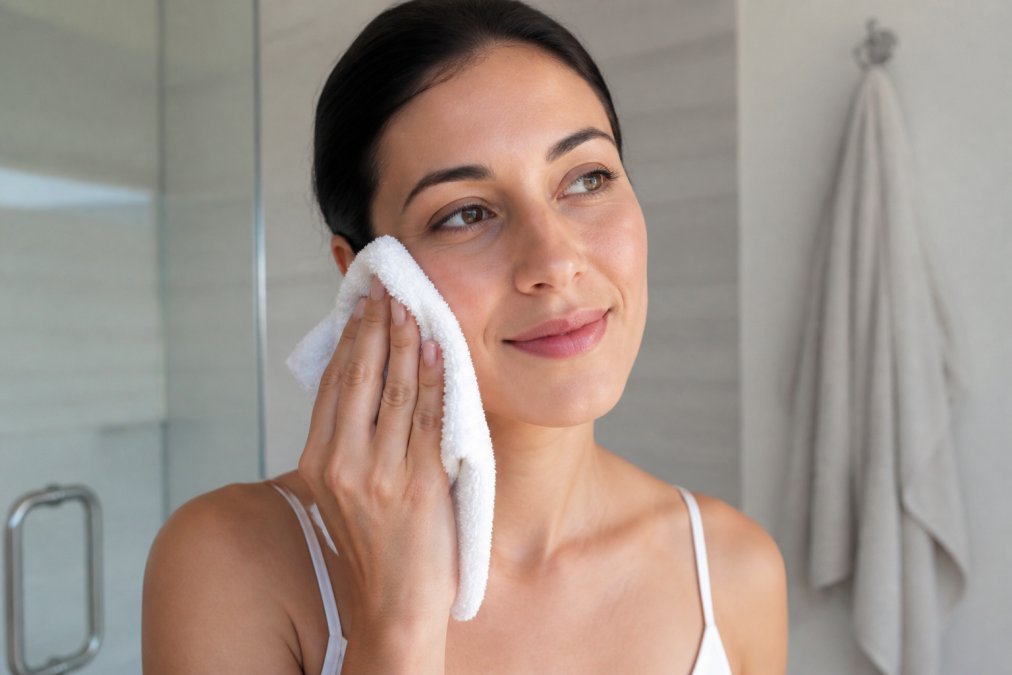
- Wipe. Use a soft, damp facial towel and sweep downward once, following the direction of hair growth. Fold to a clean side for each pass. One pass per surface, no back-and-forth.
- Rinse. Splash with lukewarm water to remove residue. Pat dry with a clean towel, never rub.
Why Water Temperature Matters More Than You Think
Most guides tell you to use warm water and move on. The specific range matters. Hot water (above roughly 104°F) dissolves the intercellular lipids that hold your barrier together and triggers the tight, hot feeling that shows up minutes after washing. Lukewarm water, roughly 86-95°F, lifts oil and residue without stripping the acid mantle.
Hard Water: The Variable Most Routines Ignore
If your tap leaves spots on glass or a white ring in a drying glass, you have hard water, water high in calcium and magnesium. Those minerals react with the fatty acids in soap and cleanser to form a waxy residue that sits on skin, feels filmy, and interferes with the barrier's ability to hold water. People with hard water often report irritation that no gentle cleanser seems to fix.
Options, in order of effort:
- Final rinse with filtered or distilled water. Cheap, immediate, and often enough to calm irritation.
- Showerhead or faucet filter. Reduces mineral load but does not eliminate it; replace cartridges on schedule.
- Chelating or low-pH cleansers. Formulated to tolerate mineral content better than traditional bar soap.
Post-Cleanse Drying: Air, Pat, or Towel?
How you dry matters as much as how you wash. Three approaches, ranked by friction:

- Air dry. Zero friction, but water evaporates off the skin and can pull moisture with it, leaving skin tighter. If you air dry, apply moisturizer within about 60 seconds while skin is still slightly damp.
- Pat with a soft, clean towel. The practical default. Press the towel against skin, do not drag. Use a fresh section each time.
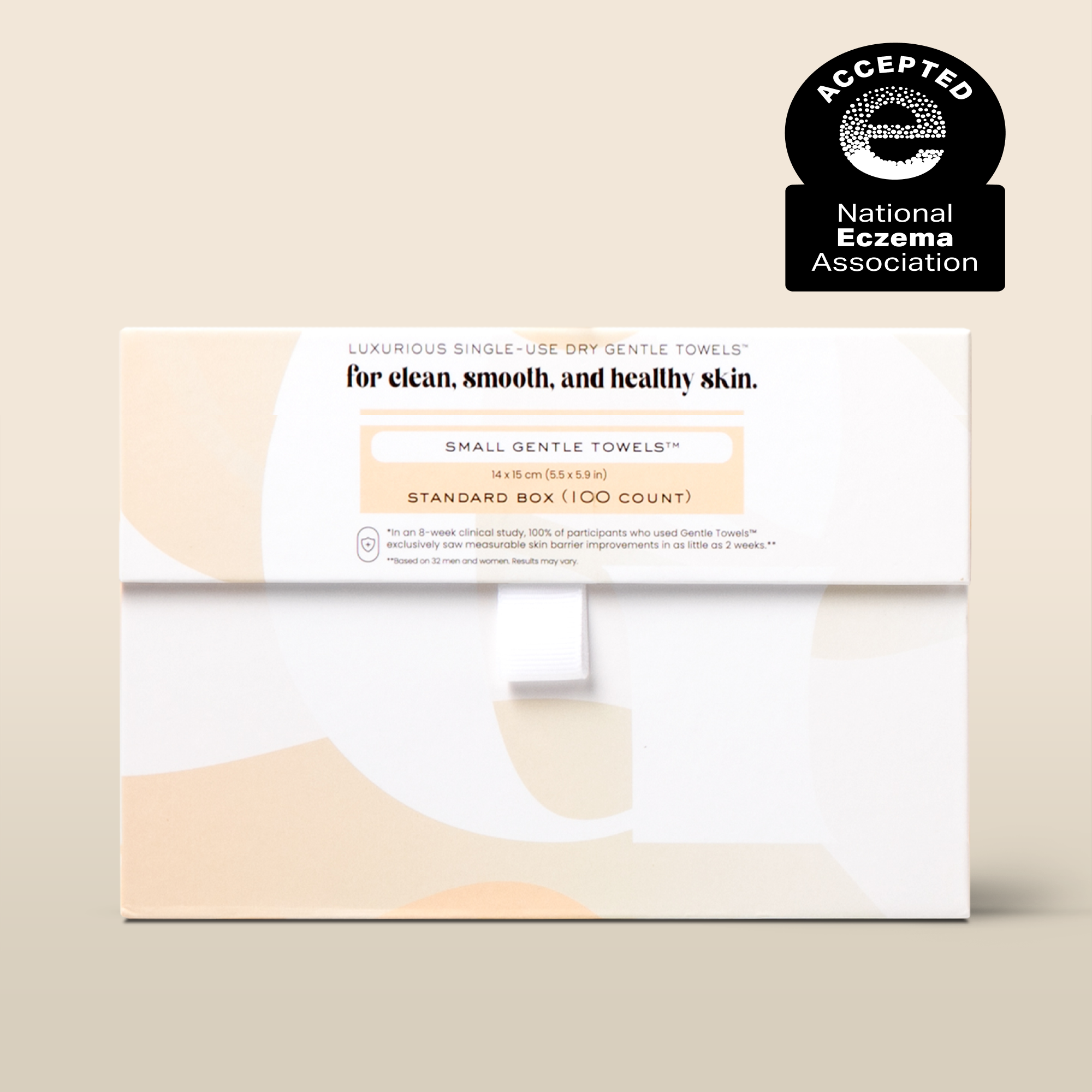
- Microfiber or single-use cloths. Lowest lint and lowest drag of the towel options. Good for reactive or acne-prone skin where reusing a damp towel can reintroduce bacteria.
Build a Gentle Face Cleansing Routine That Works
A gentle face cleansing routine is short, consistent, and boring in the best way. Most people need two steps: a mild cleanser and a soft towel. That is it.
Morning vs. Evening: How Often to Wash
Wash twice a day at most. Morning cleansing removes overnight oil; evening cleansing removes sunscreen, makeup, and grime. If your skin is very dry or reactive, rinse with water in the morning and save the cleanser for night.
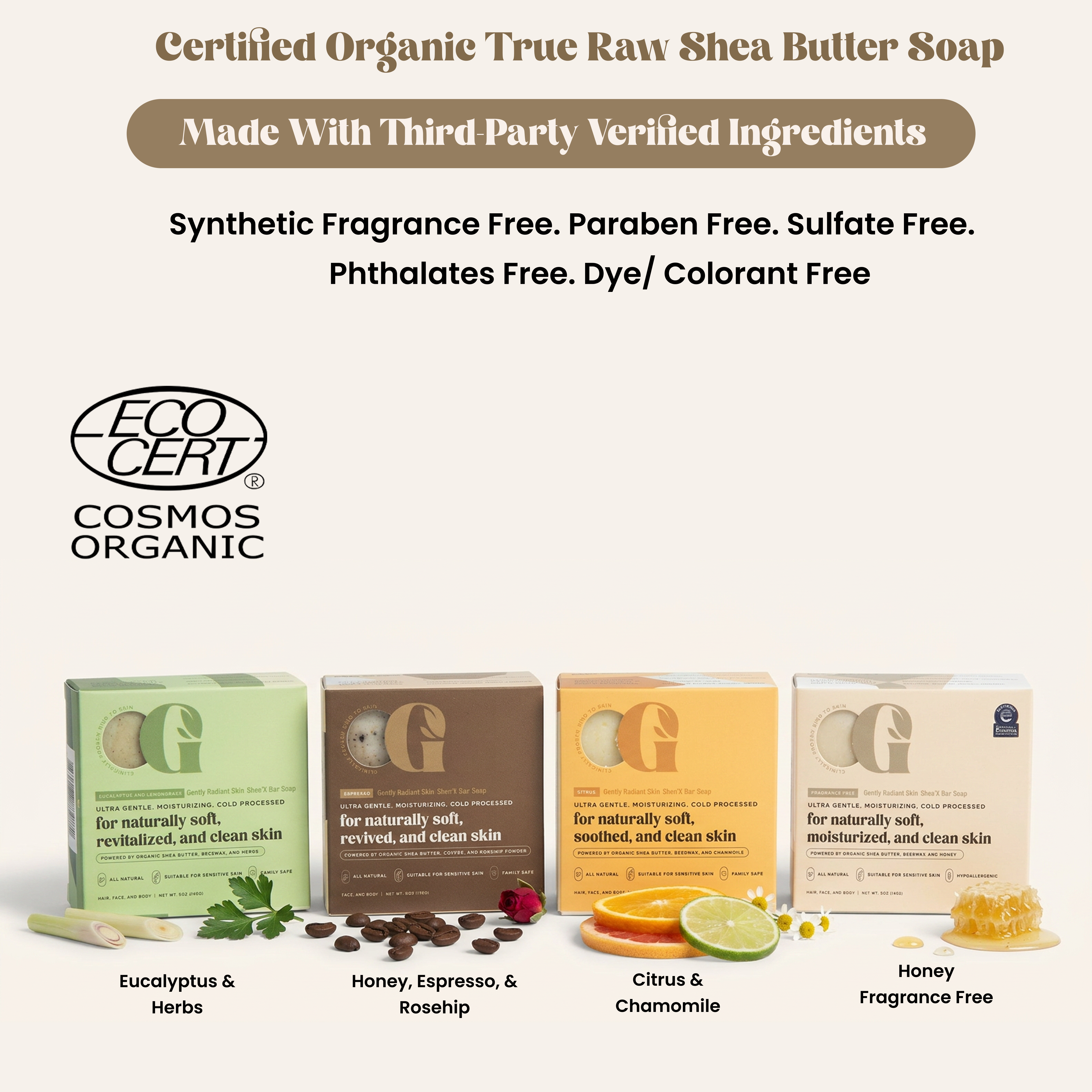
5oz SheaX™ Honey Fragrance Free Bar Soap →
Keep it simple:
- Morning: lukewarm rinse or a tiny amount of mild cleanser
- Evening: gentle cleanser, then moisturizer within one minute
- Never wash more than twice daily, even after workouts if you can rinse instead
Water Temperature, Hard Water, and pH Balance: The Variables Most People Ignore
Water temperature and pH quietly decide whether your cleanser helps or hurts. Hot water strips lipids fast. Hard water leaves mineral residue that can leave skin feeling filmy and dry. And a cleanser that throws off your skin's natural pH leaves the acid mantle struggling to recover.
Three rules cover most of it:
- Temperature: Use lukewarm water, never hot. Hot water is the single fastest way to trigger tightness.
- Hard water: If your tap leaves spots on glass, it is hard. A filter or a final rinse with filtered water helps.
- pH: Choose pH-balanced cleansers near skin's natural acidity. True soaps run alkaline, so look for cold-process bars made with skin-friendly ingredients.
Ingredients to Avoid and Ingredients That Help Sensitive Skin
Reading the label is the fastest way to protect sensitive skin, but the label only helps if you understand what each ingredient class does to the barrier. Two lists matter: what to skip and what to seek. The third factor, pH, is what most guides leave out, and it is often the reason a "gentle" cleanser still stings.
What to Skip: Alcohol, Fragrance, Harsh Surfactants
- Drying alcohols like denatured alcohol, SD alcohol, and isopropyl alcohol. These evaporate fast and take skin lipids with them. Not all alcohols are drying, cetyl, stearyl, and cetearyl alcohol are fatty alcohols that actually soften skin. The drying ones are the short-chain, volatile types.
- Fragrance, including "parfum," "essential oil blend," and botanical extracts added for scent. Fragrance is one of the most common causes of contact reactions, and "natural" fragrance is not automatically safer.
- Harsh surfactants like sodium lauryl sulfate (SLS) and, to a lesser degree, sodium laureth sulfate (SLES). These foam heavily, which feels like cleaning but signals aggressive lipid stripping. Gentler alternatives include coco-glucoside, cocamidopropyl betaine, and sodium cocoyl isethionate.
- Physical scrubs with walnut shell, apricot kernel, or coarse polyethylene beads. These create micro-tears and are especially damaging on active breakouts or compromised barriers.
- High-pH true soaps. Traditional bar soap often sits around pH 9-10. Skin's natural pH is roughly 4.5-5.5. Washing with an alkaline product disrupts the acid mantle and can take hours for skin to recover.
What to Look For: Ceramides, Humectants, Emollients
- Ceramides (ceramide NP, ceramide AP, ceramide EOP). These are the fats that make up a large share of the lipid barrier. Cleansers and moisturizers that include them help replace what washing removes.
- Humectants like glycerin, hyaluronic acid, and panthenol. These pull water into the upper layers of skin. They work best when paired with an emollient or occlusive to seal that water in.
- Emollients like shea butter, squalane, and jojoba. These soften and smooth by filling the gaps between skin cells.
- Soothing agents like colloidal oatmeal, chamomile, allantoin, and centella asiatica. These calm visible redness and reduce the reactive feeling that follows a flare.
- Barrier-supporting lipids like cholesterol and fatty acids. Ceramides work best in a ratio with cholesterol and fatty acids, which is why balanced formulations outperform single-ingredient boosters.
A quick comparison of what each ingredient class does:
| Ingredient Type | Example | Job |
|---|---|---|
| Ceramides | Ceramide NP | Rebuild lipid barrier |
| Humectants | Glycerin | Draw in water |
| Emollients | Shea butter | Soften and seal |
| Soothing agents | Colloidal oatmeal | Calm inflammation |
| Fatty alcohols | Cetearyl alcohol | Emollient, non-drying |
Why pH Balance Matters for the Acid Mantle
The SheaX™ Honey Fragrance Free Bar Soap from Gently Radiant Skin is a cold-process, unrefined raw shea butter bar that cleanses without compromising comfort, and it is accepted by the National Eczema Association.
Common Mistakes That Cause Irritation (and How to Fix Them)
| Mistake | Fix | Why It Helps |
|---|---|---|
| Washing with hot water | Switch to lukewarm | Protects lipids |
| Rubbing with a towel | Pat dry gently | Reduces friction |
| Exfoliating daily | Cut to once weekly | Prevents over-exfoliation |
| Skipping patch testing | Test on inner arm 48 hours | Catches reactions early |
| Cleansing 3+ times daily | Cap at twice | Preserves acid mantle |
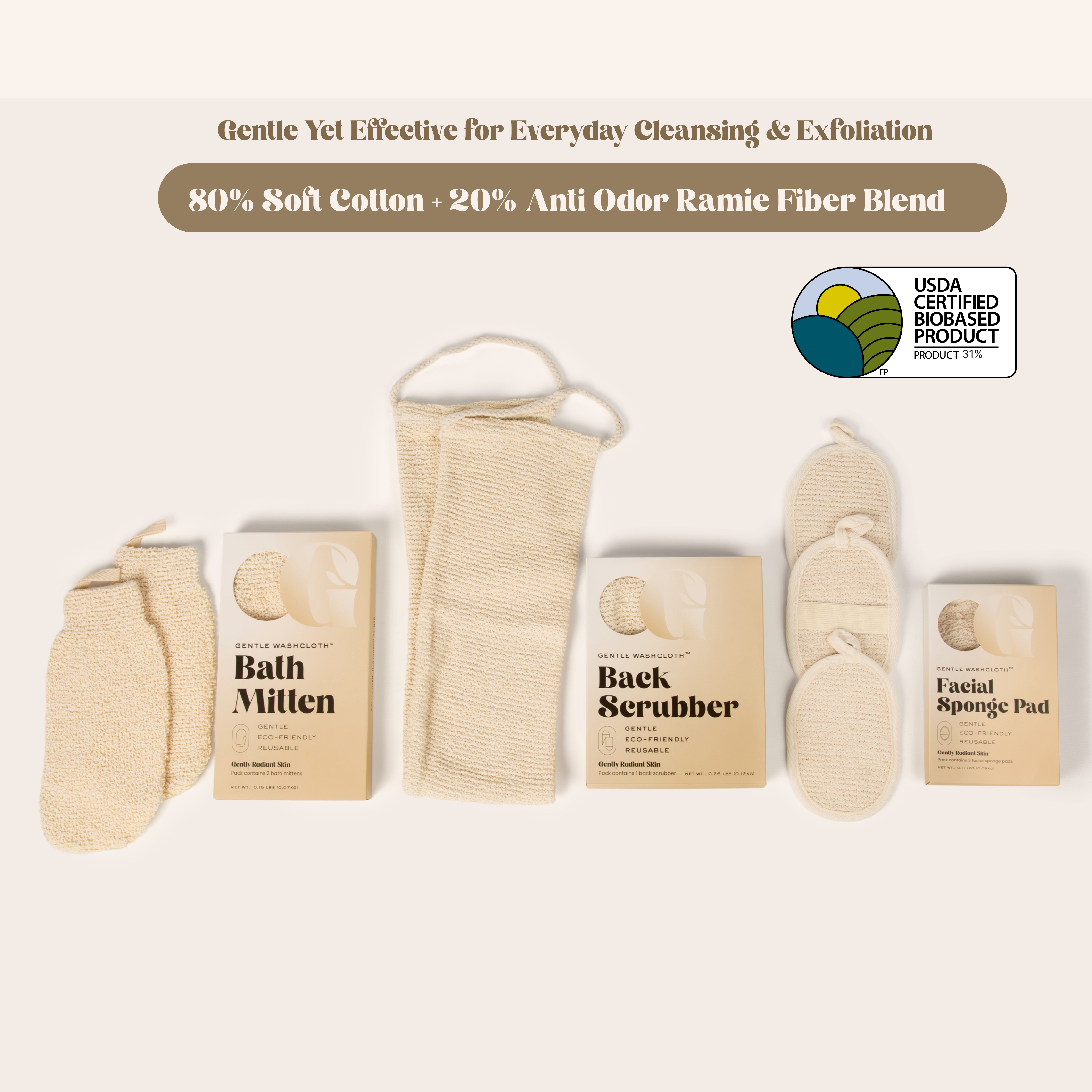
If your skin is acne-prone, the same rules apply. Swap harsh scrubs for a soft, hygienic towel like the Gentle Washcloth™ Collection from Gently Radiant Skin, made from a USDA certified biobased cotton and ramie blend for smooth, controlled cleansing and light exfoliation.

Frequently Asked Questions
How do I quickly calm down irritated skin after cleansing?
Stop the triggering product immediately. Rinse with lukewarm water, pat dry with a soft towel, and apply a fragrance-free moisturizer containing ceramides to support the lipid barrier. Avoid exfoliants, alcohol-based toners, and hot water for several days. If redness, stinging, or tightness persists beyond a week, see a dermatologist. For daily cleansing, switch to a fragrance-free, pH-balanced cleanser and use only your fingertips, no scrubbing.
Is it better to wash my face with hands or a washcloth?
Both can work if you avoid friction. Fingertips are the gentlest option for daily cleansing because they let you control pressure precisely. A soft, single-use facial towel or a USDA biobased cotton and ramie washcloth can help remove makeup and sunscreen more thoroughly without scrubbing, as long as you press and hold rather than rub. Avoid rough washcloths, loofahs, and anything that feels abrasive on reactive skin.
Can over-cleansing cause skin irritation?
Yes. Washing more than twice a day, using hot water, or using foaming cleansers with harsh surfactants strips the acid mantle and accelerates trans-epidermal water loss. That leads to tightness, redness, and reactive skin. Most people with sensitive skin do well with one evening cleanse and a gentle morning rinse. If your skin feels tight after washing, that is a sign the cleanser or frequency is too aggressive.
What ingredients should I avoid if I have reactive skin?
Skip fragrance, essential oils, denatured alcohol, sulfates, and physical scrubs. These disrupt the moisture barrier and trigger inflammation. Look instead for fragrance-free, pH-balanced formulas with ceramides, glycerin, or shea butter. Patch testing on your inner forearm for 48 hours before full-face use helps you catch reactions early. Non-comedogenic and hypoallergenic labels are useful guides, but the ingredient list matters more than the front label.