


How to Repair a Damaged Skin Barrier Naturally
Table of Contents
- Signs of a Damaged Skin Barrier You Shouldn't Ignore
- Common Causes of a Damaged Skin Barrier
- How to Repair a Damaged Skin Barrier Naturally: 7 Steps
- Skin Barrier Repair Timeline: What to Expect Week by Week
- Ingredients to Avoid When Your Barrier Is Compromised
- Post-Recovery Maintenance: Keeping Your Barrier Strong
- Frequently Asked Questions
Last Updated: September 26, 2026
Signs of a Damaged Skin Barrier You Shouldn't Ignore
A damaged skin barrier announces itself through tightness, redness, stinging, and flaking that no amount of moisturizer seems to fix. The stratum corneum, your skin's outermost layer, works as a protective mantle of lipids and dead skin cells that holds water in and irritants out. When that mantle breaks down, transepidermal water loss climbs and everyday products suddenly burn.
Watch for these signals:
- Skin that stings when you apply products that used to feel fine
- Persistent redness across the cheeks, nose, or chin
- Flaking or rough patches despite regular moisturizing
- A tight, "squeaky clean" feeling after washing
- Increased skin sensitivity to products you've tolerated for years
Common Causes of a Damaged Skin Barrier
Over-cleansing is the most common cause of barrier breakdown, followed closely by over-exfoliation and harsh actives. Every stripping wash or abrasive scrub removes lipids that hold your barrier together, and daily use means the skin repair cycle never catches up.
The usual suspects:
- Chemical exfoliation with AHAs, BHAs, or retinoids used too frequently
- Harsh soaps and foaming cleansers that disrupt pH balance
- Hot water and long showers that strip the lipid barrier
- Environmental exposure to wind, cold, and dry indoor air
- Underlying conditions like eczema that leave skin more vulnerable
How to Repair a Damaged Skin Barrier Naturally: 7 Steps
Repairing a damaged skin barrier naturally takes roughly four to six weeks of consistent, gentle care: remove irritants, restore moisture retention, and let the skin repair cycle work without interference.
Step 1: Stop the Damage First
Before adding anything new, remove the aggressors. Pause exfoliants, retinoids, and any product that stings on contact. It feels like doing nothing, but it matters most.
Step 2: Switch to a Gentle Skincare Routine for Reactive Skin
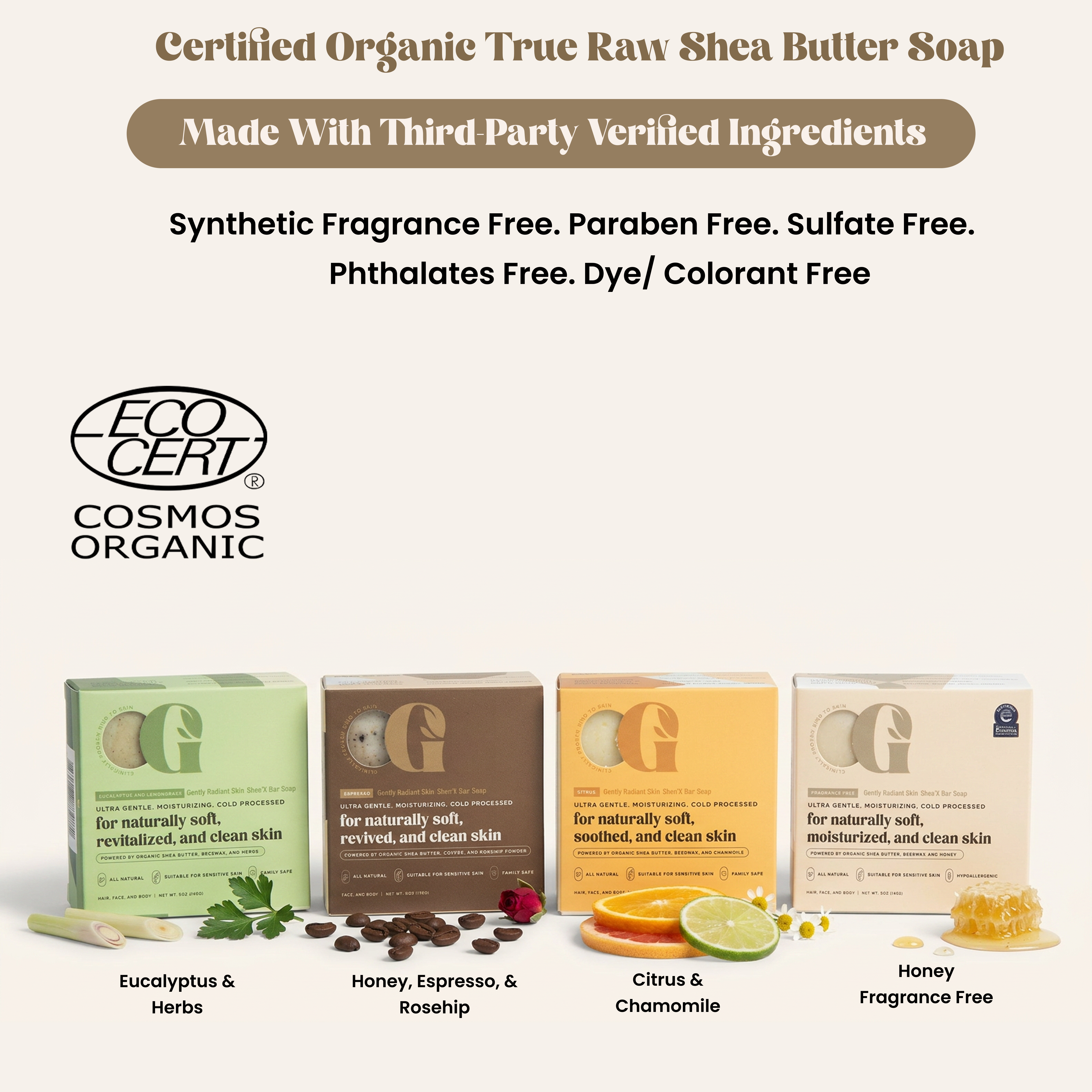
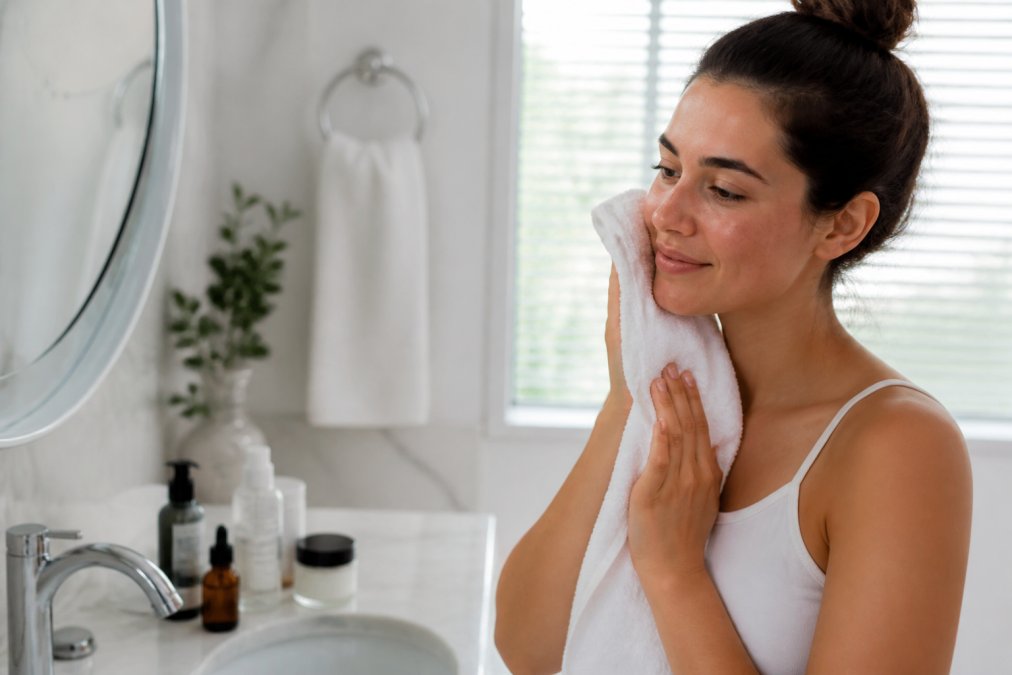
A gentle skincare routine for reactive skin means fewer steps, not more. Use lukewarm water, a fragrance-free cleanser, and your hands or a soft cloth instead of a scrub. Gently Radiant Skin's SheaX Honey Fragrance Free Bar Soap is cold-processed with unrefined raw shea butter and accepted by the National Eczema Association, which makes it a practical starting point for reactive skin.

Step 3: Layer Barrier-Repairing Ingredients
Look for ceramides, squalane, fatty acids, and hyaluronic acid. Humectants like hyaluronic acid draw water in; occlusives seal it. Apply to damp skin, then seal with a richer cream. Ceramides replace lost lipids, which is why they appear in nearly every dermatologist-recommended repair routine.
Step 4: Add Internal Support Through Diet
Barrier health starts from within. Omega-3 fatty acids from fatty fish, walnuts, and flaxseed support the skin's lipid structure, while protein provides building blocks for skin elasticity and repair. Prioritize whole foods over supplements unless a doctor says otherwise.
Step 5: Manage Stress and Sleep
Stress raises cortisol, which is linked to inflammation and slower barrier recovery. Sleep is when the skin repair cycle does most of its work, so aim for seven to nine hours and treat wind-down routines as part of your skincare.
Step 6: Protect Against Environmental Triggers Beyond UV
Sunscreen is non-negotiable, but wind, cold, dry indoor heating, and hard water also strip the barrier. A winter humidifier and a scarf in cold wind do more than most people expect.
Step 7: Keep It Simple
The final step is restraint. Once your skin calms, resist adding back every paused product, a short routine you sustain beats a complex one you'll abandon.
Skin Barrier Repair Timeline: What to Expect Week by Week
The skin barrier repair timeline typically runs four to six weeks for mild-to-moderate damage, but it depends on how much of the stratum corneum you stripped and how consistently you remove the aggressor. Recovery moves in phases, and knowing what happens underneath makes it easier to resist testing your skin with an active before it's ready.
| Phase | What's Happening in the Skin | What You'll Notice | What to Do |
|---|---|---|---|
| Days 1-7 (Calm) | Transepidermal water loss is still elevated; inflammatory signaling is high | Stinging on contact with water or product, visible redness, tightness within minutes of washing | Strip the routine to cleanser, moisturizer, and sunscreen. No actives, no exfoliation, no hot water. |
| Weeks 2-3 (Rebuild) | Ceramides, cholesterol, and free fatty acids begin re-forming in the intercellular matrix; pH balance normalizes | Stinging fades first, then redness. Flaking may briefly increase as dead cells shed without help | Keep the routine boring. Apply moisturizer to damp skin within 60 seconds of cleansing to trap water. |
| Weeks 4-6 (Stabilize) | Lipid ratio approaches normal; moisture retention improves; barrier responds to environmental shifts again | Skin stops reacting to lukewarm water, mild cleansers, and normal indoor heating | Reintroduce one product per week, see the reintroduction protocol below. |
| Week 7+ (Maintain) | Barrier function is intact but not bulletproof; tolerance rebuilds gradually | You can tolerate gentle actives again, but overuse will re-trigger damage faster than the first time | Cap exfoliation at once or twice weekly and keep sunscreen daily. |
Why the Timeline Isn't the Same for Everyone
Three variables move the clock:
5oz SheaX™ Honey Fragrance Free Bar Soap →
- How long you were over-treating. Two weeks of nightly retinoid recovers faster than six months of layered AHA, BHA, and vitamin C.
- Your baseline skin type. Oily skin rebounds faster because sebum feeds the lipid barrier; dry or mature skin rebuilds more slowly.
- Environmental load. Dry heating, cold wind, and hard water keep pulling water out of the stratum corneum while you try to put it back in.
The Reintroduction Protocol (The Part Most Guides Skip)
Healing is half the job; the other half is reintroducing actives without re-injuring the barrier. A pattern that works:
- Week 4-5: Confirm your skin tolerates your basic routine for seven straight days with no stinging.
- Week 5: Add back one active, usually a low-strength retinoid or a gentle AHA, once every third night.
- Week 6: If no reaction, move to every other night. Stop there for two weeks.
- Week 8+: Only then consider adding a second active, and never on the same night as the first.
Ingredients to Avoid When Your Barrier Is Compromised
Most guides hand you a list of 'bad' ingredients and stop. More useful is understanding why each one hurts a compromised barrier, so you can spot the next offender yourself.
The Four Categories to Pause
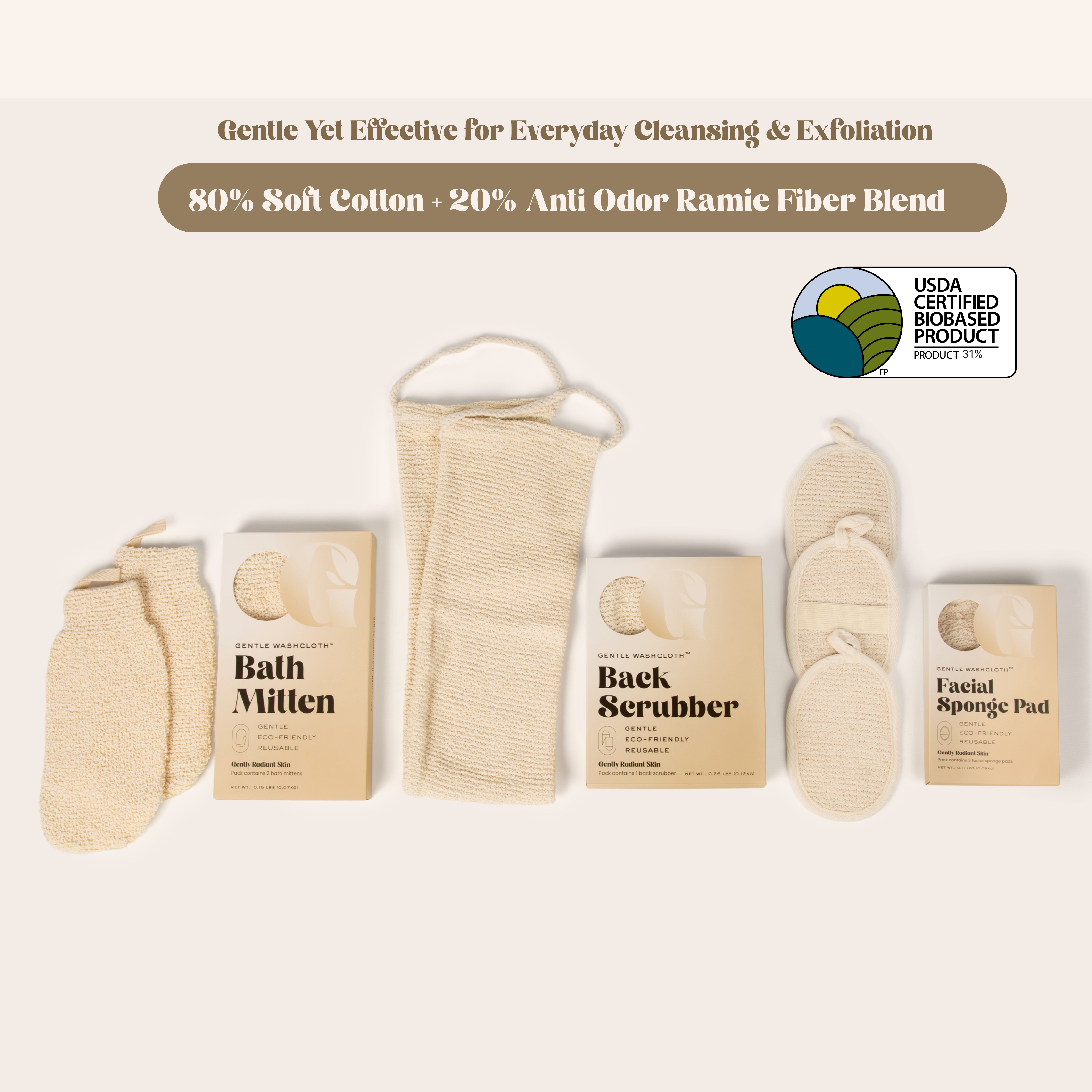
1. Exfoliants, chemical and physical. Chemical exfoliants like glycolic, lactic, salicylic, and mandelic acid dissolve bonds between dead skin cells. On healthy skin that's the point; on a compromised barrier it removes cells the barrier still needs. Physical scrubs, brushes, and mitts do the same mechanically. Pause all until week four minimum.
The 'Natural' Trap
A common mistake is assuming 'natural' means gentle. Essential oils (lavender, citrus, peppermint, eucalyptus), botanical extracts, and plant-derived fragrances are among the most frequent causes of contact irritation in people with skin sensitivity. 'Fragrance-free' isn't the same as 'unscented', unscented products may still contain masking fragrances. Look for fragrance-free and check the list for parfum or fragrance anyway.
What to Use Instead
Swap the paused items for these, in this order of priority:
- A fragrance-free, non-foaming or low-foaming cleanser
- A moisturizer built on ceramides, squalane, fatty acids, or cholesterol, the same lipids the barrier is missing
- A humectant layer (glycerin, hyaluronic acid, panthenol) applied to damp skin, sealed with an occlusive
- A mineral or well-tolerated chemical sunscreen every morning
Environmental Triggers Beyond UV
Your barrier is also stripped by things that never appear on a label:
- Hard water. Mineral residue disrupts pH balance and worsens irritation; a shower filter or filtered final rinse helps.
- Low humidity. Winter heating drops indoor humidity into the 20s, accelerating transepidermal water loss. A humidifier at 40-50% makes a measurable difference.
- Air pollution. Particulate matter and ozone generate free radicals. Gentle night cleansing and an antioxidant-sparing moisturizer help, but skip strong vitamin C until the barrier is stable.
- Wind and cold. Both increase water loss and cause micro-cracking; a scarf or balm does more than most people expect.
Post-Recovery Maintenance: Keeping Your Barrier Strong
Maintenance is where most people relapse. Once skin feels normal, it's tempting to reintroduce everything at once, don't. Add one product back per week and watch for redness or stinging. Keep your cleanser fragrance-free and non-comedogenic, exfoliation to once or twice weekly, and sunscreen daily.
Frequently Asked Questions
How long does it take to restore a damaged skin barrier?
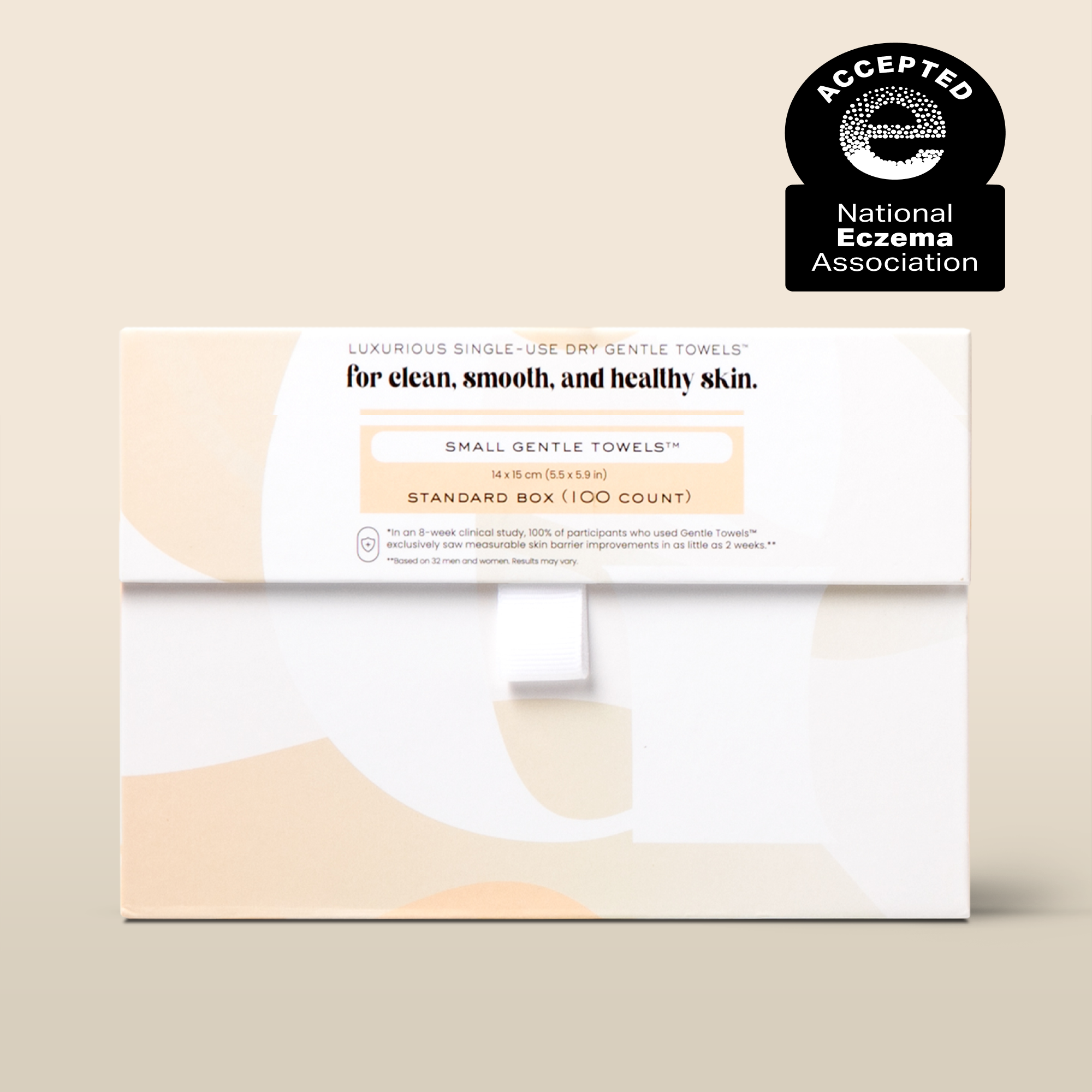
Most people see meaningful improvement in two to four weeks with consistent gentle care. The stratum corneum, your outermost layer, typically renews itself every 14 to 28 days. Deeper barrier function, including ceramide and lipid production, can take four to eight weeks to fully stabilize. Clinical testing on Gentle Towels showed skin barrier improvement in 2 weeks. If irritation persists past six weeks, see a dermatologist.
How do I tell if my skin barrier is broken?
Signs of a damaged skin barrier include persistent redness, stinging when you apply products that used to feel fine, tightness after cleansing, flaking or rough patches, and increased sensitivity to things like water temperature or fragrance. You may also notice more breakouts, dullness, or a feeling that nothing absorbs properly. If several of these appear together after starting a new active ingredient or over-cleansing, your barrier is likely compromised.
What vitamins repair the skin barrier?
Vitamin B3 (niacinamide) supports ceramide production and reduces inflammation, making it one of the most studied options. Vitamin E and vitamin C act as antioxidants that protect the lipid barrier from oxidative stress. Vitamin A in high doses can damage the barrier, so avoid retinoids during recovery. Food sources matter too: fatty fish, eggs, and leafy greens provide the building blocks your skin needs. A dermatologist can recommend whether a topical or oral supplement makes sense for you.
Can natural oils help repair the skin barrier?
Yes, certain oils support barrier repair. Squalane mimics your skin's natural sebum and helps with moisture retention without clogging pores. Jojoba, rosehip, and shea butter are rich in fatty acids that reinforce the lipid barrier. Look for non-comedogenic, fragrance-free options. Apply oils as the last step of your routine to seal in humectants like hyaluronic acid. Patch test first, especially if you have reactive skin or eczema.
Which ingredients should I avoid when my skin barrier is compromised?
Skip chemical exfoliants (glycolic acid, lactic acid, salicylic acid), retinoids, high-concentration vitamin C, and physical scrubs. Avoid harsh soaps, sulfates, and anything with added fragrance or essential oils. Alcohol-based toners and astringents strip the protective mantle further. During recovery, stick to fragrance-free, non-comedogenic products. Once your barrier is stable, you can reintroduce actives one at a time, spaced a few days apart.
What lifestyle habits contribute to a healthy skin barrier?
Sleep quality, stress management, and hydration all affect barrier function. Chronic stress raises cortisol, which slows the skin repair cycle and increases inflammation. Aim for seven to nine hours of sleep, drink enough water, and eat foods rich in omega-3 fatty acids and antioxidants. Avoid smoking and excessive alcohol, both of which impair circulation and lipid production. A consistent, gentle skincare routine for reactive skin works best alongside these habits.
Do I need to see a dermatologist for a damaged skin barrier?
If your barrier does not improve after four to six weeks of gentle care, or if you have severe redness, swelling, oozing, or pain, see a dermatologist. They can rule out conditions like rosacea, perioral dermatitis, or contact dermatitis that mimic barrier damage. For eczema-prone skin, a dermatologist or pediatrician can recommend prescription options. Over-the-counter barrier-repair products work well for mild to moderate damage, but professional guidance helps when symptoms persist.