


Is Fragrance-Free Soap Better for Your Skin?
Table of Contents
- How Fragrance-Free Soap Supports Skin Barrier Health
- Common Irritants in Traditional Soaps and Ingredients to Avoid
- Fragrance-Free vs Unscented Soap: What Is the Difference?
- Signs of Fragrance Allergy on Skin and How to Patch Test
- Benefits for Sensitive and Eczema-Prone Skin
- How to Transition to a Fragrance-Free Routine
- Environmental and Sustainability Impact of Fragrance-Free Options
- Conclusion
- Frequently Asked Questions
Last Updated: September 29, 2026
How Fragrance-Free Soap Supports Skin Barrier Health
Fragrance-free soap is generally better for your skin because it removes one of the most common triggers of contact dermatitis while leaving the skin's protective acid mantle intact.
The skin barrier is the thin outer layer, the stratum corneum, that holds water in and keeps irritants out. It is often described as a brick-and-mortar structure: flattened skin cells are the bricks, and a lipid matrix of ceramides, cholesterol, and fatty acids is the mortar. When that mortar erodes, water escapes and irritants get in. When it works, you barely notice it. When it breaks down, everything stings.
The Science of Skin pH and Alkalinity
Healthy skin sits at a slightly acidic pH, usually between 4.5 and 5.5. This acidity, often called the acid mantle, is not incidental, it is a defense system. The acidic film inhibits the growth of harmful bacteria, supports beneficial skin flora, and regulates the enzymes that rebuild the lipid barrier. When the surface pH rises, those enzymes slow down and barrier repair stalls.
Traditional bar soap is alkaline, typically landing around pH 9 to 10. That is not a manufacturing flaw; it is chemistry. True soap is made through saponification, the reaction of a fat or oil with a strong alkali such as sodium hydroxide (lye). The reaction produces soap molecules plus glycerin, and the resulting product is inherently alkaline. When you wash with it, the surface pH of your skin can jump by several points and stay elevated for a while afterward.

A pH-balanced, fragrance-free cleanser keeps that disruption to a minimum. The distinction matters because "soap" and "cleanser" are not the same thing, and most product labels blur them. A true soap is alkaline by nature. A synthetic detergent, or syndet, is engineered to clean at a pH closer to your skin's natural range, often 5.5 or below. That is why a fragrance-free syndet bar can feel dramatically different from a traditional bar even when both lather the same way.
Surfactants vs. True Soap: What Cleans Without Stripping
Cleansing agents fall into two broad groups. True soap is created through saponification and tends to be alkaline. Synthetic surfactants are detergents engineered to lift oil and dirt at a pH closer to your skin's natural range.
Neither category is automatically gentle. The deciding factor is the specific surfactant and how much of the skin's lipid barrier it removes. Harsh surfactants strip too much, which raises transepidermal water loss and leaves skin feeling raw. Gentler surfactants clean effectively while leaving emollients and humectants behind to support moisture regulation.
A few surfactant families worth knowing:
- Anionic surfactants such as sodium lauryl sulfate (SLS) carry a negative charge and clean aggressively. They are the most likely to strip lipids and cause tightness.
- Anionic, milder options like sodium cocoyl isethionate and sodium lauryl sulfoacetate clean well at a lower irritation potential and are common in syndet bars.
- Amphoteric surfactants such as cocamidopropyl betaine are often paired with anionics to reduce irritation. They are generally mild but are a known contact allergen for a minority of users.
- Nonionic surfactants like decyl glucoside and lauryl glucoside are among the gentlest and are frequently used in formulas for eczema-prone skin.
The practical takeaway: a fragrance-free label removes one variable, but the surfactant system determines whether the wash strips your barrier. A fragrance-free true soap can still be alkaline and drying; a fragrance-free syndet bar is usually the gentler daily choice.
Common Irritants in Traditional Soaps and Ingredients to Avoid
The most common irritants in traditional soaps are synthetic fragrance, essential oils, and harsh surfactants. Fragrance is the leading cause of allergic contact dermatitis from cosmetics, according to American Academy of Dermatology guidance on fragrance allergy.
Ingredients worth screening for on a label:
- Parfum or fragrance, an umbrella term that can hide dozens of chemical sensitizers
- Essential oils such as limonene, linalool, and citronellol, which are natural but still common sensitizers
- Sodium lauryl sulfate, an effective but aggressive surfactant that can strip the lipid barrier
- Preservatives like methylisothiazolinone, which trigger reactions in some people
- Cocamidopropyl betaine, generally mild, but a known contact allergen for a minority of users
If your skin stings, flakes, or reddens after washing, the cleanser is the first suspect, not the last.
Fragrance-Free vs Unscented Soap: What Is the Difference?
Fragrance-free soap contains no added scent compounds at all. Unscented soap contains no noticeable scent, but it may still include masking agents to cover the smell of raw ingredients. This distinction trips up more shoppers than any other label term, so it is worth reading carefully.
A product labeled unscented can legally contain fragrance ingredients as long as they neutralize an odor rather than add one. For someone with fragrance sensitivity, that is the difference between a calm reaction and a flare-up.
The 'Masking Fragrance' Loophole
The masking fragrance loophole is the practice of adding scent compounds purely to neutralize an unpleasant base odor, then labeling the product unscented. Because the ingredient is technically not there for its scent, it can slip past a casual label check.
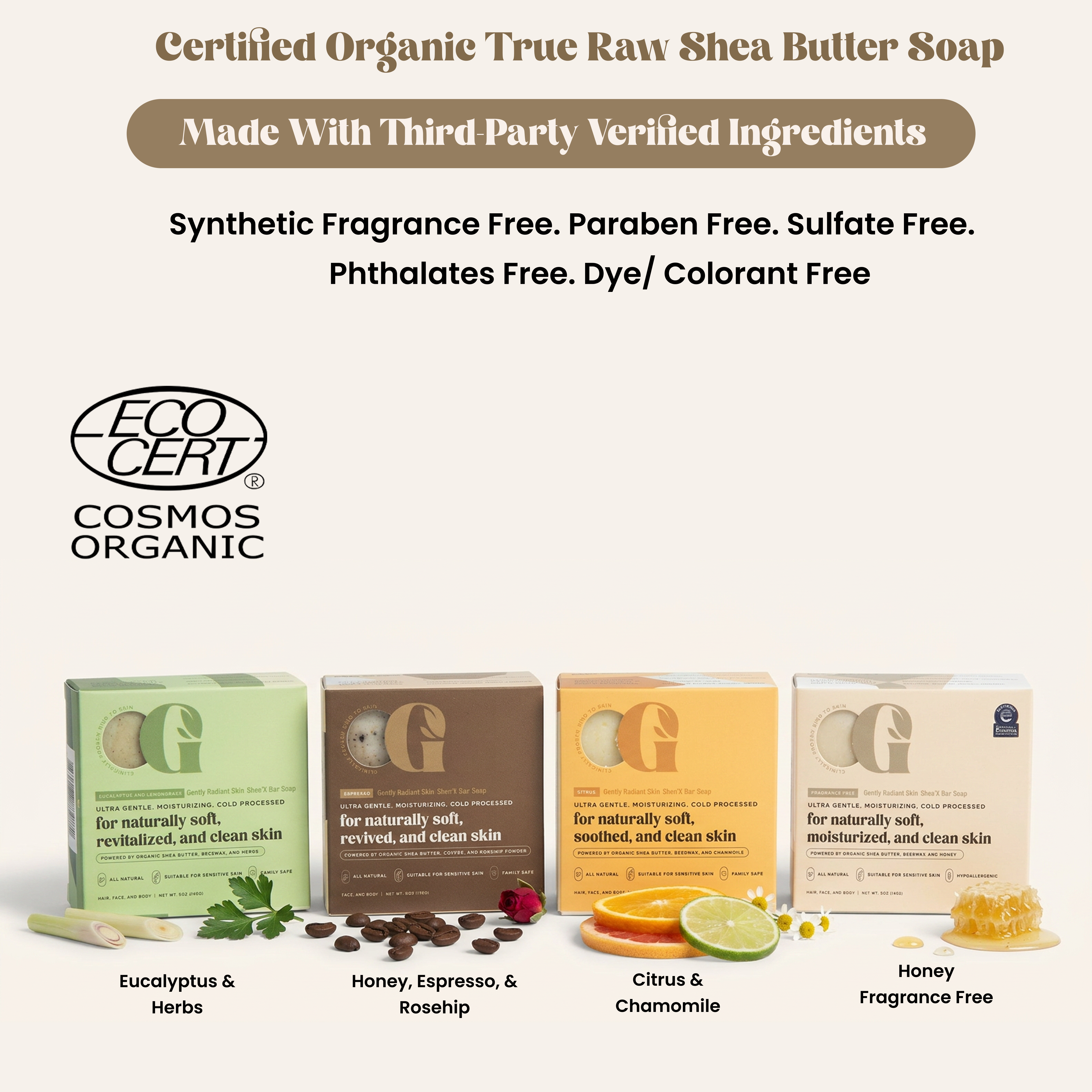
5oz SheaX™ Honey Fragrance Free Bar Soap →
The fix is simple. Look for the words fragrance-free and scan the ingredient list for parfum, fragrance, or aroma. If any of those appear, the product is not fragrance-free regardless of what the front of the package says. The FDA labeling requirements for cosmetics explain how fragrance is declared on US product labels, and reading them once will change how you shop.
Signs of Fragrance Allergy on Skin and How to Patch Test
Signs of fragrance allergy typically appear as redness, itching, burning, or a raised, bumpy rash within hours to a few days of contact. The reaction often shows up on the face, neck, hands, or wherever the product was applied most heavily.
Patch testing is how you confirm it. Here is a straightforward method:
- Apply a small amount of the product to the inner forearm
- Cover it with a bandage and leave it for 24 hours
- Remove the bandage and check for redness, bumps, or itching
- Wait another 48 hours and check again, since some reactions are delayed
- Stop using the product immediately if any reaction appears
For persistent or severe reactions, a dermatologist can run a formal patch test with a standardized allergen panel.
Benefits for Sensitive and Eczema-Prone Skin
For sensitive and eczema-prone skin, removing fragrance reduces the number of potential triggers your barrier has to defend against. Eczema is a condition where the lipid barrier is already compromised, so every unnecessary irritant adds load to a system that is struggling.
Fragrance-free formulas are also more predictable. When a reaction happens, you have fewer variables to eliminate. That predictability is why so many dermatologist-recommended regimens start with a fragrance-free cleanser before anything else changes.
Gently Radiant Skin's SheaX Honey Fragrance Free Bar Soap is accepted by the National Eczema Association and approved by both dermatologists and pediatricians, which is the kind of third-party backing worth looking for.
How to Transition to a Fragrance-Free Routine
Transitioning to a fragrance-free routine works best one product at a time, starting with whatever touches the most skin surface area. Cleanser first, then moisturizer, then everything else.
A practical sequence:
- Week 1: Swap your body wash or bar soap for a fragrance-free option
- Week 2: Replace your facial cleanser and any exfoliating products
- Week 3: Switch moisturizers and sunscreen
- Week 4: Review laundry detergent, haircare, and hand soaps
Environmental and Sustainability Impact of Fragrance-Free Options
Fragrance-free products tend to have a lighter environmental footprint, though the reasons are less obvious than they first appear. This is the angle most guides skip entirely, they treat fragrance as a skin concern only.
- USDA Bio-based verifies that a product's ingredients meet a defined renewable-content standard.
- USDA Organic certifies agricultural ingredients grown and processed to a defined standard.
- EPA Safer Choice identifies products whose chemical ingredients meet the agency's safer-chemistry criteria.
- Leaping Bunny and Cruelty Free International verify that no animal testing was used.
Conclusion
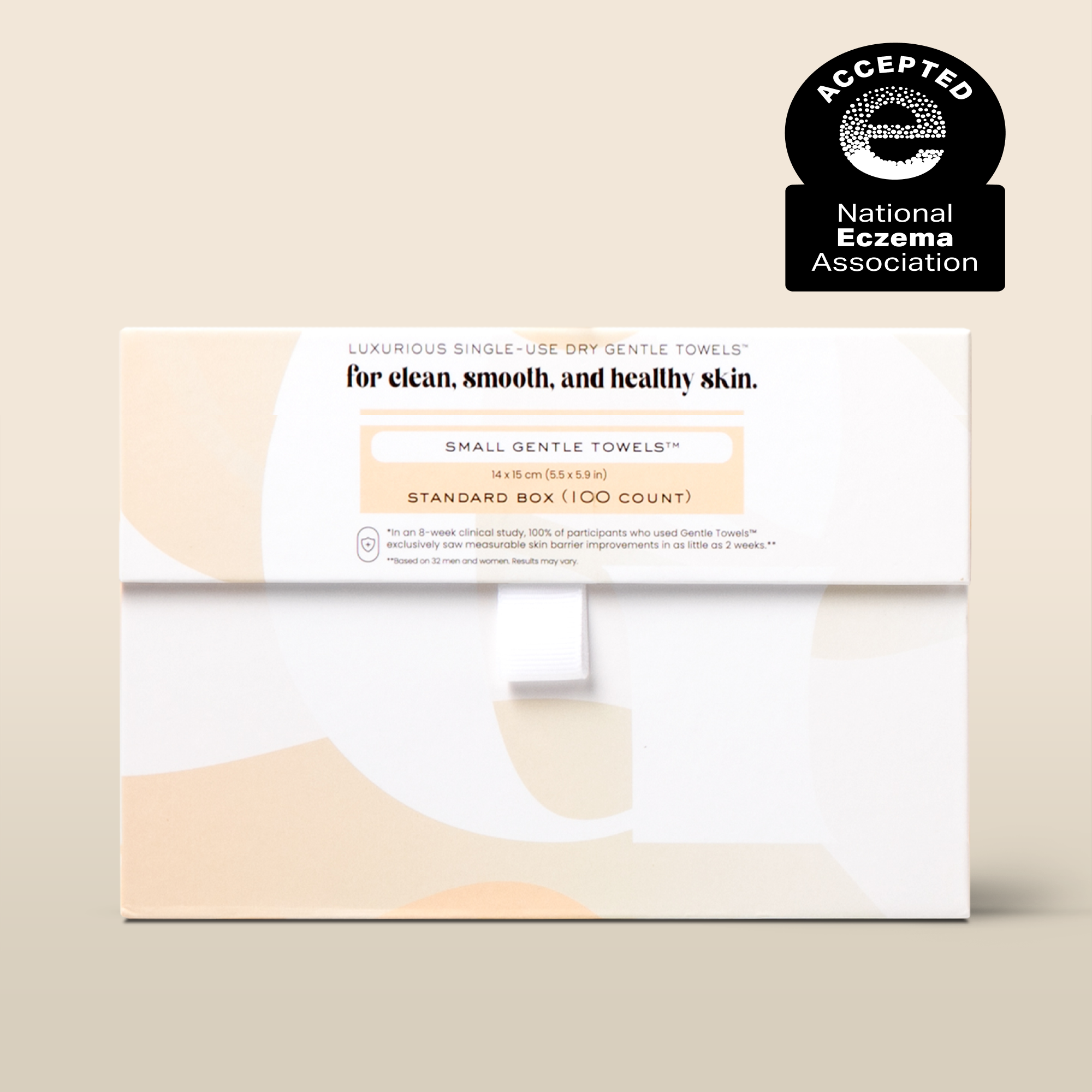
Finding a cleanser that respects your skin barrier without stripping it is harder than it should be, and the fragrance-free label is the fastest filter you have. Gently Radiant Skin makes that search simpler with cold-processed organic shea butter soaps accepted by the National Eczema Association, plus Gentle Towels facial towels that are clinically tested to improve skin barrier in two weeks and reduce the appearance of blemishes by week eight.

Frequently Asked Questions
Is it better to use fragrance-free soap?
Yes, for most people with sensitive, reactive, or eczema-prone skin, fragrance-free soap is better because it removes a common trigger for contact dermatitis and irritation. Synthetic fragrance and essential oils can disrupt the skin barrier, leading to redness, itching, and transepidermal water loss. A fragrance-free soap lets you cleanse without adding chemical sensitizers, so your skin can focus on moisture regulation and repair.
Does fragrance-free mean unscented?
No. Unscented products may contain masking agents that neutralize or cover the smell of other ingredients, and those masking agents can still cause irritation. Fragrance-free means no fragrance or masking chemicals are added. When checking labels, look for the term fragrance-free and scan for ingredients like parfum, essential oils, or 'masking fragrance' to be sure.
What fragrance-free body soap is best for sensitive skin?
Look for a soap that is accepted by the National Eczema Association, dermatologist approved, and made without synthetic fragrance or essential oils. A cold-process soap with unrefined shea butter, like the SheaX Honey Fragrance Free Bar Soap, cleanses gently while supporting the lipid barrier. Pair it with a soft, single-use towel to avoid bacterial transfer and reduce friction on reactive skin.
Can fragrance in soap cause long-term skin damage?
Switching to a fragrance-free soap gives your skin a chance to rebuild its acid mantle and reduce inflammation, which is especially important for eczema-prone skin.