


Fragrance-Free Cleansing for Sensitive Skin
Table of Contents
- Why Fragrance-Free Cleansing Matters for Sensitive Skin
- Ingredients to Avoid for Sensitive Skin
- How to Remove Makeup Without Scrubbing
- Building a Fragrance-Free Skincare Routine for Sensitive Skin
- SheaX Honey Fragrance-Free Bar Soap: Cold-Processed Cleansing
- Gentle Towels: Clinical Testing for Barrier Repair
- Patch Testing and Identifying Your Skin Triggers
- Frequently Asked Questions
Last Updated: September 3, 2026
Why Fragrance-Free Cleansing Matters for Sensitive Skin
Fragrance-free cleansing for sensitive skin is not a luxury, it's a clinical necessity. Synthetic fragrances and essential oils trigger reactions in reactive skin types, causing inflammation, redness, and barrier damage that compounds over time. The single most common mistake people with sensitive skin make is continuing to use fragranced products because they smell good, not realizing the fragrance itself is the primary irritant.
The distinction between "fragrance-free" and "unscented" matters more than most people realize. Unscented products often contain masking fragrances that neutralize odors while still irritating the skin. Fragrance-free formulations contain zero added scents of any kind. For reactive skin, this difference is the gap between a product that calms and one that triggers a flare-up.
Sensitive skin has a compromised lipid barrier, the protective layer that prevents trans-epidermal water loss and blocks irritants. When you cleanse with fragranced products, you're asking your barrier to process chemical irritants every single day. Over weeks, this depletes the skin's natural defenses. The result: increased dryness, heightened reactivity to other ingredients, and a cycle of worsening sensitivity.
Ingredients to Avoid for Sensitive Skin
What you leave out of a cleanser matters as much as what you put in. Common cleansing ingredients that seem harmless to most people become trigger points for reactive skin types.
Sulfates strip the skin's natural oils aggressively. Sodium lauryl sulfate and sodium laureth sulfate are surfactants designed to create lather and remove impurities, but they also disrupt the acid mantle, the skin's naturally acidic protective layer. For sensitive skin, sulfates create micro-tears in the barrier that persist long after cleansing.
Parabens function as preservatives but trigger contact dermatitis in many people with reactive skin. Even though parabens are approved for cosmetic use, individual sensitivity varies widely. If your skin flares after using a product, parabens are often the culprit.
Synthetic fragrance compounds are chemical cocktails that penetrate the epidermis and trigger inflammatory responses. The term "fragrance" on a label can hide 3,000+ chemical ingredients, manufacturers don't have to disclose individual components (the FDA). This opacity makes fragrance one of the least predictable ingredients for sensitive skin.
Alcohol denat (denatured alcohol) evaporates quickly and can feel drying and irritating on reactive skin. While small amounts appear in many products, higher concentrations in toners and cleansers accelerate moisture loss from the barrier.
Essential oils are natural but not gentle. Lavender, tea tree, and peppermint oils are common irritants for sensitive skin. They're volatile compounds that trigger reactions similar to synthetic fragrances. "Natural" does not mean "non-irritating" for reactive skin types.
| Ingredient | Why It's Problematic | Sensitive Skin Impact |
|---|---|---|
| Sulfates | Strip natural oils, disrupt acid mantle | Barrier damage, dryness, redness |
| Parabens | Contact dermatitis trigger | Delayed reactions, inflammation |
| Synthetic fragrance | Chemical irritants, penetrate epidermis | Immediate burning, flaking, redness |
| Alcohol denat | Evaporative drying | Tightness, accelerated moisture loss |
| Essential oils | Volatile irritants | Stinging, flushing, delayed sensitivity |
How to Remove Makeup Without Scrubbing
The technique matters more than the product when you have reactive skin. Aggressive scrubbing, even with gentle products, damages the barrier through mechanical irritation.
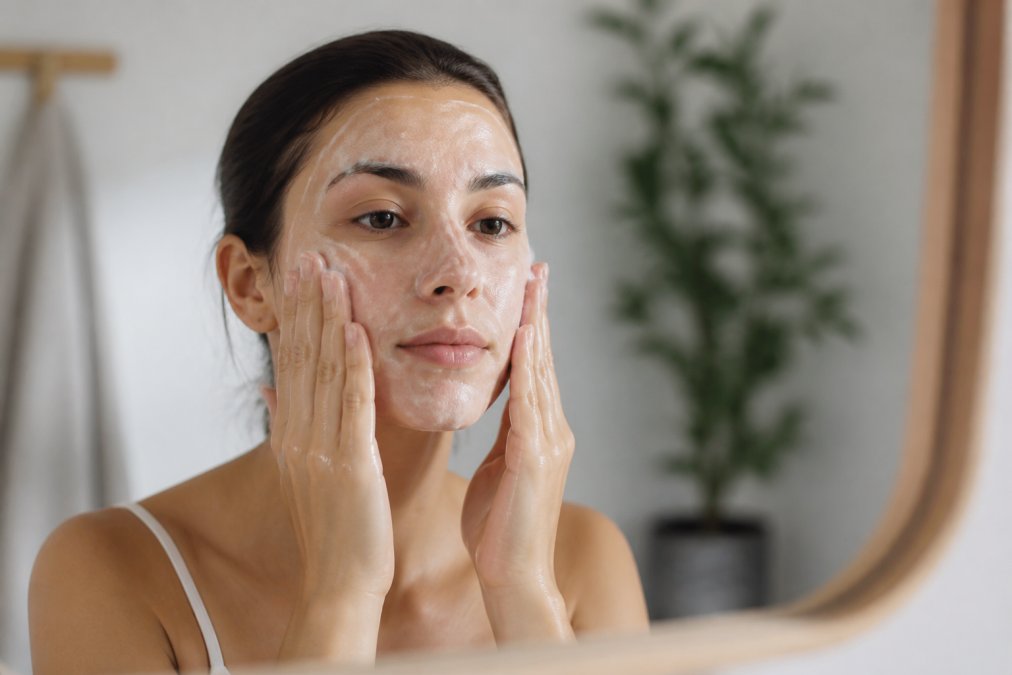
Start with an oil-based or balm cleanser if you wear makeup. These dissolve makeup without requiring friction. Apply the cleanser with your fingertips using circular motions so light they barely make contact with your skin. Think of it as coating, not scrubbing. Let the cleanser sit for 10-15 seconds to break down makeup, then add a small amount of water and emulsify gently.
Follow with a fragrance-free, non-comedogenic water-based cleanser. This removes the oil residue without stripping. Again, use only your fingertips, no washcloths, brushes, or exfoliants. Pat dry with a clean, soft towel or single-use towel designed for sensitive skin.
The critical mistake people make: they believe "thorough cleansing" requires pressure. For sensitive skin, thorough means complete removal of impurities, not aggressive scrubbing. A fragrance-free cleanser combined with the right technique removes makeup and sunscreen without mechanical damage.
Building a Fragrance-Free Skincare Routine for Sensitive Skin
A fragrance-free skincare routine for sensitive skin follows a deliberate sequence designed to restore and maintain barrier integrity.
Morning routine:
- Cleanse with a fragrance-free, soap-free cleanser (60-90 seconds, lukewarm water)
- Pat dry with a single-use towel
- Apply a humectant-based hydrating product while skin is still slightly damp
- Follow with an emollient moisturizer to seal hydration
- Apply SPF 30+ (mineral sunscreen if possible, chemical sunscreens can irritate)
Evening routine:
- Remove makeup with an oil-based cleanser (if wearing makeup)
- Follow with a fragrance-free water-based cleanser
- Pat dry gently
- Apply targeted treatment (soothing agents like centella asiatica or colloidal oatmeal if needed)
- Apply a richer moisturizer to support overnight barrier repair
The sequence matters because hydration works best on damp skin, and emollients seal moisture in. Skipping steps or reordering them reduces effectiveness.
Many people with sensitive skin over-complicate their routine, adding serums, essences, and treatments. Simplicity is more effective. A cleanser, hydrating product, and moisturizer form the foundation. Everything else is supplemental.
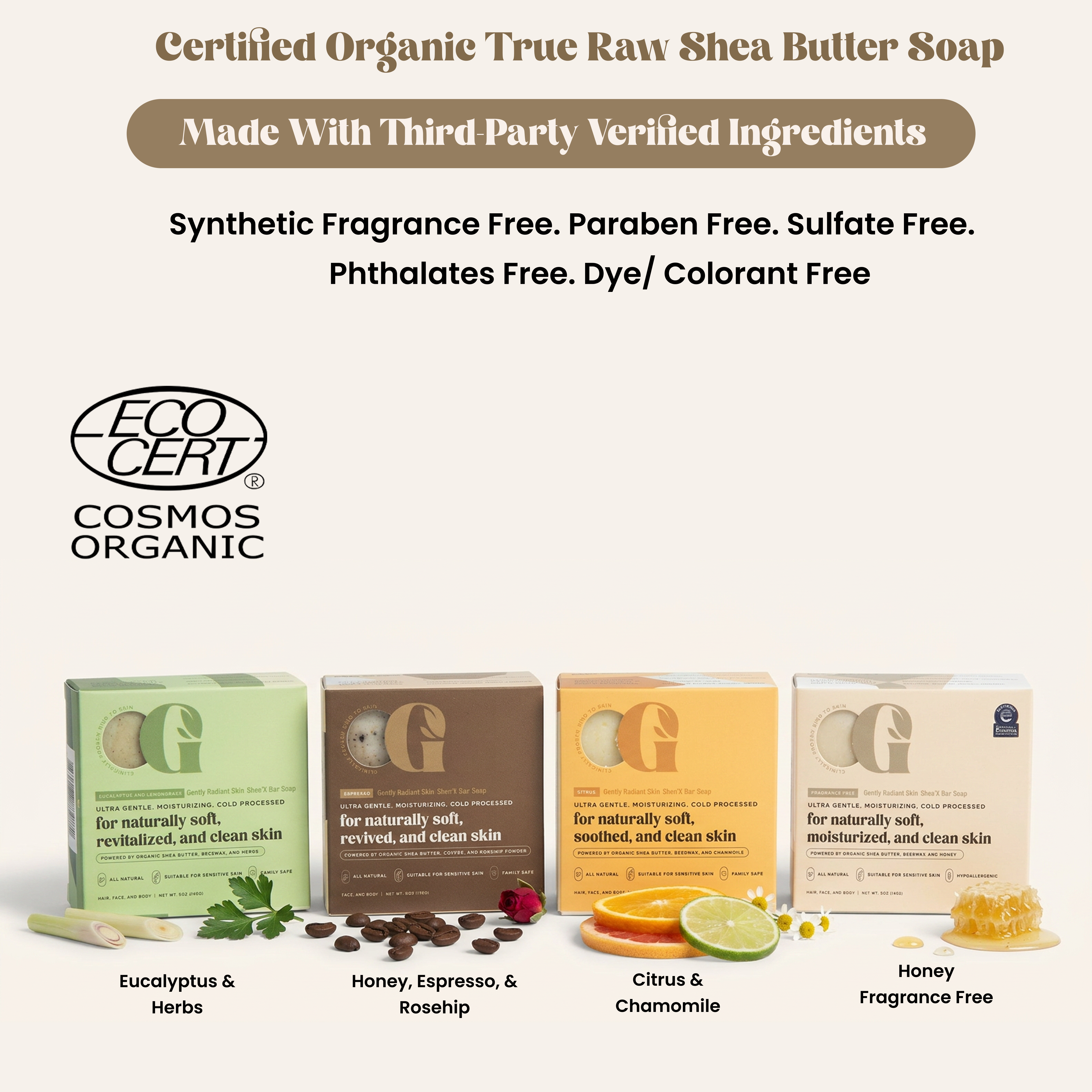
SheaX Honey Fragrance-Free Bar Soap: Cold-Processed Cleansing
The SheaX Honey Fragrance-Free Bar Soap represents a different approach to gentle cleansing. Cold-processed soaps retain the natural glycerin produced during saponification, creating a naturally moisturizing cleanser rather than a stripping one.

Unlike commercial soaps made with hot processing (which removes glycerin and requires it to be added back), cold-processed soaps maintain the full glycerin content. This means you get a cleanser that removes impurities without depleting the skin's natural moisture. For sensitive skin, this distinction translates directly to less irritation and faster barrier recovery.
The soap contains unrefined raw shea butter, which is rich in fatty acids and soothing compounds. Shea butter is non-comedogenic, meaning it won't clog pores even on acne-prone skin (peer-reviewed research). It's also accepted by the National Eczema Association, indicating clinical validation for reactive skin types.
What makes this product different from standard bar soaps: the formulation avoids sulfates, synthetic fragrance, and harsh surfactants. It's dermatologist-approved and pediatrician-approved, which matters if you're using it for children with eczema or sensitive skin. The cold-processing method preserves botanical ingredients that would be destroyed by heat.
At $20.00 for a 5oz bar, the SheaX Honey soap costs more than drugstore alternatives. More importantly, if it prevents a skin flare-up that requires dermatology visits or prescription treatments, the value is clear.
Customer feedback confirms the difference. Emma A. noted: "This SheaX Chamomile bar is the first soap I've ever used that doesn't have me reaching for lotion the second I step out of the shower." Fey E. reported: "The SheaX Fragrance-Free bar helped my daughter's eczema, and I'm genuinely amazed."
The soap works because it addresses the root problem: standard cleansers strip the barrier, requiring heavy moisturizers to compensate. This soap cleanses without stripping, so your skin's natural moisture stays intact.
Gentle Towels: Clinical Testing for Barrier Repair
Single-use facial towels designed for sensitive skin represent clinical thinking applied to a basic tool. Most people overlook towels as a source of irritation, but for reactive skin, the towel matters as much as the cleanser.
Reusable washcloths accumulate bacteria, fungi, and dead skin cells. Even if you wash them weekly, they harbor microorganisms that transfer back to your skin each time you use them. For acne-prone skin, this bacterial transfer perpetuates breakouts. For eczema-prone skin, it triggers flares.
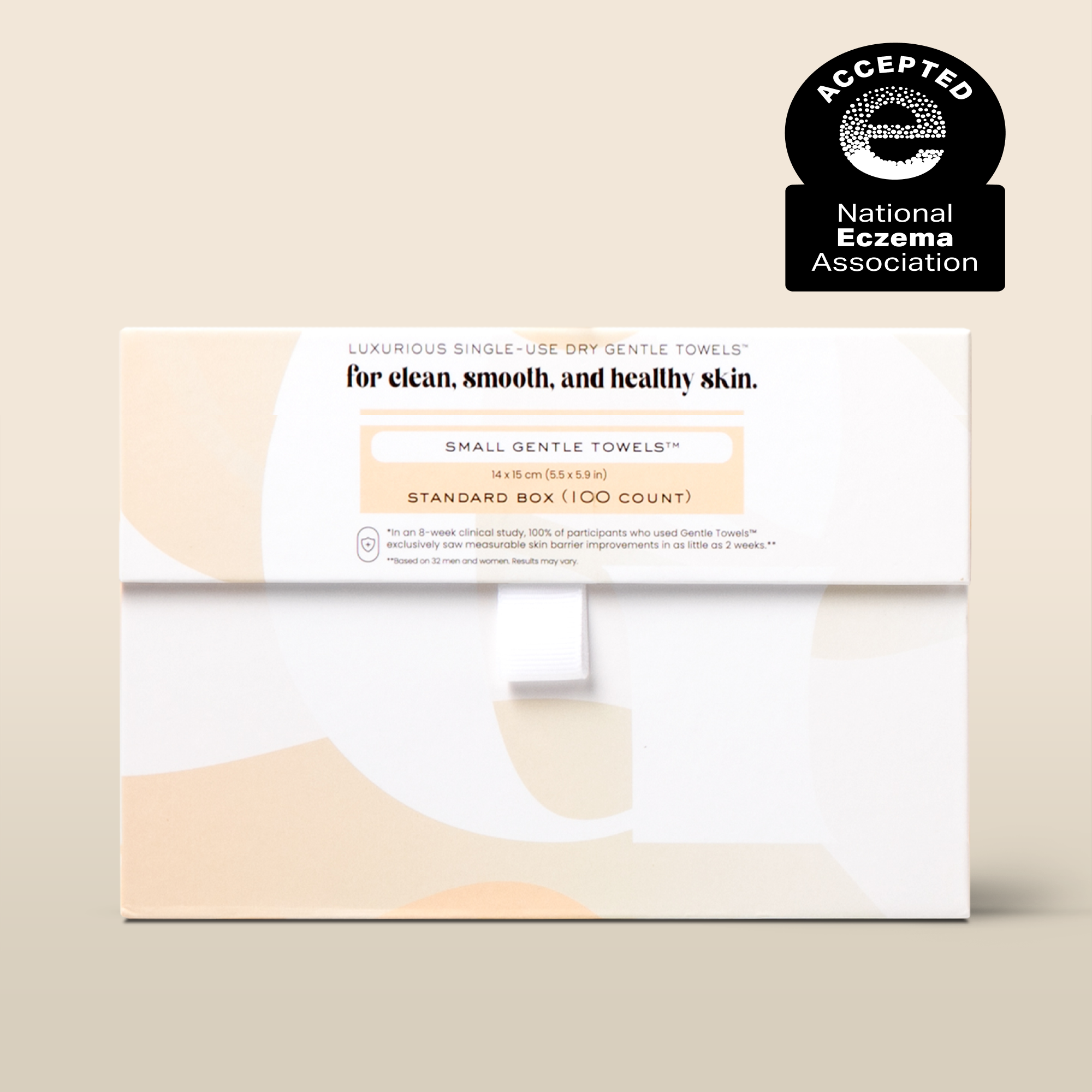
Gentle Towels are ultra-soft facial towels designed specifically for sensitive skin. They're clinically tested and proven to improve skin barrier in 2 weeks and reduce the appearance of blemishes by week 8. This isn't marketing language, these are measurable outcomes from clinical testing.

The towels are USDA Bio-based, meaning they're made from renewable materials rather than petroleum-derived synthetics. They're fragrance-free and dermatologist-approved. The ultra-soft construction means they don't create micro-abrasions the way standard towels do.
What makes these towels effective: they're single-use, eliminating bacterial carryover. They're soft enough that drying doesn't require pressure, you simply press gently to absorb water. They're available in multiple sizes, so you can use the 5.5 x 6 inch size for face and the 8 x 9 inch or 11 x 12 inch sizes for larger areas.
Pricing ranges from $9.99 for 15 towels (8 x 9 inches) to $60.00 for 200 towels (5.5 x 6 inches). For daily use, the 100-count box at $32.00 offers the best value.
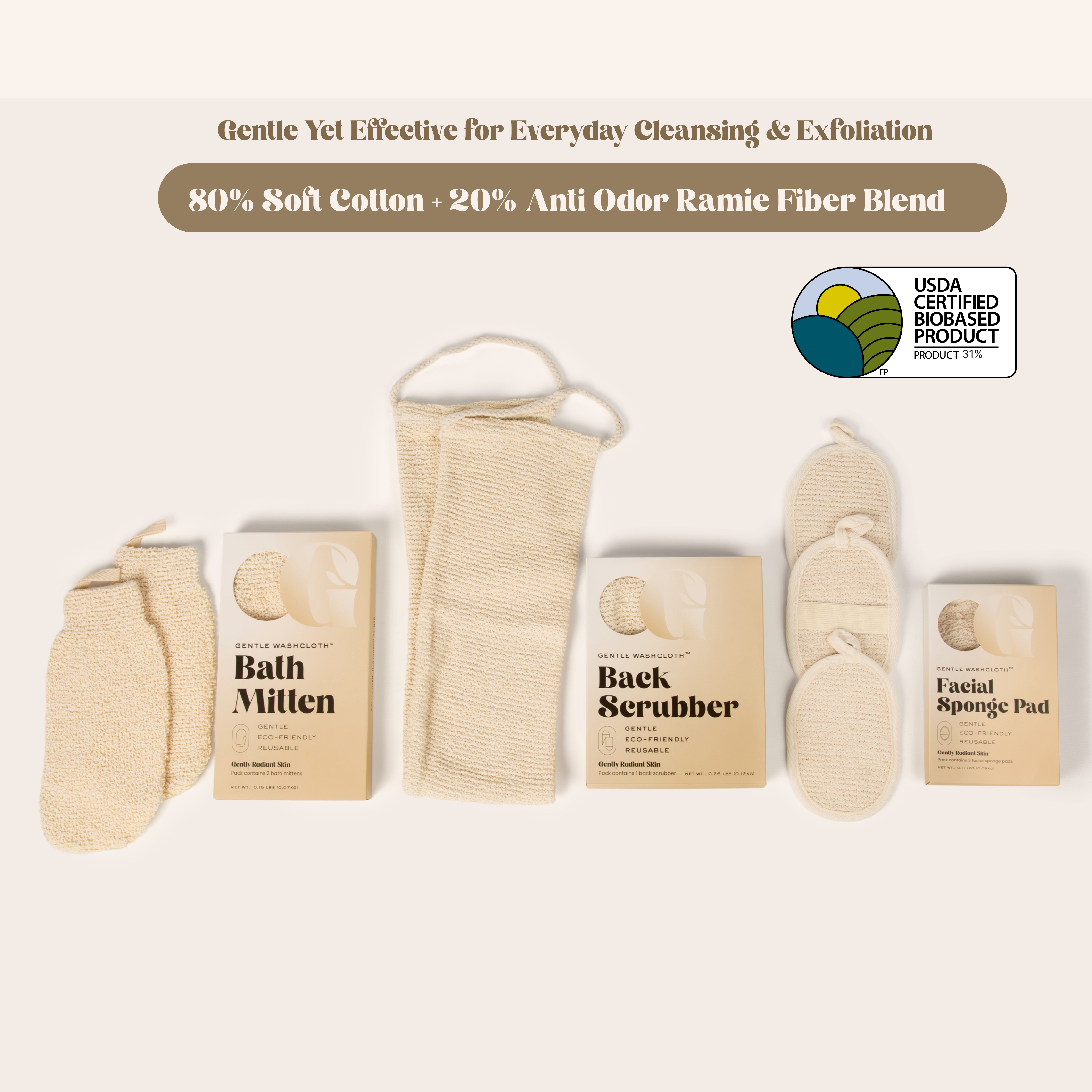
Mary I. confirmed the convenience factor: "Gentle Towels are so convenient, and I love that they come in so many sizes." Joan M. added: "I love the Gentle Washcloth bath mitten, it's exactly what I hoped for."
The barrier repair benefit comes from two sources: the elimination of bacterial recontamination, and the gentle drying method that prevents mechanical irritation. Together, these factors allow the skin's natural repair processes to work without daily interference.
| Towel Size | Count | Price | Best For | Cost Per Use |
|---|---|---|---|---|
| 5.5 x 6 inches | 50 | $18.00 | Daily facial use | $0.36 |
| 5.5 x 6 inches | 100 | $32.00 | Daily facial use, 3-month supply | $0.32 |
| 5.5 x 6 inches | 200 | $60.00 | Daily facial use, 6-month supply | $0.30 |
| 8 x 9 inches | 15 | $9.99 | Trial or occasional use | $0.67 |
| 8 x 9 inches | 30 | $14.99 | Weekly use | $0.50 |
| 8 x 9 inches | 60 | $24.99 | Bi-weekly use | $0.42 |
| 11 x 12 inches | 15 | $16.99 | Full-body or bath use | $1.13 |
| 11 x 12 inches | 30 | $25.99 | Full-body or bath use, 2-month supply | $0.87 |
Patch Testing and Identifying Your Skin Triggers
Patch testing is the only reliable way to identify which ingredients trigger your specific reactive skin. Even products marketed as hypoallergenic can cause reactions in individual users because sensitivity varies widely.
A proper patch test takes 48 hours and follows a deliberate protocol. Apply a small amount of the new product to a discrete area, behind your ear, on your inner arm, or on your jawline. These areas have sensitive skin similar to your face but are less visible if a reaction occurs. Leave the product on for 24 hours without washing it off. After 24 hours, wash it off and wait another 24 hours to observe delayed reactions.
During the 48-hour window, watch for redness, itching, burning, swelling, or hives. Some reactions appear immediately; others develop over hours. If you see any of these signs, the product is not suitable for your skin. If no reaction occurs after 48 hours, the product is likely safe for your face.
This process matters because reactive skin often has multiple triggers. You might tolerate one ingredient but react to another. Patch testing reveals your specific sensitivities rather than relying on general "sensitive skin" labels.
Common trigger patterns emerge after a few patch tests. You might discover that you react to all essential oils but tolerate botanical extracts. Or you might find that sulfates trigger reactions while paraben-free formulations don't. These patterns help you screen new products more quickly.
When you identify a cleanser that passes patch testing, like a fragrance-free, sulfate-free formula, stick with it. Changing cleansers frequently introduces new variables and prevents your barrier from stabilizing. Consistency matters more than novelty for sensitive skin.
Fragrance-free cleansing for sensitive skin is the foundation of any effective skincare routine for reactive skin types. The products you choose and the techniques you use determine whether your barrier heals or deteriorates over time. At Gently Radiant Skin, we've designed our cleansing essentials, including the SheaX Honey Bar Soap and Gentle Towels, specifically to support barrier repair while removing impurities effectively. The cold-processed formulation and clinically tested single-use towels work together to eliminate daily irritants without compromising comfort. Start with fragrance-free cleansing, patch test new products carefully, and give your barrier 2-4 weeks to stabilize. The improvement in skin texture, reduced redness, and calmed sensitivity make the commitment worthwhile. National Eczema Association product acceptance standards validates products like ours for reactive skin. SHOP SHEAX and Gentle Towels today to transform your cleansing ritual into a barrier-repair practice.
Frequently Asked Questions
Q: What is the best fragrance-free cleanser for sensitive skin?
A: The best fragrance-free cleanser depends on your specific skin condition, but look for cold-processed bar soaps with unrefined shea butter and minimal ingredients. SheaX Honey Fragrance-Free Bar Soap ($20) is dermatologist-approved and accepted by the National Eczema Association. Key features include certified organic ingredients, no synthetic fragrance or essential oils, and clinically tested formulation. Pair cleansing with fragrance-free, clinically tested towels like Gentle Towels ($17.50+) to avoid introducing irritants during drying.
Q: Is fragrance-free the same as unscented?
A: No. Fragrance-free means no synthetic fragrance, essential oils, or botanical extracts that create scent. Unscented products may contain masking fragrance to hide other odors while still being labeled unscented. For sensitive skin, always choose fragrance-free products explicitly. Check ingredient lists for terms like 'fragrance,' 'parfum,' 'essential oils,' or 'botanical extracts.' Products like SheaX are truly fragrance-free with no masking agents added.
Q: What ingredients should I avoid if I have sensitive skin?
A: Avoid synthetic fragrances, essential oils, sulfates, parabens, and harsh surfactants that strip the acid mantle and disrupt your skin barrier. Skip products with alcohol denat, strong preservatives, and dyes. Avoid exfoliating beads or rough textures that damage the lipid barrier. Instead, choose soap-free, pH-balanced cleansers with emollients like shea butter and humectants like glycerin. SheaX avoids all these irritants while Gentle Towels use ultra-soft, USDA bio-based materials that won't compromise barrier integrity.
Q: How do I know if a cleanser is truly fragrance-free?
A: Read the full ingredient list, not just marketing claims. Fragrance-free products should not contain 'fragrance,' 'parfum,' 'essential oils,' or 'botanical extracts.' Look for dermatologist testing claims and acceptance by organizations like the National Eczema Association, which verifies true fragrance-free formulation. SheaX Honey Bar and Gentle Towels both carry these certifications, ensuring they're genuinely free of irritating scent compounds that trigger reactive skin.
Q: Can fragrance-free cleansing help with eczema and rosacea?
A: Yes. Fragrance-free cleansing reduces irritation triggers and supports skin barrier repair, which is essential for eczema and rosacea management. Synthetic fragrances and essential oils commonly trigger flare-ups in reactive skin. Cold-processed soaps like SheaX with unrefined shea butter provide emollients that calm inflammation while cleansing gently. Clinically tested products improve skin barrier in 2 weeks and reduce redness. Always patch test new products and use soft, fragrance-free towels like Gentle Towels to avoid mechanical irritation.
This article was written using GrandRanker