


Shea Nut Organix Alternative for Eczema: Gentle Picks
Table of Contents
- Why Shoppers Look for a Shea Nut Organix Alternative for Eczema
- What Makes a Cleanser Safe for Eczema-Prone Skin
- Ingredients to Avoid for Eczema Flare-Ups
- Benefits of Cold-Processed Soap for Eczema
- Top Shea Nut Organix Alternatives for Eczema Relief
- How to Soothe Eczema on Children With a Gentle Routine
- Cost, Sourcing, and Ingredient Synergy: What the Price Tag Buys
- Frequently Asked Questions
Last Updated: September 22, 2026
Why Shoppers Look for a Shea Nut Organix Alternative for Eczema
Finding a shea nut organix alternative for eczema often starts the same way: a cleanser that seemed gentle leaves skin tight, itchy, or flaring within days. The problem is rarely the shea butter, it is what surrounds it.
What Makes a Cleanser Safe for Eczema-Prone Skin
A cleanser is safe for eczema-prone skin when it cleans without stripping the lipid barrier, stays free of common irritants, and leaves skin comfortable rather than tight. Three factors decide this: barrier interaction, hypoallergenic and non-comedogenic claims, and which ingredients it leaves out.
The Skin Barrier, TEWL, and Why Emollients Matter
Transepidermal water loss (TEWL) is water evaporating through the skin's surface. When the lipid barrier is compromised, as with eczema, TEWL rises and skin loses moisture faster than it can replace.
Hypoallergenic and Non-Comedogenic Labels, Explained
Hypoallergenic means formulated to reduce the likelihood of allergic reaction, though the term is loosely regulated. Non-comedogenic means designed not to clog pores.
Ingredients to Avoid for Eczema Flare-Ups
The fastest way to trigger a flare is a cleanser containing a known irritant. But a simple avoid-list is not enough: the same ingredient behaves differently depending on concentration, whether it is rinsed off, and how compromised the barrier already is. Below, each irritant is paired with its mechanism and a safer swap.
- Synthetic fragrance and "parfum", the leading cause of contact dermatitis in skincare. Fragrance mixes can contain dozens of undeclared compounds, and reactions often build over repeated exposure. Swap for: formulas labeled fragrance-free, not merely unscented.
- Essential oils (citrus, lavender, peppermint, tea tree), natural does not mean safe for reactive skin. Limonene and linalool oxidize on the shelf into sensitizers. Swap for: fragrance-free bars where botanicals add texture, not scent.
- Sulfates like sodium lauryl sulfate (SLS) and sodium laureth sulfate (SLES), these surfactants bind to skin lipids and pull them out with the rinse water, raising TEWL. Swap for: cold-processed soap, where saponified oils and retained glycerin clean without stripping.
- Alcohol denat, evaporates quickly and takes skin water with it, disrupting the barrier in the process. Swap for: glycerin, which is a humectant and draws water in rather than driving it off.
- Preservatives such as methylisothiazolinone (MI) and methylchloroisothiazolinone (MCI), potent sensitizers, especially in rinse-off products, and a frequent cause of allergic contact dermatitis on hands and face. Swap for: bar formats, which are low-water and need little to no preservative.
- Cocamidopropyl betaine, a mild surfactant that still triggers contact allergy in many reactive-skin users. Swap for: bars built on shea butter and other saponified plant oils.
- Propylene glycol and polyethylene glycols (PEGs), penetration enhancers that can carry other irritants deeper into a compromised barrier. Swap for: short, recognizable ingredient lists.
Reading the Label Like a Formulator
Ingredient order is not arbitrary. Everything above 1% must be listed in descending concentration, so anything in the first five to ten slots is present in meaningful amounts. A bar listing "fragrance" or an essential oil there is a risk for reactive skin.
Two label traps worth knowing:
- "Unscented" is not "fragrance-free." Unscented products often contain masking fragrances to neutralize the smell of raw ingredients. Only "fragrance-free" tells you no scent compound was added.
- "Natural" is not a safety claim. The term is not tightly regulated in skincare, and several of the most common contact allergens, including essential oils and botanical extracts, are entirely natural.
The Swap That Matters Most
For most people with eczema-prone skin, the highest-impact change is replacing a fragranced, sulfate-based cleanser with a fragrance-free, cold-processed bar. That swap removes the most common irritant category and the most common barrier-stripping surfactant at once, while keeping the shea butter and glycerin that support the barrier.
Benefits of Cold-Processed Soap for Eczema
Cold-processed soap is made without the high heat of commercial manufacturing, preserving naturally occurring glycerin and the fatty acids in the oils. That glycerin is a humectant: it draws water into skin rather than stripping it away.
Fatty Acids, Glycerin, and What Cold Processing Preserves
Cold processing keeps more natural glycerin in the finished bar. Commercial makers often extract glycerin to sell separately, leaving a bar that cleans well but dries skin.
Top Shea Nut Organix Alternatives for Eczema Relief
The best shea nut organix alternative for eczema combines cold-processed shea butter with a fragrance-free formula and third-party acceptance for sensitive skin. Each option below cleanses without compromising the lipid barrier.
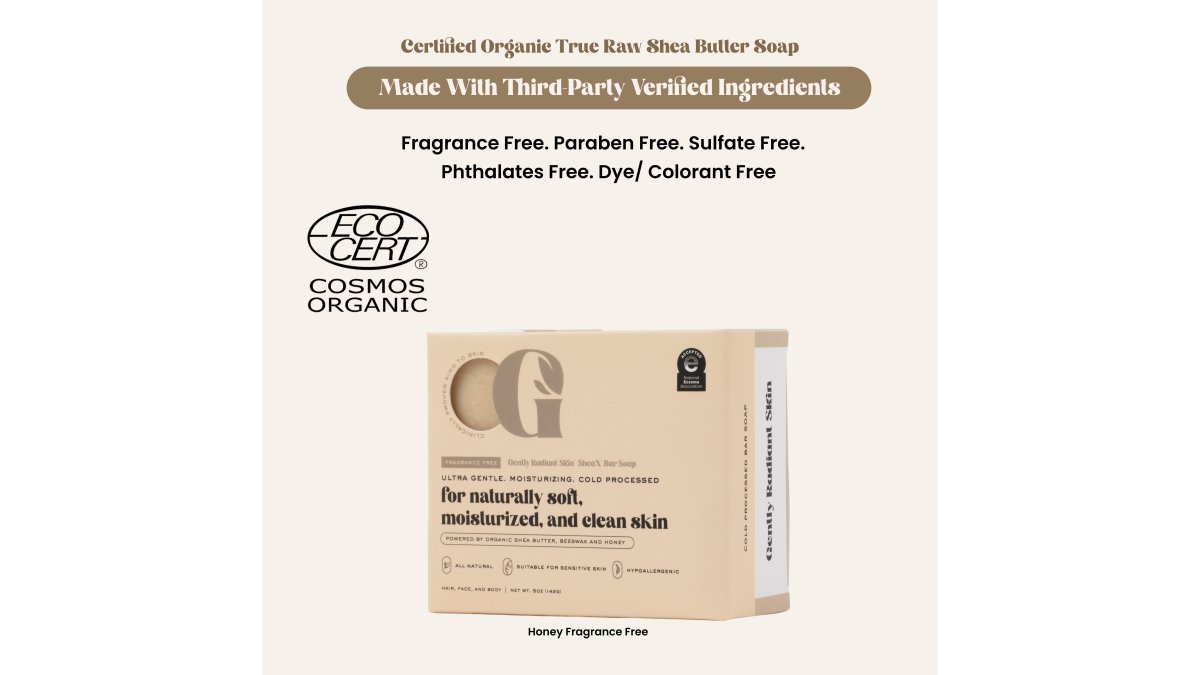
5oz SheaX™ Honey Fragrance Free Bar Soap
Our top pick for reactive and eczema-prone skin. Cold-processed with unrefined raw shea butter and purposeful botanicals, no added fragrance. Accepted by the National Eczema Association, Dermatologist Approved, Pediatrician Approved, and Certified Organic.

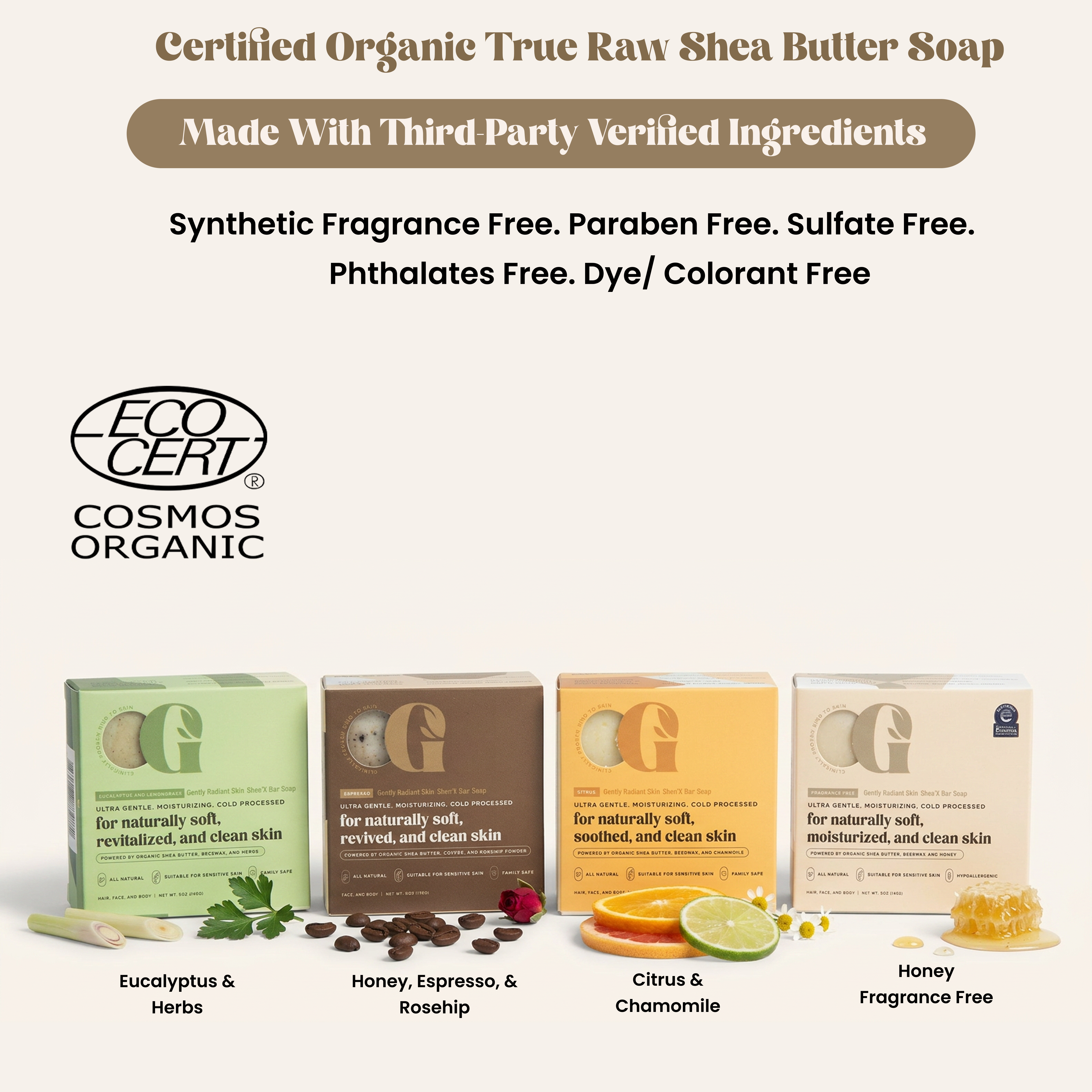
5oz SheaX™ Bar Soap
The same cold-processed base in scented botanical variations for family members without reactive skin. Certified Organic, Dermatologist Approved, and Pediatrician Approved, with the same unrefined raw shea butter core.
5oz SheaX™ Honey Fragrance Free Bar Soap →
Gentle Towels™ and Gentle Washcloth™ Collection
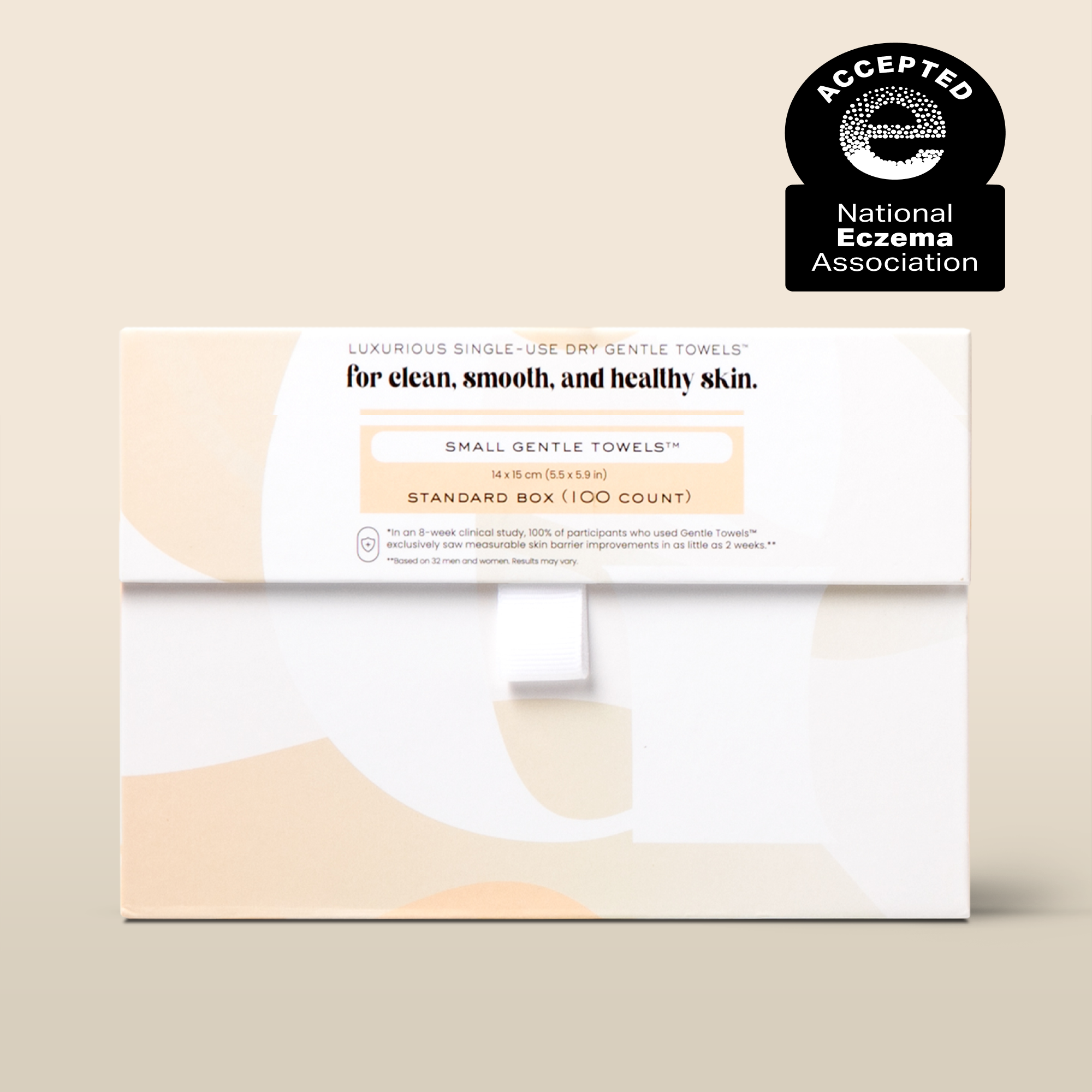
Cleansing tools matter as much as the soap. Gentle Towels™ are ultra-soft, fragrance-free, single-use facial towels in a magnetic flap box, usable wet or dry. Accepted by the National Eczema Association, Dermatologist Approved, Pediatrician Approved, and USDA Bio-based, with clinical testing showing barrier improvement in 2 weeks and reduced blemish appearance by week 8. The 50-towel refill box is $18.00; the standard box is $17.50.
| Product | Price | Key Certifications | Best For |
|---|---|---|---|
| 5oz SheaX™ Honey Fragrance Free Bar Soap | $20.00 | NEA Accepted, Certified Organic, Fragrance Free | Eczema-prone and reactive skin |
| 5oz SheaX™ Bar Soap | $20.00 | Certified Organic, Dermatologist Approved | Mixed-skin households |
| Gentle Towels™ | $17.50 | NEA Accepted, USDA Bio-based | Single-use facial cleansing |
| Gentle Towels™ 50-count Refill | $18.00 | NEA Accepted, USDA Bio-based | Makeup and sunscreen removal |
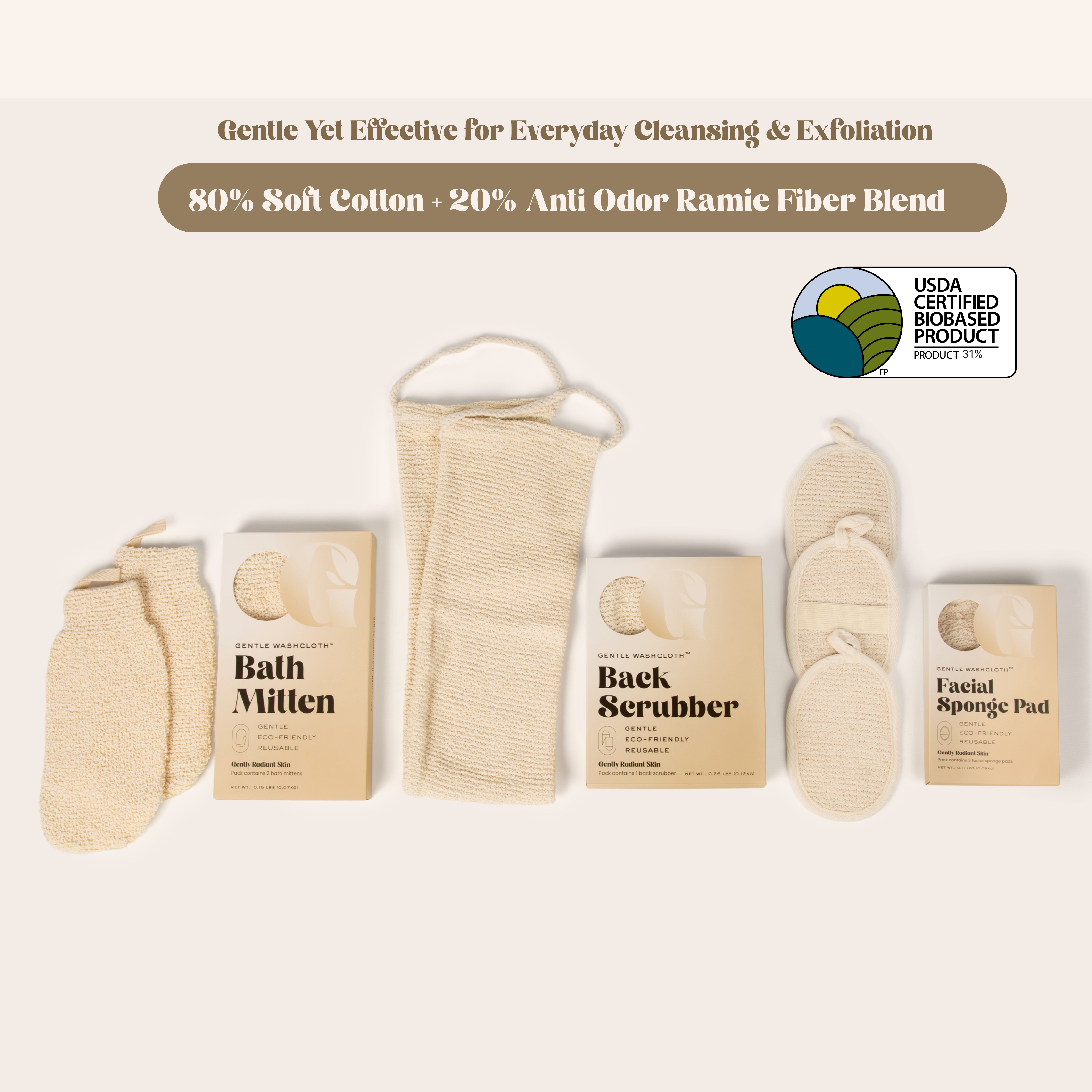
| Gentle Washcloth™ Collection | $50.00 | USDA Bio-based | Reusable face and body cleansing |
| Self-Draining Bamboo Soap Dish | $12.00 | USDA Certified Biobased | Keeping bars dry between uses |
How to Soothe Eczema on Children With a Gentle Routine
Soothing eczema on children comes down to three habits: lukewarm water, fragrance-free cleansing, and immediate moisture. Skip the bubble bath, keep showers short, and pat skin dry instead of rubbing. What most guides omit is the sequence, order and timing do as much work as the products.
A workable routine looks like this:
- Bath or shower in lukewarm water for 5-10 minutes, no longer. Hot water accelerates water loss from an already leaky barrier.
- Cleanse with a fragrance-free, cold-processed bar like the SheaX™ Honey Fragrance Free Bar Soap, applied with hands rather than a loofah. Washcloths and scrubbers create friction that irritates flare-prone skin.
- Pat dry within 3 minutes of leaving the water, leaving skin slightly damp. Remove standing water without removing the water already bound in the outer skin layers.
- Apply moisturizer immediately while skin is still damp. This step matters most, moisturizer on damp skin traps water that would otherwise evaporate, while moisturizer on dry skin mostly sits on the surface.
- Dress in soft cotton and avoid wool or rough seams against flare-prone areas.
The Patch Test Protocol Most Guides Skip
Patch testing is the step most people skip, and it prevents a week of misery. A proper test takes four days, not four minutes, because allergic contact reactions often develop on a delay.
- Day 1: Apply a small amount of the new product to the inner forearm, about the size of a coin. Leave it on for 24 hours without washing.
- Day 2: Check for redness, itching, bumps, or a burning sensation at the 24-hour mark. If any reaction appears, stop and return to the previous product.
- Day 3: If clear, repeat on a small patch near the flare-prone area, the inner elbow or behind the knee for most children, and wait another 24 hours.
- Day 4: If still clear, the product is likely safe for face or full body. Introduce one new product at a time so you can identify the trigger if something goes wrong.
Two things make patch testing more reliable:
- Test the product as you will use it. A bar soap should be lathered and left on the skin, not dabbed on dry, because the surfactant action is part of what can irritate.
- Keep a written log. Note the product, date, and any reaction. Patterns across weeks are easier to spot on paper than from memory, and a dermatologist can use that log to narrow down suspects.
Why Timing Beats Product Choice
A common pattern in pediatric eczema care: the moisturizer is right but the timing is wrong. Moisturizer applied 20 minutes after a bath, once skin has dried, does a fraction of the work it does within three minutes of patting dry. The same applies to cleanser, a gentle bar with hot water and a loofah can still trigger a flare, while a plain bar with lukewarm water and hands often will not.
Cost, Sourcing, and Ingredient Synergy: What the Price Tag Buys
Cost per ounce tells a more honest story than sticker price. A $20 cold-processed shea bar lasting six weeks costs less per use than a $6 drugstore bar that irritates skin and gets replaced twice as often. Factor in the moisturizer you no longer need after every shower, and the gap narrows further.
Frequently Asked Questions
What is the best Shea Nut Organix alternative for eczema-prone skin?
The best alternative is a fragrance-free, cold-processed bar that carries third-party acceptance for eczema. The 5oz SheaX Honey Fragrance Free Bar Soap ($20.00) is accepted by the National Eczema Association and is dermatologist and pediatrician approved. Pair it with Gentle Towels ($17.50), which are clinically tested to improve the skin barrier in 2 weeks. Together they cleanse without stripping the lipid barrier that eczema already struggles to maintain.
What ingredients should I avoid for eczema flare-ups?
Skip synthetic fragrance, essential oils, sulfates, parabens, and drying alcohols. Fragrance is one of the most common triggers for contact dermatitis on reactive skin, and essential oils like citrus or peppermint can sting already-inflamed patches. Look for short ingredient lists built on emollients such as shea butter, which is rich in oleic and linoleic acid. The SheaX Fragrance-Free bar contains no added fragrance, which makes it a safer starting point than most scented alternatives.
How do I soothe eczema on children without triggering more irritation?
Keep baths short and lukewarm, use a fragrance-free cleanser, and pat rather than rub the skin dry. A pediatrician-approved bar like SheaX ($20.00) cleanses gently and leaves a soft, comfortable feel without needing immediate lotion. One customer, Fey E., said the SheaX Fragrance-Free bar helped her daughter's eczema. Patch test on the inner forearm for 48 hours before using any new product on a child's full body.
Do cold-processed soaps actually help eczema symptoms?
Cold processing preserves the natural glycerin and fatty acids in shea butter that hot processing can strip out, so the bar stays more emollient and less drying. That matters for eczema because a stripped skin barrier loses water faster, a process called transepidermal water loss. Cold-processed bars also tend to have shorter ingredient lists, which lowers the odds of hitting a trigger. They are a support tool, not a treatment, so keep using any regimen your dermatologist recommends.
How much do these eczema-friendly alternatives cost per ounce?
The 5oz SheaX bars are $20.00, which works out to $4.00 per ounce. The Gentle Towels box is $17.50, and the 50-count refill pack is $18.00. The Gentle Washcloth Collection is $50.00 and is reusable, so the cost per use drops over time. A self-draining bamboo soap dish at $12.00 keeps bars dry between uses, which makes them last longer and protects the bar from bacterial buildup.