


Shea Nut Organix vs The Yellow Bird: Real Shea Guide
Table of Contents
- Shea Nut Organix vs The Yellow Bird: What the Labels Actually Tell You
- Raw vs Yellow Shea Butter Comparison: Color, Additives, and What It Means for Your Skin
- Benefits of Unrefined Shea Butter for Sensitive and Eczema-Prone Skin
- What Makes the Best Organic Soap for Sensitive Skin
- Sourcing, Sustainability, and Shelf Life: What the Big Brands Don't Tell You
- Patch Testing and Allergic Reactions: A Practical Guide
- Conclusion: Choosing Real Shea Over Marketing Claims
- Frequently Asked Questions
Last Updated: September 18, 2026
Shea Nut Organix vs The Yellow Bird: What the Labels Actually Tell You
Shea Nut Organix vs The Yellow Bird is really a question about pigment. When shoppers compare these two names, they are usually asking why one shea butter looks pale and the other looks bright yellow, and which one is the real thing. This guide from Gently Radiant Skin answers that question, then goes further.
Raw vs Yellow Shea Butter Comparison: Color, Additives, and What It Means for Your Skin
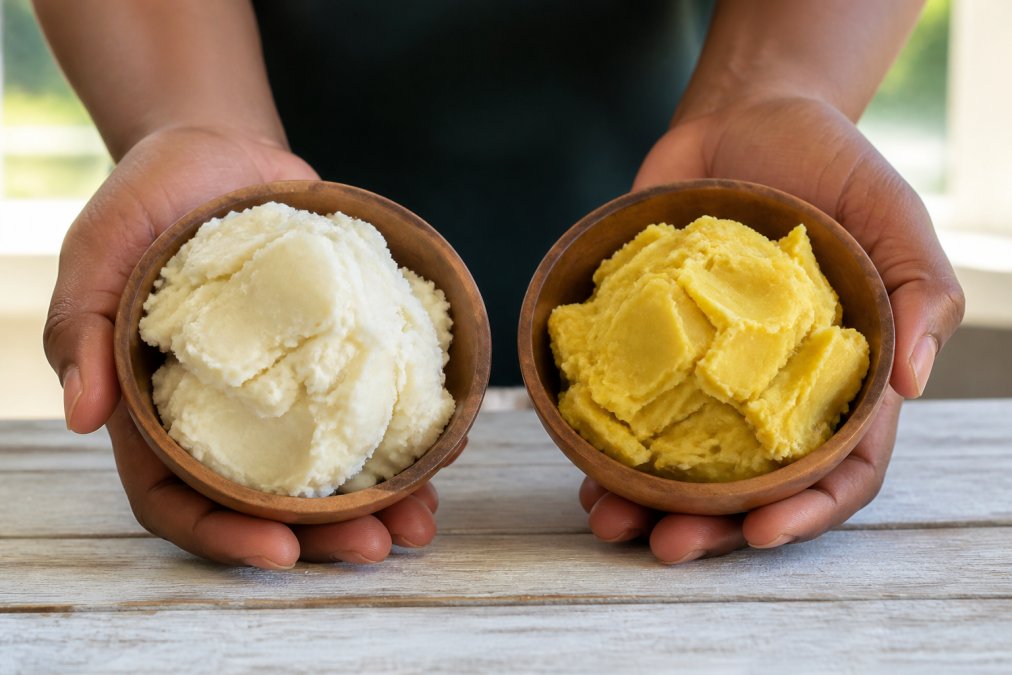
The core difference between raw and yellow shea butter is processing, not purity. Raw butter keeps its natural ivory tone, while bright yellow usually signals either a root infusion or an added colorant. That single distinction drives everything else: nutrient retention, scent, texture, oxidation rate, and how your skin is likely to respond.
Why Some Shea Butter Is Bright Yellow
Borututu root infusion is the traditional reason yellow shea butter exists. The root is dried, ground, and simmered, then the infusion is worked into warmed shea butter. The color comes from carotenoid-type plant pigments and related phenolic compounds that transfer into the fat phase. Those same compounds are why traditional users reached for borututu-infused butter for dull or uneven-looking skin, the infusion adds plant antioxidants on top of shea's own vitamin E.
How Color Relates to Nutrient Retention and Shelf Life
Color is also a rough proxy for how much processing the butter survived. Refined shea is heated, filtered, and often bleached and deodorized. That routine strips much of the vitamin A and vitamin E content and removes the natural scent, which is why refined butter is white and nearly odorless. Unrefined butter keeps those compounds, and keeps the shorter shelf life that comes with them.
How to Spot Added Dyes and Fragrances
Check the ingredient list before you check the color. Real shea butter has one ingredient: shea butter. If you see "fragrance," "parfum," or a color additive like Yellow 5 (also listed as CI 19140) or Yellow 6 (CI 15985), you are looking at a doctored product. Under U.S. Food and Drug Administration labeling rules, color additives must be declared by name, so a genuinely infused butter should list the botanical, borututu root, Cochlospermum angolense, or similar, not a numbered dye.
A few practical tells:
- The scent test. Natural shea smells nutty or smoky, never like vanilla or perfume.
- The stain test. Rub a small amount on a white cloth. Heavy yellow transfer suggests dye; a faint, uneven tint is more consistent with a botanical infusion.
- The label test. "Unrefined" and "cold-pressed" are meaningful words. "Shea-based" is not.
- The texture test. Grainy, slightly uneven butter is normal for unrefined product. Perfectly smooth, uniform yellow is more often refined butter plus color.
Benefits of Unrefined Shea Butter for Sensitive and Eczema-Prone Skin
Unrefined shea butter supports sensitive skin because it is an emollient rich in fatty acids that reinforce the skin barrier. It softens without stripping, which matters when your barrier is already compromised.
What Makes the Best Organic Soap for Sensitive Skin
The best organic soap for sensitive skin is one with a short ingredient list, a fragrance-free formula, and third-party certification you can verify. Everything else is marketing.
Certifications That Matter
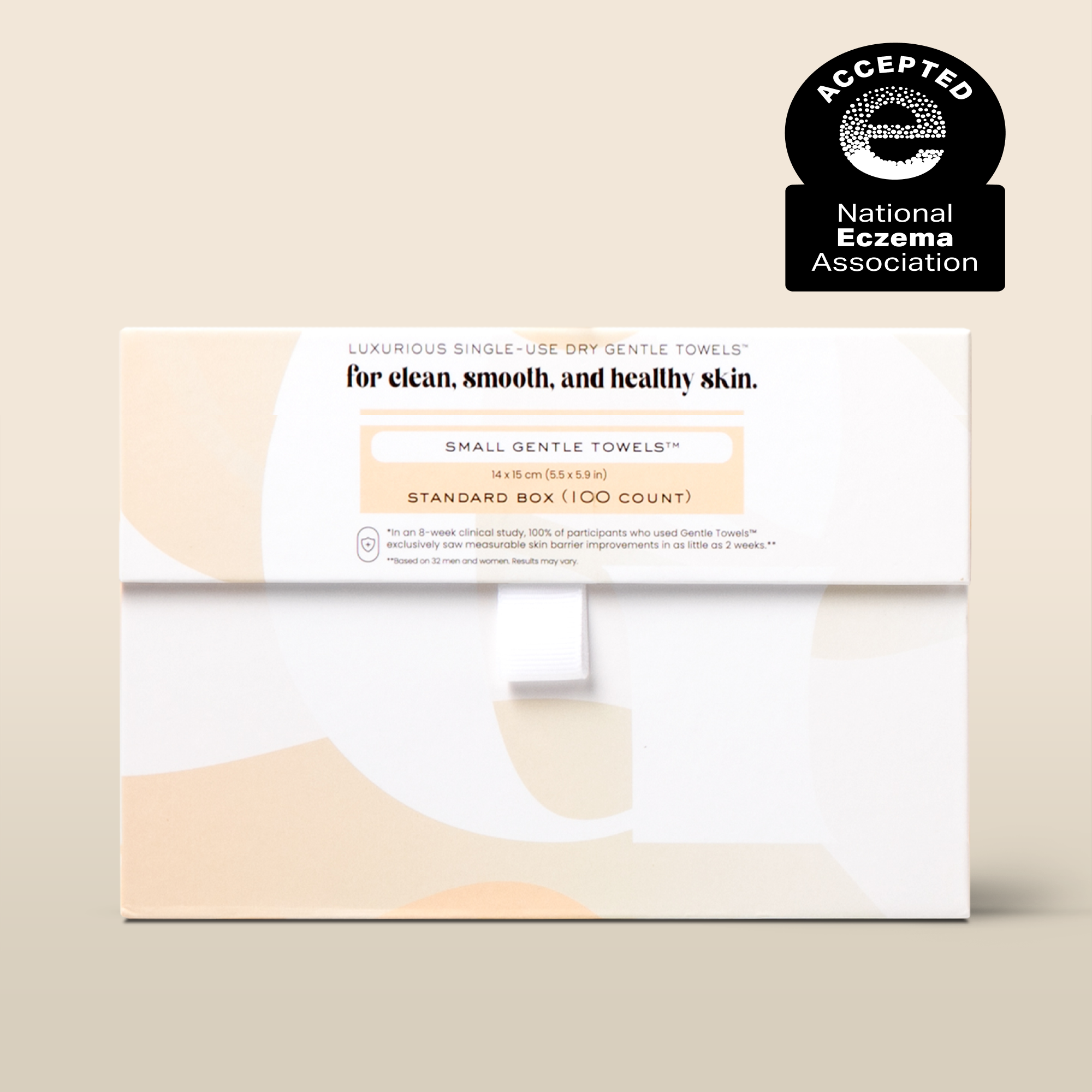
Look for certifications that require testing or review, not self-declared claims. The National Eczema Association's acceptance program reviews ingredients and testing data. USDA organic certification verifies agricultural content. Dermatologist and pediatrician approval signals the formula was reviewed by clinicians.
Ingredients to Avoid
- Synthetic fragrance and parfum. A leading trigger for reactive skin.
- Harsh sulfates. They can strip the barrier and leave skin tight.
- Added dyes. No benefit to skin, and a common irritant.
- Essential oil blends. Natural does not mean non-irritating.
If you are switching from a drugstore bar, give any new soap two full weeks before you judge it.
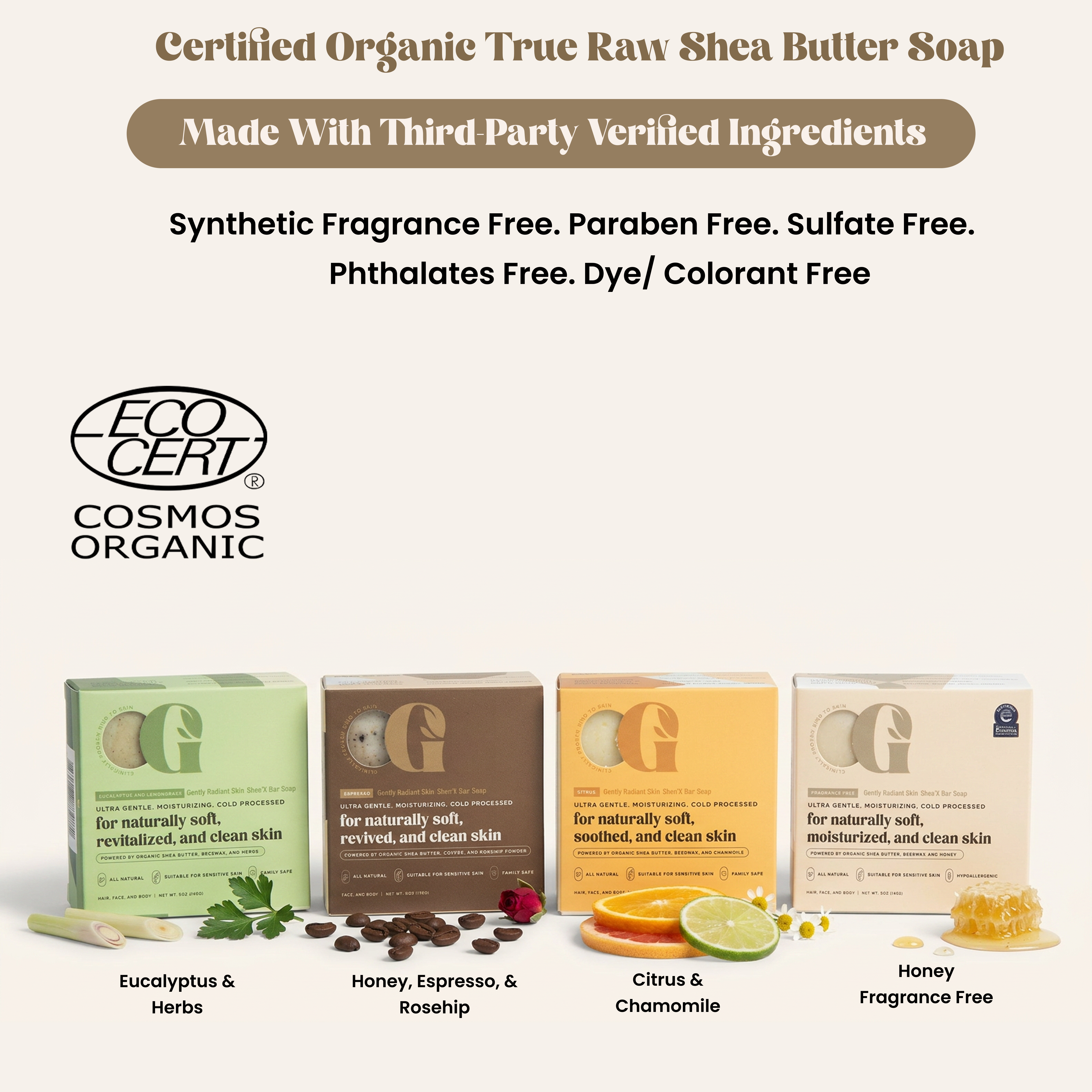
For a genuinely gentle option, the 5oz SheaX™ Citrus & Chamomile Bar Soap (https://gentlyradiantskin.com/products/sheax-organic-citrus-chamomile-bar-soap) pairs cold-process unrefined shea with purposeful botanicals, and it is both dermatologist and pediatrician approved. The 5oz SheaX™ Dead Sea Salt Bar Soap (https://gentlyradiantskin.com/products/sheax-organic-dead-sea-salt-bar-soap) suits anyone who wants the same gentle base with a mineral lift.


| Bar | Best For | Key Feature | Price |
|---|---|---|---|
| SheaX™ Honey Fragrance Free | Eczema-prone, fragrance-sensitive skin | NEA accepted, fragrance free | $20.00 |
| SheaX™ Citrus & Chamomile | Daily gentle cleansing | Dermatologist and pediatrician approved | $20.00 |
| SheaX™ Dead Sea Salt | Mineral-focused cleansing | Certified organic | $20.00 |
| SheaX™ Sea Buckthorn + Licorice | Blemish-prone sensitive skin | Cold-process unrefined shea | $20.00 |
Sourcing, Sustainability, and Shelf Life: What the Big Brands Don't Tell You
Sourcing and shelf life are the two details most labels skip. Unrefined shea butter has a shorter shelf life than refined butter, and where the nuts come from shapes both quality and ethics. This is the section competitors gloss over, so it is worth slowing down.
Shelf Life: Unrefined vs. Refined vs. Infused
Unrefined butter typically keeps for about a year when stored cool (below roughly 75°F), dark, and sealed. Refined butter lasts longer, often 18 to 24 months, because processing strips out the vitamin E, plant sterols, and residual unsaponifiables that eventually turn rancid.
- Keep the container closed and away from light; vitamin E degrades with UV exposure.
- Store below 75°F. Shea melts near body temperature, and repeated melt-and-cool cycles speed oxidation.
Sourcing and Sustainability: What to Ask
Shea is largely harvested and processed by women's cooperatives across West Africa, and the tree is not farmed in the conventional sense, it grows wild, and the nuts are gathered. That means supply depends on protecting standing trees rather than planting new ones, which is why sourcing practices matter for both quality and long-term supply.
Useful questions:
- Is the shea wild-harvested or from a named cooperative?
- Is the butter unrefined, and was it cold-pressed or heat-processed?
- For yellow butter: is the color from borututu root infusion or from an added dye?
- Does the brand disclose the country of origin on the label or website?
Reading the Label Under U.S. Rules
U.S. Food and Drug Administration guidance on cosmetic labeling sets the rules for how ingredients must be listed, which is why reading the label is your most reliable tool. Ingredients appear in descending order of concentration, so "shea butter" should be first on a shea product, not fifth behind water and surfactants. Color additives must be declared by name, and fragrance may be listed generically as "fragrance" or "parfum," which is exactly why that single word is a problem for reactive skin: it can hide dozens of individual compounds.
Patch Testing and Allergic Reactions: A Practical Guide
Patch testing is the fastest way to find out whether a new soap will irritate your skin, and it takes about 48 hours.
Here is how to do it properly:
- Wash a small patch of inner forearm and let it dry.
- Apply a coin-sized amount of the product and let it absorb.
- Leave it uncovered for 24 hours without washing the area.
- Check for redness, itching, or bumps at the 24-hour mark.
- Re-check at 48 hours before using the product on your face or body.
- If you react, stop and note the ingredient list for future reference.
Patch test every new cleanser, even one marketed for sensitive skin.
Conclusion: Choosing Real Shea Over Marketing Claims
Color sells, but it does not cleanse. The honest way to choose between names like Shea Nut Organix and The Yellow Bird is to read the ingredient list, check the certifications, and patch test before you commit.
Frequently Asked Questions
What is the difference between raw and yellow shea butter?
Raw shea butter is unrefined and keeps its natural ivory to pale cream color, with a nutty scent and grainy texture. Yellow shea butter gets its color from added ingredients like borututu root infusion or palm oil, not from the shea nut itself. That means yellow shea butter is often a blend rather than pure shea. If you want the full benefits of unrefined shea butter, look for cold-pressed, unrefined options with no color additives.
Which shea butter is better for eczema-prone skin, yellow or white?
Unrefined ivory shea butter is the safer choice for eczema-prone skin because it has no added dyes, fragrances, or botanical infusions that could trigger irritation. Yellow shea butter often contains borututu root or palm oil, which some people react to. Look for products accepted by the National Eczema Association, like the SheaX Honey Fragrance Free Bar Soap, which is dermatologist and pediatrician approved and made with certified organic ingredients.
How can I tell if shea butter is real or fake?
Real unrefined shea butter has a nutty, slightly smoky scent, a grainy texture that melts on contact with skin, and an ivory or cream color. If it is bright yellow, scent-free, or has a smooth, waxy feel, it likely contains additives or has been highly refined. Check the ingredient list for shea butter listed first, and avoid products with dyes, synthetic fragrance, or palm oil as a primary ingredient.
What makes the best organic soap for sensitive skin?
The best organic soap for sensitive skin uses cold-process methods, unrefined shea butter, and certified organic ingredients with no synthetic fragrance or dyes. Look for dermatologist and pediatrician approvals, National Eczema Association acceptance, and short ingredient lists. The SheaX line from Gently Radiant Skin meets these standards, with options like the Citrus & Chamomile Bar Soap that cleanse gently without stripping the skin barrier.
Does the color of shea butter affect its moisturizing properties?
No. The moisturizing power of shea butter comes from its fatty acids, vitamin A, and vitamin E content, not its color. Unrefined ivory shea butter delivers the same emollient benefits as yellow versions. In fact, yellow shea butter with added palm oil or dyes may dilute the shea content, reducing how well it supports the skin barrier. Color is a marketing signal, not a quality indicator.
Choosing a soap for reactive skin comes down to trust, not color. Gently Radiant Skin makes that choice easier with cold-process unrefined shea butter bars that are Certified Organic, dermatologist and pediatrician approved, and accepted by the National Eczema Association. Get started with Gently Radiant Skin and give your skin a gentler daily cleanse.