


The Yellow Bird Alternative for Eczema: 5 Gentler Options
Table of Contents
- Why Look for a Yellow Bird Alternative for Eczema?
- What to Look for in an Eczema-Friendly Cleanser
- Our Top Pick: SheaX™ Honey Fragrance Free Bar Soap
- Best for Facial Cleansing: Gentle Towels™
- The Classic Choice: SheaX™ Original Bar Soap
- A Budget-Friendly Option: Gentle Towels™ Daily Facial Towels
- The Body Cleansing Duo: Gentle Washcloth™ Collection
- How to Soothe Eczema on Children with These Products
- Frequently Asked Questions
Last Updated: September 7, 2026
Why Look for a Yellow Bird Alternative for Eczema?
Eczema affects roughly one in ten people in the United States, and for those living with atopic dermatitis, the quest for a cleanser that doesn't trigger a flare-up can feel endless, which is why The Yellow Bird alternative for eczema has become a popular search term (the American Academy of Dermatology). The Yellow Bird alternative for eczema that many families are turning to involves a shift away from synthetic chemicals toward cold-processed, botanically rich soaps that respect the skin barrier. Gently Radiant Skin offers a thoughtfully curated collection of cleansing essentials designed to transform your daily skincare ritual into a moment of comfort and restoration. Below, we'll show you exactly which gentle options work best and why ingredient transparency matters more than marketing claims.
The skin barrier of someone with eczema struggles to retain moisture, a condition dermatologists call increased transepidermal water loss. Harsh surfactants in conventional soaps strip away lipid replenishment, leaving skin vulnerable to irritation. A truly eczema-friendly cleanser must clean without disrupting this balance, which is why fragrance-free formulas and emollient-rich ingredients like colloidal oatmeal and shea butter are staples in dermatologist-recommended routines.
What to Look for in an Eczema-Friendly Cleanser
The most effective eczema-friendly skincare routine starts with understanding what triggers your skin, not just what the label claims. Most commercial cleansers contain synthetic fragrances, sulfates, and preservatives that can worsen pruritus and compromise skin barrier function. Check for the National Eczema Association seal, which indicates the formula has been reviewed for safety on sensitive skin.
Ingredient-Specific Sensitivity Testing: The Missing Step
Most guides tell you to look for "fragrance-free" and "gentle" formulas, but they rarely explain how to test whether a product is safe for your specific skin. Eczema patients are not uniformly reactive, a product that works for one person can trigger a severe flare in another. The culprit is often a specific botanical extract, preservative, or carrier oil that marketing materials never mention.
Here is a practical, dermatologist-recommended approach to ingredient-specific sensitivity testing that goes beyond the standard patch test:
Step 1: The 48-Hour Forearm Test. Apply a pea-sized amount to a 1-inch square on your inner forearm, twice daily for 48 hours. Do not wash the area. Cover it with a bandage. If you see redness, raised bumps, or feel itching or burning, wash it off immediately and do not use the product.
Step 2: The 7-Day Extended Test. If the 48-hour test is clear, move to a 7-day trial on a small area prone to eczema, the inside of the elbow or behind the knee works well. Apply the product daily as you would normally. Some allergic reactions are delayed and only appear after several days of cumulative exposure, so this extended window catches reactions a quick patch test misses.
Step 3: The Ingredient Isolation Method. If you have a known trigger, or suspect a specific ingredient, test that ingredient in isolation. For example, if you react to a "natural" soap containing shea butter, honey, and essential oils, you cannot tell which one is the problem. Purchase a plain, unrefined shea butter and test it alone, then raw honey alone, then a fragrance-free soap base alone. This is the only way to pinpoint the exact trigger.
Hidden Triggers in "Natural" Products
A common pattern dermatologists see is patients who switch to "all-natural" products only to experience worse flares. Hidden triggers include:
- Essential oils, Even "therapeutic grade" lavender, tea tree, and chamomile oils are common contact allergens. The National Eczema Association does not certify products containing essential oils as fragrance-free, even if the oil is added for skin benefits rather than scent.
- Coconut-derived surfactants, Sodium coco-sulfate and cocamidopropyl betaine, derived from coconut, are gentle but can still cause reactions in a subset of patients.
- Botanical extracts, Calendula, chamomile, and aloe vera are anti-inflammatory in theory, but plant extracts contain dozens of chemical compounds, any of which can be an allergen.
- Preservatives, Phenoxyethanol and ethylhexylglycerin are common in "natural" formulations and are less irritating than parabens, but they are not universally tolerated.
Fragrance-Free Formulas and Skin Barrier Support
Fragrance is the single most common cause of contact dermatitis in skincare products (the American Academy of Dermatology). Even "natural" essential oils can trigger reactions, so fragrance-free is the gold standard for eczema care. Look for cleansers with moisturizing agents like unrefined shea butter, which supports lipid replenishment and calms inflammation while you wash.
The Role of pH and Surfactant Type
Healthy skin has a slightly acidic pH of around 4.5 to 5.5 (peer-reviewed research). Traditional bar soaps are alkaline (pH 9 to 10), which disrupts the acid mantle and increases transepidermal water loss. Cold-processed soaps like SheaX™ naturally land in a more neutral range. Also look for the surfactant type: non-ionic or amphoteric surfactants (like decyl glucoside or cocamidopropyl betaine) are gentler than anionic surfactants (like sodium lauryl sulfate), which strip lipids and increase irritation.
By understanding not just what to look for but how to test for it, you take control of your skincare routine in a way no product label can guarantee. The right cleanser is the one that passes your personal, evidence-based sensitivity testing.
Our Top Pick: SheaX™ Honey Fragrance Free Bar Soap
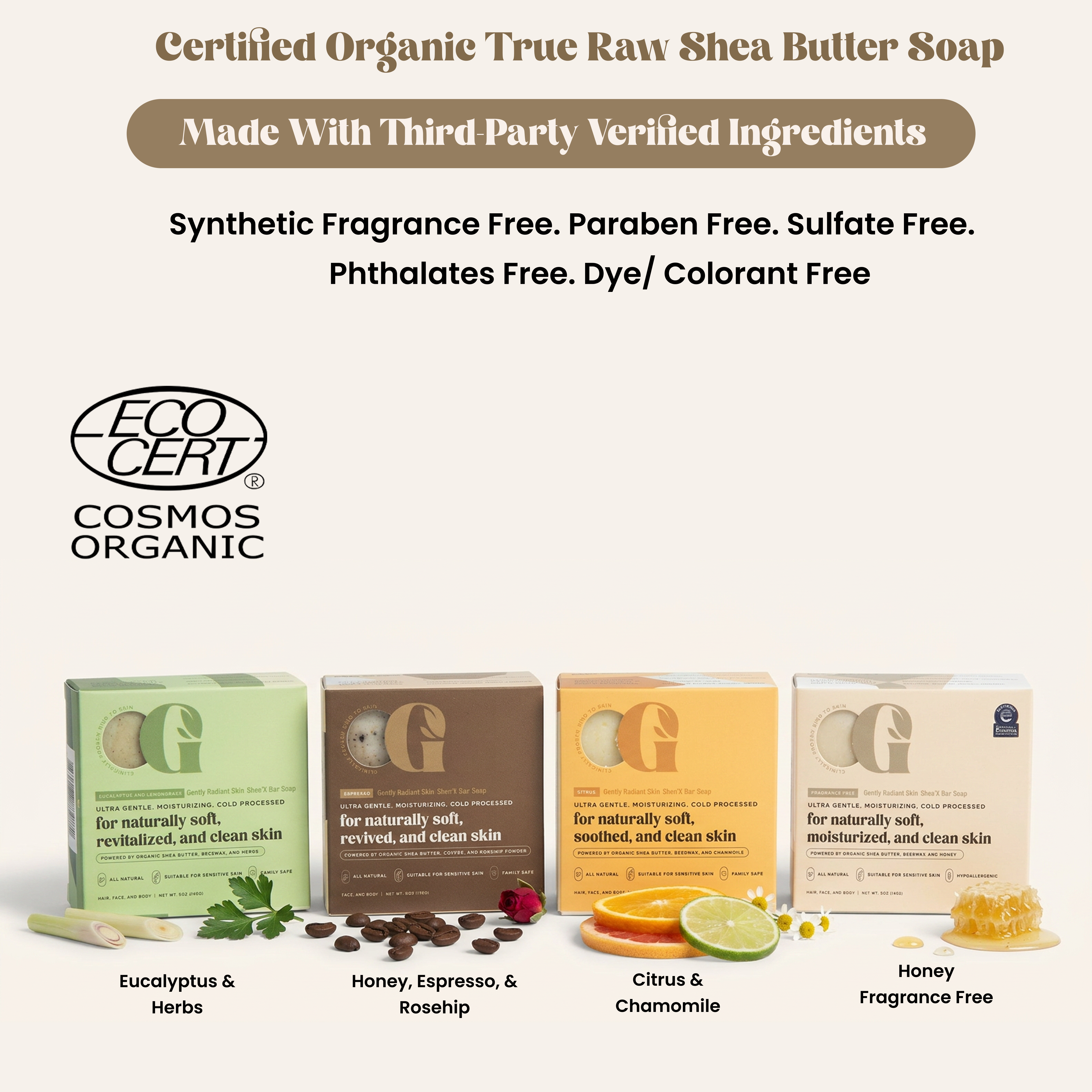
For most families, the 5oz SheaX™ Honey Fragrance Free Bar Soap is the best Yellow Bird alternative for eczema because it delivers genuine clinical credentials without compromising on comfort. Priced at $20.00, this cold-processed bar is accepted by the National Eczema Association, dermatologist approved, and pediatrician approved, making it one of the few cleansers that works for both children and adults with reactive skin. The raw shea butter base provides natural lipid replenishment, repairing the skin barrier while you cleanse.

Cold-processed soap retains more natural glycerin and unsaponified shea butter than commercially milled bars. Customers like Fey E. report that "The SheaX Fragrance-Free bar helped my daughter's eczema, and I'm genuinely amazed." The honey adds humectant properties that draw moisture into the skin, while the absence of fragrance eliminates the most common trigger for flare-ups.
Best for Facial Cleansing: Gentle Towels™
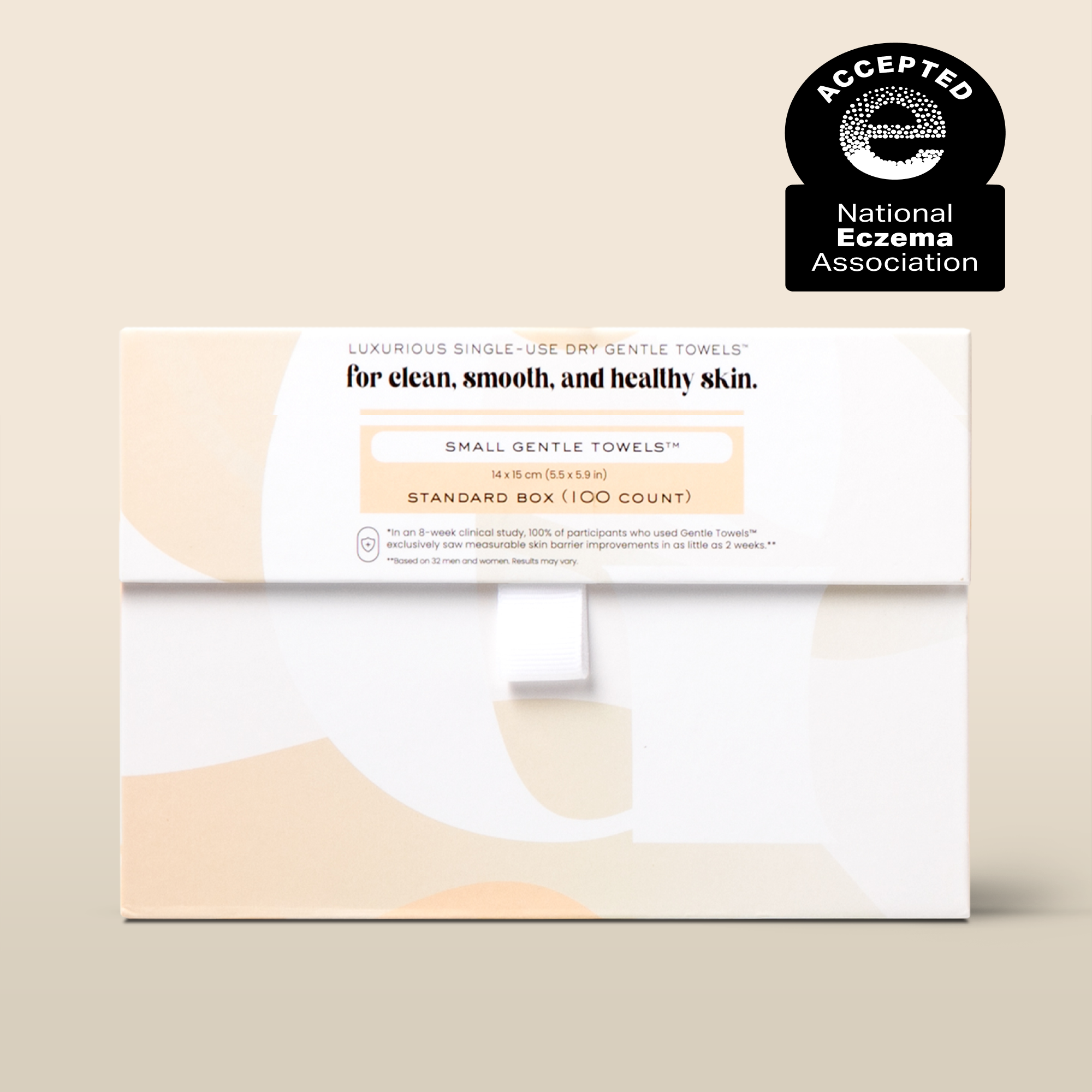
Facial skin with eczema requires a different approach than the body, as the barrier here is thinner and more reactive to friction. Gentle Towels™ at $17.50 are ultra-soft, single-use facial towels that eliminate the risk of bacterial transfer from reusable washcloths. Clinically tested and fragrance-free, these USDA Bio-based towels improve the skin barrier in 2 weeks and reduce the appearance of blemishes by week 8.

The key advantage is hygiene. Reusable washcloths can harbor bacteria and detergent residue that aggravate eczema, even after washing. Using a fresh towel each time ensures you're never reintroducing irritants to stressed skin. These work wet for cleansing or dry for patting moisture into the skin after applying topical remedies.
The Classic Choice: SheaX™ Original Bar Soap
If you prefer a straightforward formula without botanical additions, the 5oz SheaX™ Bar Soap delivers the same cold-processed raw shea butter base at $20.00. This version skips the honey for a pure, uncomplicated cleanse that suits the most sensitive skin types. It carries the same approvals as the honey variant, making it a reliable Yellow Bird alternative for eczema when you want to minimize variables.

| Product | Price | Key Feature | Best For |
|---|---|---|---|
| SheaX™ Honey Bar | $20.00 | NEA Accepted, fragrance free | Kids and adults with reactive skin |
| Gentle Towels™ | $17.50 | Clinically tested, single-use | Facial cleansing and makeup removal |
| SheaX™ Original Bar | $20.00 | Pure shea, no botanicals | Ultra-sensitive, minimal-ingredient routines |
| Gentle Towels™ Daily | $18.00 | 50 count, refillable box | Daily facial cleansing on a budget |
| Gentle Washcloth™ Set | $50.00 | Cotton and ramie blend | Full body cleansing with light exfoliation |
A Budget-Friendly Option: Gentle Towels™ Daily Facial Towels
For families who go through facial towels quickly, the Gentle Towels™ Daily Facial Towels offer the same clinically tested benefits at $18.00 for 50 towels. At roughly $0.36 per use, this option makes an eczema-friendly routine accessible without the premium price tag of other single-use products. The refillable magnetic flap box keeps towels accessible and hygienic between uses.
These towels measure 5.5 x 6 inches, a practical size for both adult faces and children's smaller features. Customers like Mary I. appreciate the convenience: "Gentle Towels are so convenient, and I love that they come in so many sizes." For makeup and sunscreen removal, wet the towel and hold it against the skin for a few seconds before wiping, allowing the fibers to lift debris without aggressive scrubbing.
The Body Cleansing Duo: Gentle Washcloth™ Collection
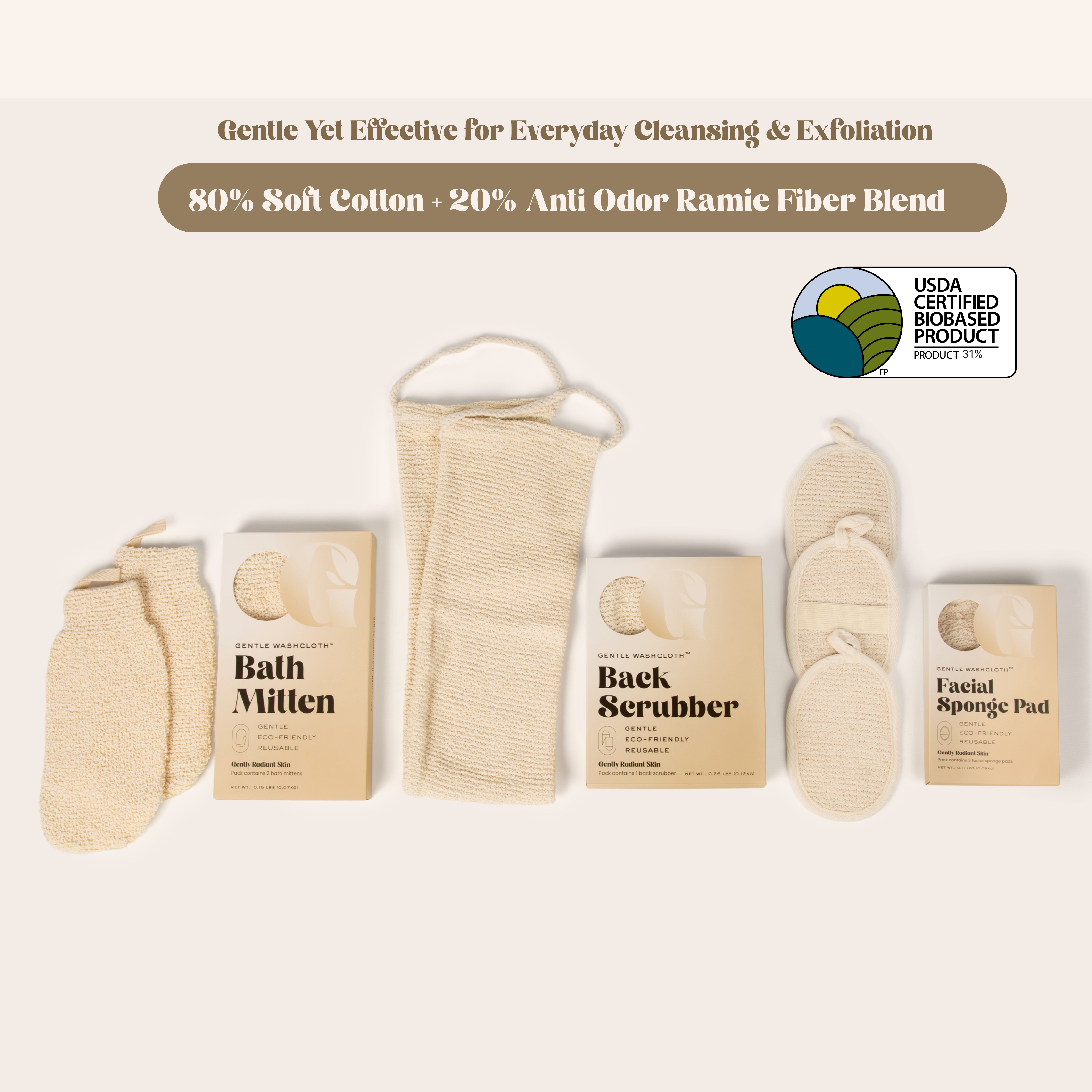
Full-body cleansing with eczema requires a tool that cleans effectively while providing controlled, gentle exfoliation to remove flaking skin without damaging new skin underneath. The Gentle Washcloth™ Collection at $50.00 uses a USDA certified biobased cotton and ramie fiber blend for smooth, controlled cleansing. Joan M. notes, "I love the Gentle Washcloth bath mitten, it's exactly what I hoped for."
The bath mitten design is particularly useful for parents washing children with eczema, as it allows you to control pressure and reach awkward areas without fabric bunching or dragging. The ramie fibers provide just enough texture to lift away dry, flaking skin, while the cotton base stays soft against inflamed areas. Pair this with the SheaX™ Honey bar for a complete body cleansing routine.
How to Soothe Eczema on Children with These Products
Learning how to soothe eczema on children starts with establishing a consistent, gentle bathing routine, but a truly effective plan goes beyond the bathtub. The most successful approach for pediatric eczema is a hybrid one: using natural, barrier-supporting cleansers as the daily foundation while keeping conventional medical treatments ready for breakthrough flares.
The Hybrid Bathing Protocol
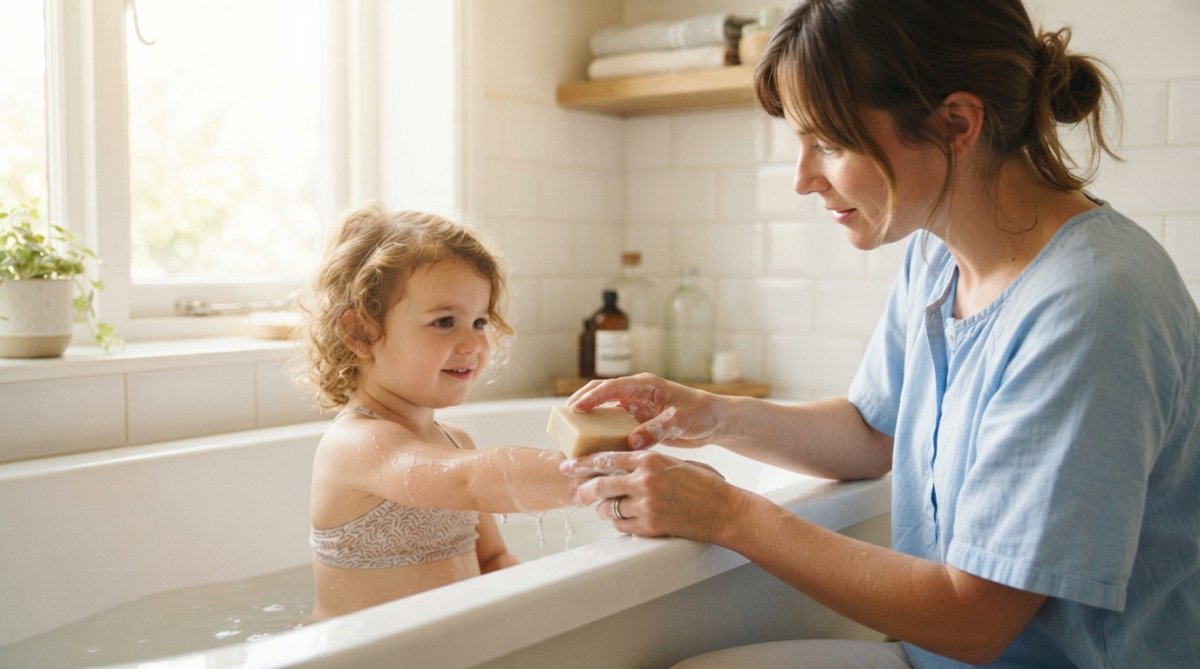
Bath time should be limited to 10 minutes using lukewarm water, as prolonged hot water strips the skin barrier and worsens inflammation. Apply the SheaX™ Honey bar directly to wet skin, then rinse and gently pat dry with a soft towel rather than rubbing. The National Eczema Association recommends a soak-and-smear approach: apply a thick emollient within three minutes of patting dry to lock in moisture. Gentle Towels™ work well here, as you can use a dry towel to pat on moisturizer without disturbing tender skin.
When to Layer in Prescription Treatments
Many pediatricians and pediatric dermatologists support a layered approach. For a child with active, itchy patches, a low-potency topical corticosteroid (like hydrocortisone 1%, available over the counter) applied once daily to the affected area for a short course, typically 5 to 7 days, remains the first-line standard of care. The key is timing: apply the steroid first, wait 15 to 20 minutes for absorption, then apply your emollient or barrier cream on top. This "steroid then seal" method maximizes the medication's effect while protecting the surrounding skin.
For maintenance between flares, many dermatologists recommend "weekend therapy" or proactive application: applying a thin layer of a prescription-strength topical calcineurin inhibitor (like tacrolimus or pimecrolimus) twice a week to previously affected areas to prevent recurrence. Natural cleansers like SheaX™ play a supporting role here, they keep the skin barrier resilient so the prescription medication can work more effectively and less frequently.
The Cost-Benefit Reality for Families
A common pattern families face is the assumption that natural products and prescription medications are competing budget items. In practice, they serve different purposes. Natural cleansers like the SheaX™ bar at $20.00 last 4 to 6 weeks with daily use, making them a modest recurring cost. Consistent use of barrier-supporting cleansers can reduce flare frequency, which in turn reduces the number of steroid prescriptions and dermatologist visits needed each year.
Building a Written Action Plan
Most practitioners find that families who succeed with pediatric eczema have a written action plan. A simple version includes three tiers: (1) Daily maintenance, lukewarm baths with SheaX™ Honey bar, immediate moisturization, and cotton clothing; (2) Early flare response, add the topical steroid or calcineurin inhibitor as prescribed, continue the same cleansing routine, and avoid introducing new products; (3) Escalation, if the flare does not improve within 48 to 72 hours or if signs of infection appear (weeping, honey-colored crusting, spreading redness), contact your pediatrician or dermatologist immediately.
Patch Testing Before You Switch
Before switching to any new product, natural or medical, dermatologists recommend patch testing on a small area of skin for several days. This is especially important for children, whose skin reacts differently than adult skin. Apply the product to the inner forearm twice daily for three to five days and monitor for increased redness, itching, or new patches. If no reaction occurs, you can confidently incorporate the product into your full routine. This step is non-negotiable, even for products labeled "gentle" or "hypoallergenic."
By framing your approach this way, you move beyond the false choice between natural and conventional care and give your child the benefit of both, fewer flares, lower long-term costs, and a clear path forward when things get worse.
Frequently Asked Questions
What makes a good Yellow Bird alternative for eczema?
A good alternative for eczema should be fragrance-free, use gentle surfactants, and contain ingredients that support skin barrier function, like shea butter or colloidal oatmeal. It should also be free of harsh sulfates and synthetic chemicals that can trigger the itch-scratch cycle. Look for products that are dermatologist-tested and have clinical evidence of improving skin barrier health.
How does shea butter help with skin barrier repair in eczema patients?
Shea butter is rich in fatty acids and vitamins that help replenish the skin's lipid barrier. A compromised barrier allows moisture to escape and irritants to enter, which is a core problem in atopic dermatitis. By providing these lipids, shea butter helps reduce transepidermal water loss and supports the skin's natural repair process, making it a valuable ingredient in an eczema-friendly skincare routine.
Are bar soaps or liquid cleansers better for soothing eczema on children?
The best choice depends on the formulation, not the format. A cold-processed bar soap made with unrefined shea butter and free from fragrance and harsh detergents can be very gentle and moisturizing. The key is to avoid products with sulfates, which strip the skin. Look for a soap that is accepted by the National Eczema Association and designed to cleanse without disrupting the skin barrier.
How do cold-processed soaps compare to commercial eczema cleansers?
Cold-processed soaps retain the natural glycerin and unsaponified oils, like shea butter, which act as natural moisturizing agents. Many commercial cleansers strip these away and add synthetic chemicals to compensate. For eczema-prone skin, a cold-processed soap with minimal, organic ingredients can provide gentler cleansing while helping to calm inflammation and support the skin microbiome, reducing the need for immediate lotion after bathing.