


How to Tell if Skincare Is Greenwashed: 2026 Guide
Table of Contents
- What Is Greenwashed Skincare? Legal Definitions and Marketing Realities
- How to Read Skincare Ingredient Labels Like a Formulator
- Common Greenwashing Buzzwords in Cosmetics and What They Hide
- Third-Party Beauty Certifications That Actually Verify Claims
- The Trust-Score Framework: How to Tell if Skincare Is Greenwashed in 5 Steps
- The Carbon Footprint of Natural Ingredients: What Brands Do Not Tell You
- Frequently Asked Questions
Last Updated: September 13, 2026
What Is Greenwashed Skincare? Legal Definitions and Marketing Realities
Greenwashed skincare is any product marketed with environmental or "natural" language that overstates, obscures, or misrepresents what the formula actually contains. The term describes a gap between the label and the lab. This guide from Gently Radiant Skin breaks down exactly how to tell if skincare is greenwashed, from ingredient lists to certification logos.
The stakes are higher than most shoppers realize. The Federal Trade Commission's Green Guides establish when environmental marketing claims cross into deception, and the agency has repeatedly brought enforcement actions against companies whose "all natural" or "eco-friendly" labels did not hold up. Meanwhile, the FDA's cosmetics labeling requirements govern what must appear on a label, but they do not pre-approve marketing terms like "clean" or "green." That gap is where greenwashing lives.
What Is Actually Legally Enforceable vs. Marketing Fluff
Most greenwashing guides stay subjective. The more useful question is which claims a regulator can actually act on. Here is the split:
| Claim Type | Legal Status | Who Can Enforce |
|---|---|---|
| "Organic" on a cosmetic | Not a regulated cosmetic term; only enforceable if it meets USDA organic standards | USDA (for the seal), FTC (for deceptive use) |
| "Natural" | No legal definition for cosmetics | FTC, only if the claim is deceptive in context |
| "Chemical-free" | Scientifically impossible; treated as deceptive | FTC |
| "Non-toxic" | No regulatory definition | FTC, if it implies a competitor is unsafe |
| "Dermatologist-tested" | Not defined; scope undisclosed | FTC, if the testing claim is misleading |
| "Cruelty-free" | Not defined by any federal agency | FTC, if paired with a false certification |
| "Recyclable" | Defined by the FTC Green Guides | FTC |
| "Biodegradable" | Defined by the FTC Green Guides | FTC |
The pattern is consistent: environmental claims with a defined meaning (recyclable, biodegradable, compostable) are the ones the FTC can hold a brand to. Vague wellness terms (clean, pure, non-toxic) have no federal definition, which is precisely why brands lean on them.
The Enforcement Reality
The FTC does not pre-approve labels. It acts after the fact when a claim is demonstrably false or unsubstantiated. The practical takeaway for shoppers: a claim being legal does not mean it is verified. "Natural" can appear on a label with zero substantiation because no rule defines it. That is the loophole greenwashers exploit.
Below, we'll show you exactly how to tell if skincare is greenwashed using a five-step framework, plus the buzzwords, certifications, and label tricks that separate honest brands from performative ones.
How to Read Skincare Ingredient Labels Like a Formulator
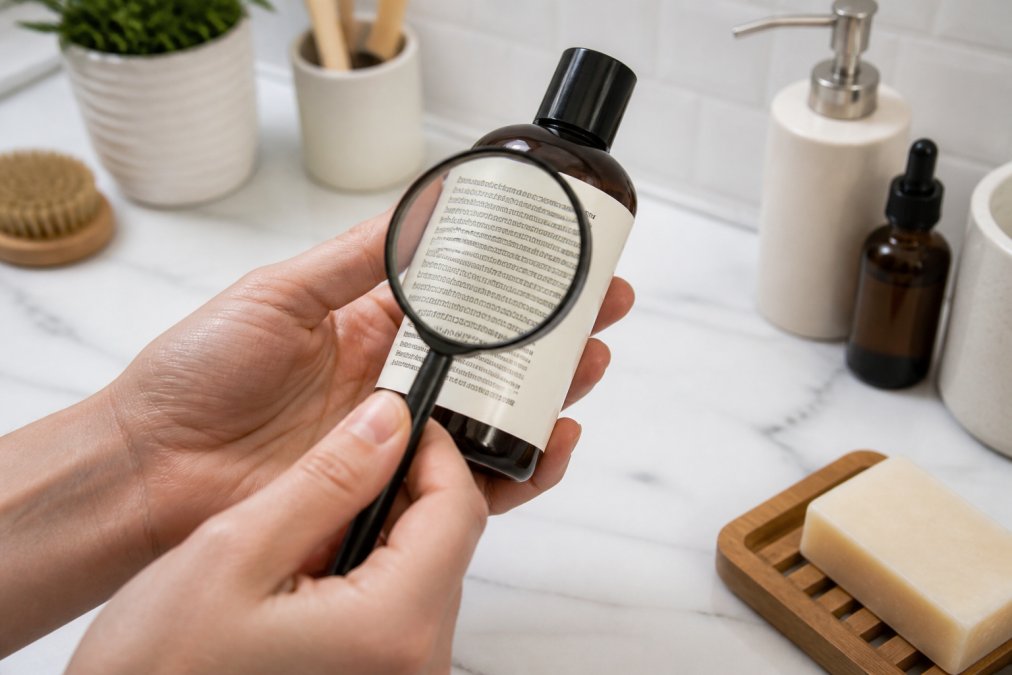
Reading a skincare ingredient label starts with understanding that ingredients are listed by weight, and everything after the first few entries is present in tiny amounts. If a brand's hero botanical appears near the bottom of a 40-ingredient list, it is likely there for the label, not the formula.
Decoding INCI Names and Concentration Clues
The International Nomenclature of Cosmetic Ingredients (INCI) system standardizes how ingredients appear on labels worldwide, which means "aqua" always means water and "butyrospermum parkii" always means shea butter. Two rules matter most:
- Order equals concentration. The first five ingredients typically make up the bulk of the formula.
- Under 1% is a free-for-all. Preservatives, fragrances, and actives below 1% can be listed in any order, so a "featured" extract may be nearly absent.
A common mistake is assuming a long botanical list means a potent formula. Often it means the opposite: dozens of extracts at trace levels, none of them doing measurable work. When a brand lists its star ingredient last, that is your first clue about how to tell if skincare is greenwashed.
Common Greenwashing Buzzwords in Cosmetics and What They Hide
The most common greenwashing buzzwords in cosmetics are "chemical-free," "clean," "non-toxic," and "eco-friendly," and each one is either meaningless or misleading. Water is a chemical. "Clean" has no legal definition. "Non-toxic" implies a competitor's product is toxic, which no regulator has confirmed.
Here is what these terms actually signal:
| Buzzword | What It Implies | What It Actually Means |
|---|---|---|
| Chemical-free | No synthetic ingredients | Scientifically impossible; water is a chemical |
| Clean | Safer, purer formula | No legal definition; self-applied |
| Non-toxic | Competitors are toxic | No regulatory basis |
| Eco-friendly | Low environmental harm | Unverified without certification |
| Dermatologist-tested | Clinical validation | Testing scope is undisclosed |
Third-Party Beauty Certifications That Actually Verify Claims
Third-party beauty certifications verify claims because an independent body, not the brand, audits the formula, facility, or sourcing. The key word is "independent." A logo designed in-house proves nothing.
Visual Guide to Certification Logos
When you spot a seal, verify it against the issuing body's own website before trusting it. Legitimate seals share three traits: a named issuer, published standards, and a searchable list of certified products.
| Seal | Issuing Body | What It Verifies | How to Check It |
|---|---|---|---|
| USDA Organic | USDA National Organic Program | At least 95% certified organic content by weight | Search the USDA Organic Integrity Database |
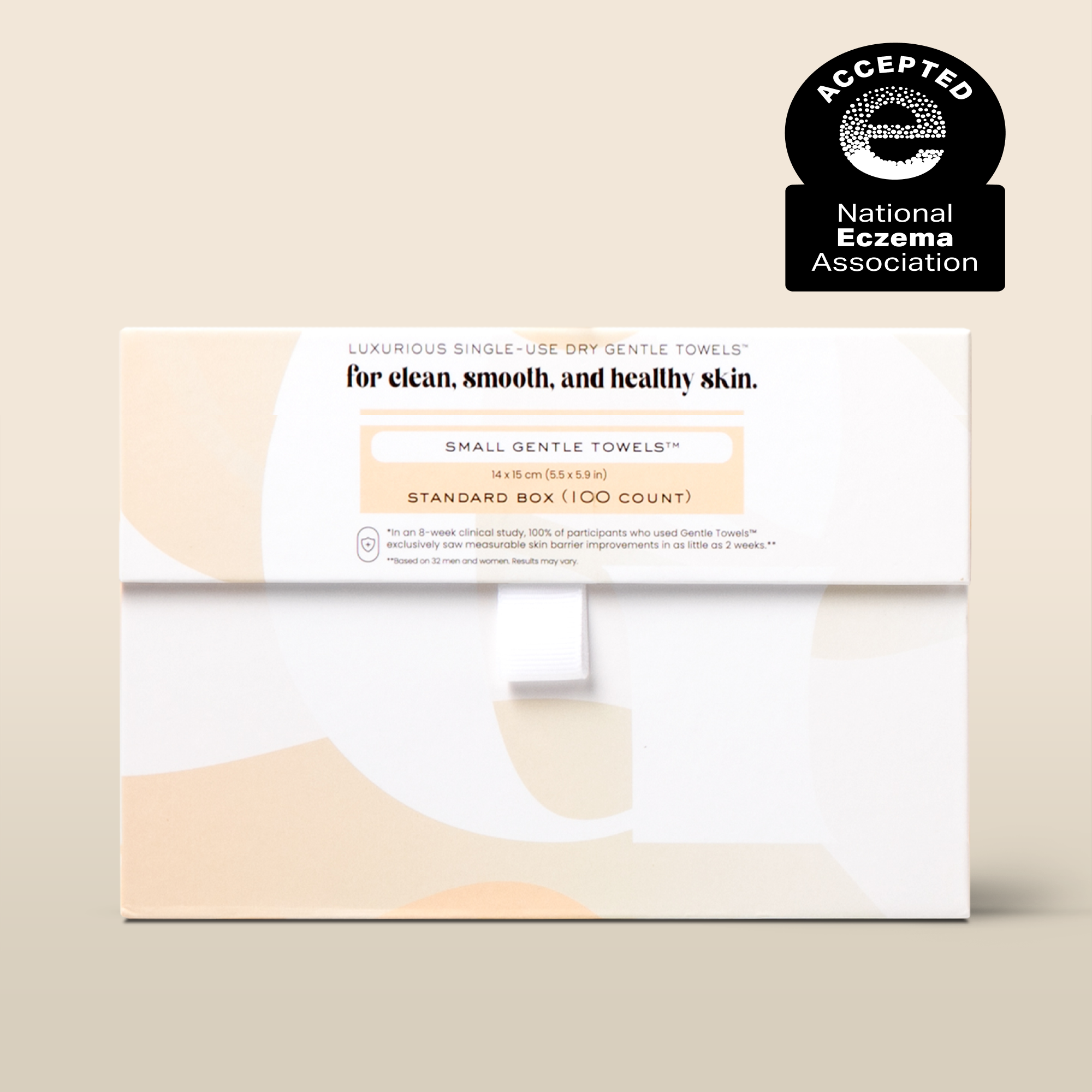
| National Eczema Association Seal of Acceptance | National Eczema Association | Independent review of ingredients and testing data | Look up the product in NEA's accepted-products list |
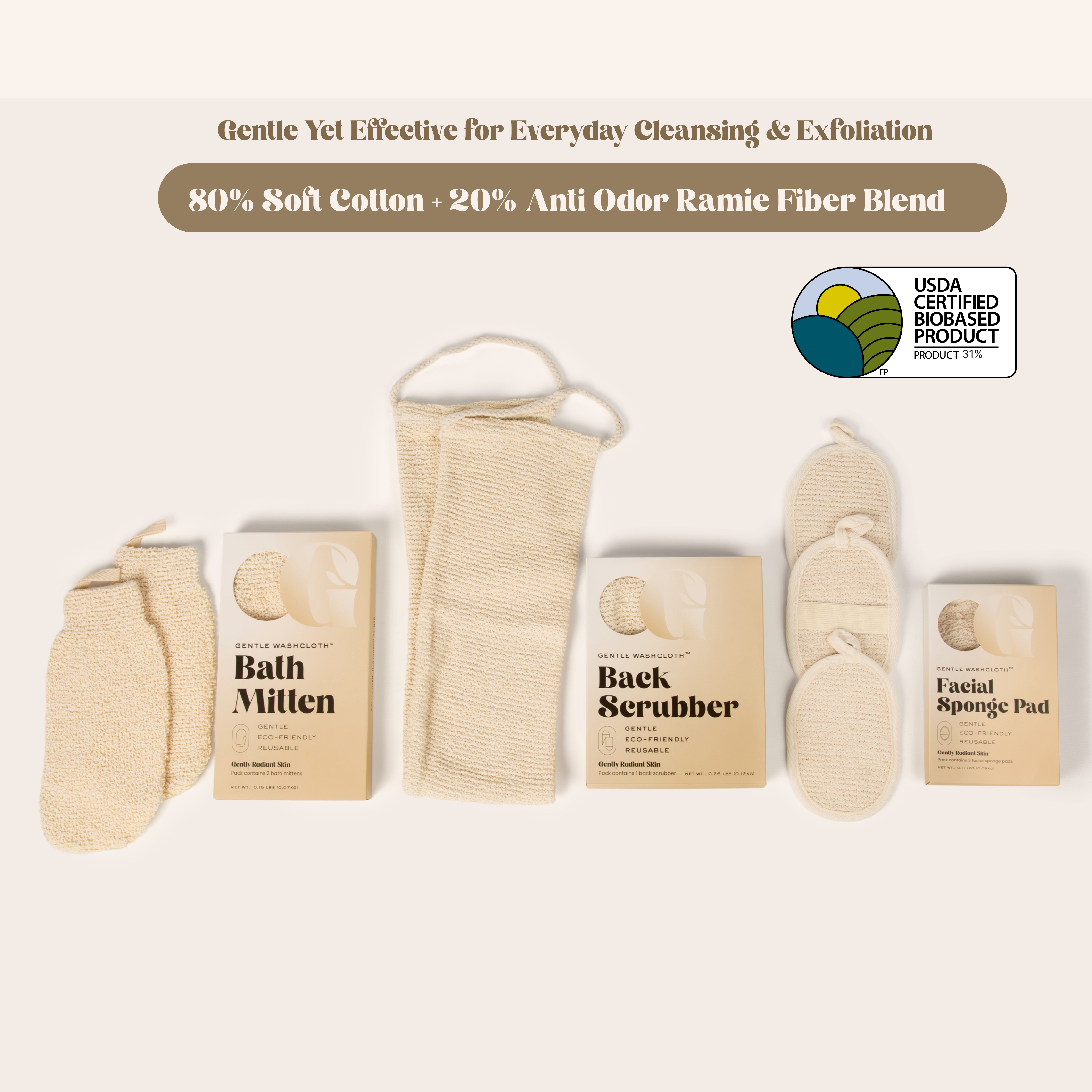
| USDA BioPreferred / Bio-based | USDA BioPreferred Program | Verified percentage of biobased content | Check the USDA BioPreferred catalog |
| Leaping Bunny | Cruelty Free International | Independent supply-chain audit for animal testing | Search the Leaping Bunny company list |
| Fair Trade Certified | Fair Trade USA | Sourcing and labor standards | Verify on Fair Trade USA's product finder |
| B Corp | B Lab | Overall social and environmental performance | Look up the company on B Lab's directory |
How to Spot a Fake Eco-Label
A self-designed seal is the most common certification trick in skincare. The tells are consistent:
- No named issuer. The logo says "EcoPure" or "Green Certified" but never names the organization behind it.
- No searchable database. A real certifier lets you look up certified products. A fake one does not.
- Vague scope. "Certified sustainable" without saying what was audited, the ingredient, the packaging, or the whole company?
- A logo that mimics a real one. Green leaves and checkmarks are easy to imitate. Read the issuer name, not the icon.
A legitimate certification always traces back to a named organization with public standards. If a logo has no verifiable issuer, treat it as decoration.
The Trust-Score Framework: How to Tell if Skincare Is Greenwashed in 5 Steps
The fastest way to tell if skincare is greenwashed is to score the brand on five verifiable signals, not its adjectives. Use this checklist and tally one point per yes:
- Ingredient order: Does the featured botanical appear in the top five ingredients?
- Certification: Is there a seal from a named, independent body you can verify?
- Concentration: Does the brand disclose percentages for its key actives?
- Sourcing: Does it name where its ingredients come from, not just "sustainably sourced"?
- Packaging: Are recyclable or refillable claims backed by specific materials?
Four or five checks means the brand is likely transparent. Two or fewer, and you are probably looking at green marketing rather than green formulation. This is the practical answer to how to tell if skincare is greenwashed: stop reading adjectives and start verifying claims.
The Carbon Footprint of Natural Ingredients: What Brands Do Not Tell You
"Natural" does not mean low-impact. A botanical extract grown overseas, shipped across an ocean, and processed in an energy-intensive facility can carry a larger carbon footprint than a lab-synthesized equivalent made nearby. The EPA's guidance on sustainable materials management makes the point that environmental impact depends on the full lifecycle, not on whether an ingredient is "natural."
This is the angle most guides skip. A brand can be entirely truthful about using natural ingredients and still have a supply chain that undermines its environmental story. Ask where ingredients are grown, how they are processed, and how far they travel. If a brand cannot answer, that silence is itself an answer about how to tell if skincare is greenwashed.
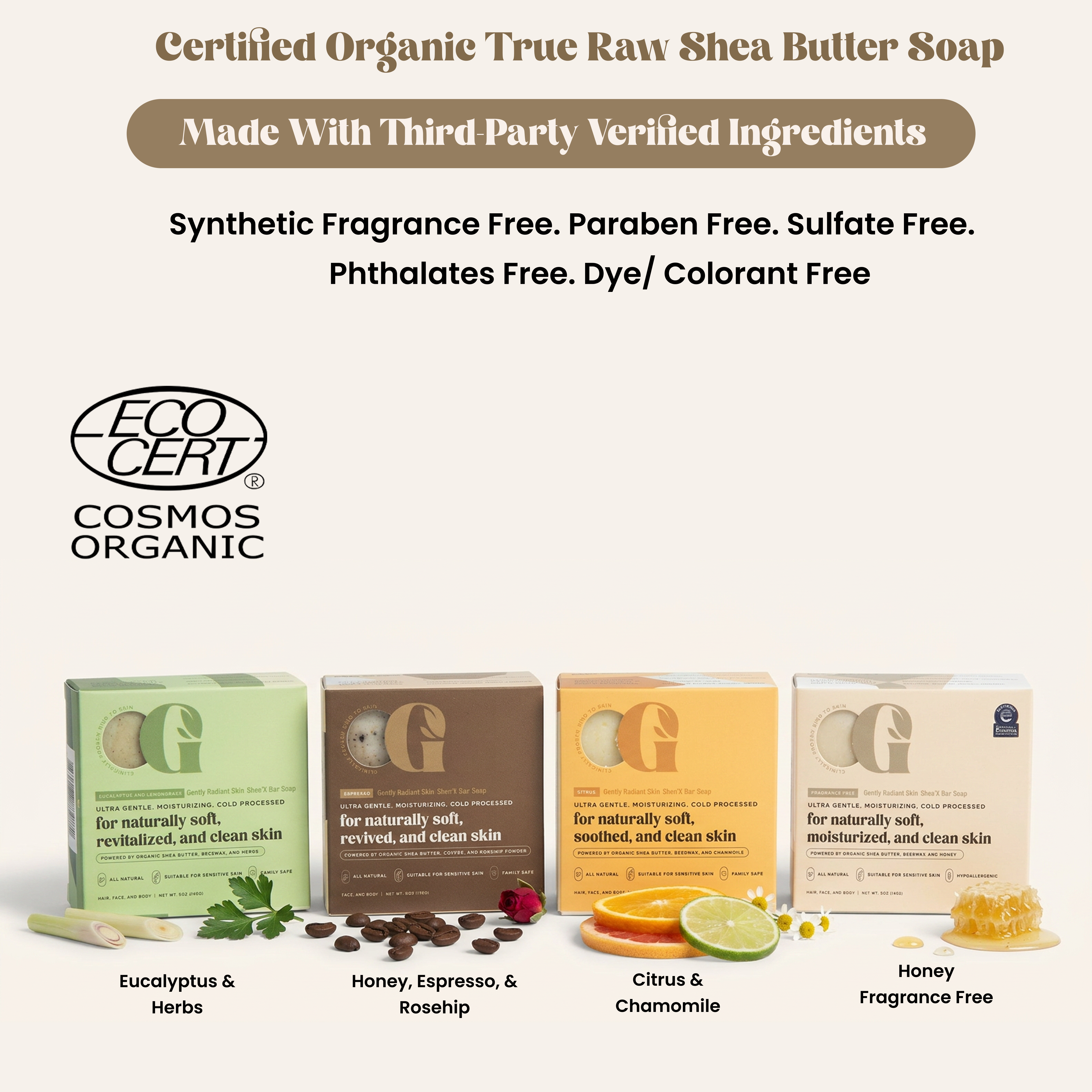
For shoppers who want to skip the guesswork, Gently Radiant Skin publishes its certifications and ingredient sourcing directly, and its SheaX™ bar soaps and Gentle Towels™ carry USDA Bio-based and National Eczema Association credentials you can verify independently.

Sorting real sustainability from marketing theater takes effort, and most labels are built to discourage that effort. Gently Radiant Skin takes the opposite approach: dermatologist and pediatrician approved formulas, Certified Organic and USDA Bio-based ingredients, and a National Eczema Association Seal of Acceptance you can check for yourself. If you want cleansing essentials where the claims match the formula, start with the SheaX™ organic bar soaps or the Gentle Towels™ collection. Get started with Gently Radiant Skin and cleanse with a brand that shows its work.
Frequently Asked Questions
What is a famous example of greenwashing in skincare?
When a brand uses vague terms like 'eco-friendly' without proof, that is a greenwashing red flag. Checking for third-party certification is the fastest way to separate real claims from marketing spin.
What are the most common greenwashing buzzwords in cosmetics?
Watch for 'natural,' 'clean,' 'chemical-free,' 'eco-friendly,' 'non-toxic,' and 'green.' None of these have a legal definition enforced by the FDA for cosmetics. A product labeled 'natural' can still contain synthetic preservatives or irritants. 'Chemical-free' is impossible because water is a chemical. Instead of trusting these words, look for specific certifications like USDA Organic, NEA acceptance, or EWG Verified. If a brand relies on vague buzzwords without third-party proof, treat the claim as unverified.
How can I verify if a skincare brand's sustainability claims are real?
Start by checking for third-party beauty certifications such as USDA Bio-based, Certified Organic, or Leaping Bunny. Visit the certifying body's website to confirm the brand is listed. Brands that publish ingredient sourcing details and clinical testing results are more credible. If a company claims 'sustainable packaging' but does not specify recyclable materials or refill options, that claim is likely greenwashing.
What is the difference between 'natural' and 'organic' in skincare labeling?
'Natural' has no legal definition for cosmetics in the U.S., so any brand can use it. 'Organic' is regulated by the USDA for agricultural ingredients. A product can say 'made with organic ingredients' if it contains at least 70% organic content, but only products with 95% or more organic ingredients can display the USDA Organic seal. For sensitive or eczema-prone skin, choose products with certified organic ingredients and no synthetic fragrance. Always read the full ingredient list, not just the front label.