


Why Skin Feels Tight After Washing: Barrier Guide
Table of Contents
- Why Skin Feels Tight After Washing: The Barrier Explanation
- Signs of a Damaged Skin Barrier You Should Not Ignore
- Is Squeaky Clean Skin Good? The Tightness Myth
- How to Choose a Gentle Facial Cleanser for Tight, Reactive Skin
- Why Skin Feels Tight After Washing: Hard Water, Heat, and Over-Washing
- How to Stop the Tightness: Post-Wash Routine and Barrier Repair
- Conclusion: Comfortable Skin Is the Goal
- Frequently Asked Questions
Last Updated: September 15, 2026
Why Skin Feels Tight After Washing: The Barrier Explanation
That tight, pulling sensation after you wash your face is not a sign of cleanliness, it is your skin telling you its protective barrier has been stripped. Understanding why skin feels tight after washing starts with the stratum corneum, the outermost layer that acts as a brick-and-mortar wall of skin cells held together by lipids, ceramides, and cholesterol. When cleansers dissolve those lipids faster than your skin can replace them, water escapes and irritants get in. At Gently Radiant Skin, we hear this constantly from customers managing eczema, rosacea, and reactive skin, and the fix is almost never "try harder", it is "wash more gently."
A common mistake is treating that tightness as proof the cleanser worked. It is closer to proof the cleanser took too much. Many dermatologists describe the post-wash feeling you actually want as "comfortable and soft," not "squeaky" and certainly not "taut." According to the American Academy of Dermatology's guidance on face washing, gentle, non-comedogenic cleansers used with lukewarm water are the standard recommendation for anyone prone to irritation. That advice sounds basic, but the mechanism behind it explains almost everything else .
Signs of a Damaged Skin Barrier You Should Not Ignore
A damaged skin barrier announces itself in predictable ways, and tightness is only the first clue. Watch for redness that lingers longer than it used to, stinging from products that never bothered you before, flaking around the nose and cheeks, and a papery texture no moisturizer fixes. Sensitivity that appears out of nowhere is usually weeks of cumulative over-cleansing, not a sudden allergy.
Most people damage their barrier slowly, not dramatically. One hot shower, one foaming cleanser, one alcohol-based toner, repeated daily, adds up. Your sebaceous glands keep producing oil, but the natural moisturizing factors and ceramides that hold water in are depleted, so skin behaves as though it is both oily and dry at once.
Is Squeaky Clean Skin Good? The Tightness Myth
Squeaky clean skin is not good skin. That phrase describes the sensation of every last bit of oil, including the lipids your barrier needs, being stripped away. Surfactants, the molecules that let water lift oil and dirt off your skin, do not distinguish between the sebum you want gone and the ceramides you need to keep. Strong surfactants like sodium lauryl sulfate are especially efficient at this, which is exactly why they leave skin feeling tight. According to the National Eczema Association's guidance on bathing and moisturizing, people with eczema and sensitive skin should avoid harsh soaps and opt for gentle, fragrance-free cleansers instead.
The myth persists because tightness feels like evidence. It is not. A well-formulated gentle cleanser leaves skin soft, supple, and slightly moisturized, not scrubbed down to a squeak.
How to Choose a Gentle Facial Cleanser for Tight, Reactive Skin
Choosing a gentle facial cleanser comes down to four things: surfactant type, pH, what the formula leaves behind, and whether it matches your actual skin state. Most tightness complaints trace back to a mismatch on one of those four, not a bad product.
Surfactant type. Anionic surfactants like sodium lauryl sulfate (SLS) and, to a lesser degree, sodium laureth sulfate (SLES) are the most aggressive at stripping lipids, which is why they leave that taut, papery feeling. Amphoteric and nonionic surfactants, cocamidopropyl betaine, coco-glucoside, decyl glucoside, and sodium cocoyl isethionate, clean effectively at lower concentrations and disrupt the lipid bilayer far less.
pH. Healthy skin sits at an acid mantle of roughly pH 4.5 to 5.5 (Role of pH Value in Clinically Relevant Diagnosis). Traditional bar soaps are alkaline, often pH 9 to 10, and each wash temporarily pushes skin pH upward, slowing the enzymes that rebuild barrier lipids and giving irritants an easier path in. Syndet bars and most liquid cream cleansers are formulated closer to pH 5.5. If a cleanser leaves your face tight but not red, pH is often the culprit.
What the formula leaves behind. Cream, balm, and oil cleansers deposit emollients, fatty alcohols, plant oils, shea butter, that stay on the skin after rinsing and cushion the barrier during the wash. Gel and foaming cleansers rinse cleaner, which suits oily and acne-prone skin but offers no cushioning. Cold-process bar soaps can offer a gentle cleansing experience, with natural fats acting as emollients during cleansing.
| Cleanser Texture | Best For | Barrier Impact | Watch Out For |
|---|---|---|---|
| Cream or balm | Dry, reactive skin | Leaves emollients behind | Can feel heavy on oily skin |
| Gel or foaming | Oily, acne-prone skin | Higher stripping risk | SLS, SLES, high-foam systems |
| Cold-process bar | Sensitive, eczema-prone skin | Gentle, fat-rich lather | Must be fragrance-free |
| Micellar water | Makeup removal, quick cleanse | Low residue, low friction | Needs rinsing on reactive skin |
Dehydrated vs. dry, the distinction most people miss. Dry skin lacks oil; dehydrated skin lacks water. Dehydrated skin often looks shiny by midday yet feels tight right after cleansing, because the barrier loses water faster than it can hold it, the oil is there, the water is not. Dry skin feels tight and looks dull or flaky all day, because sebum production itself is low. For dehydrated skin, a cream cleanser plus a humectant-heavy moisturizer applied to damp skin can be beneficial. For dry skin, layering emollients and occlusives can help. Different product textures may suit different skin types; a rich cream on dehydrated-but-oily skin might trigger congestion, while a gel on truly dry skin could deepen tightness.
Fragrance, essential oils, and drying alcohols (denatured alcohol, SD alcohol) are common triggers for reactive skin, so fragrance-free formulas are the safer default until your barrier recovers. Once tightness resolves, reintroduce one variable at a time.
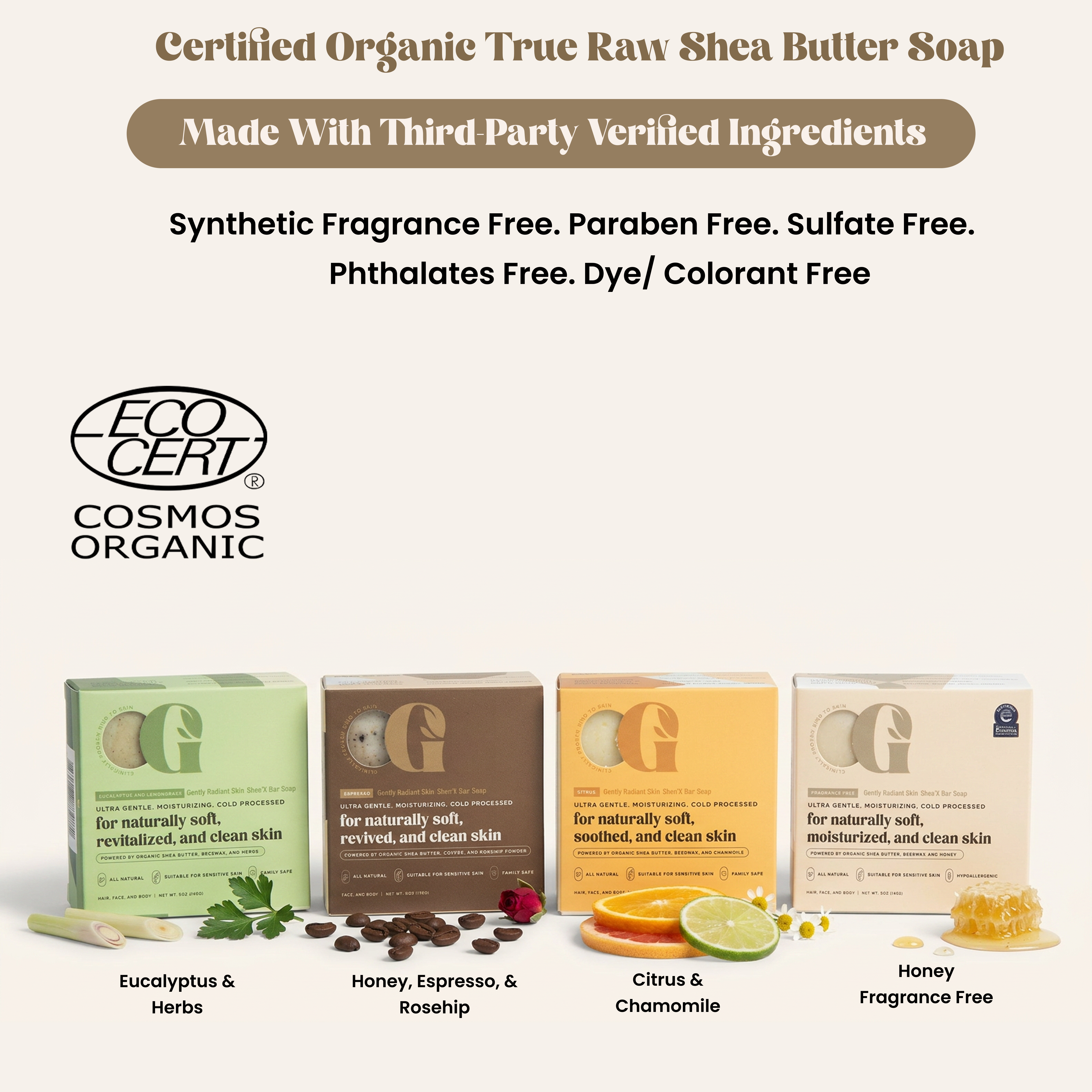
For readers managing eczema or a child's flare-prone skin, the SheaX™ Honey Fragrance Free Bar Soap was formulated with exactly this problem in mind. It is accepted by the National Eczema Association, dermatologist and pediatrician approved, and made with certified organic, cold-processed shea butter that cleanses without the tight aftermath. One customer, Fey E., put it plainly: the fragrance-free bar helped her daughter's eczema, and she was genuinely surprised.

Why Skin Feels Tight After Washing: Hard Water, Heat, and Over-Washing
Hard water, hot water, and too-frequent washing are the three accelerants most people never consider, and hard water is a leading cause of post-wash tightness in most U.S. households.
Hard water: the mineral residue problem. Hard water contains dissolved calcium and magnesium ions. When those ions meet the surfactants in soap or cleanser, they form insoluble compounds, soap scum or lime soap, that deposit on the skin. That residue sits on top of the lipid barrier, blocking the natural moisturizing factors underneath and creating a filmy, tight, sometimes itchy sensation even after a gentle cleanse. It also makes cleansers lather poorly, leading people to use more product and scrub harder. According to the U.S.
What actually helps, in order of cost and effort:
How to Stop the Tightness: Post-Wash Routine and Barrier Repair
Conclusion: Comfortable Skin Is the Goal
Frequently Asked Questions
Does healthy skin feel tight after cleansing?
No. Healthy skin should feel soft, comfortable, and slightly moisturized after washing. A tight, squeaky feeling means your cleanser has stripped away too much of the lipid barrier and natural moisturizing factors that keep water in and irritants out. If tightness fades within a minute or two without lotion, your barrier is likely intact. If it lingers or feels papery, that's a sign of a damaged skin barrier and you should switch to a gentler, fragrance-free cleanser.
Can a harsh cleanser damage my skin barrier?
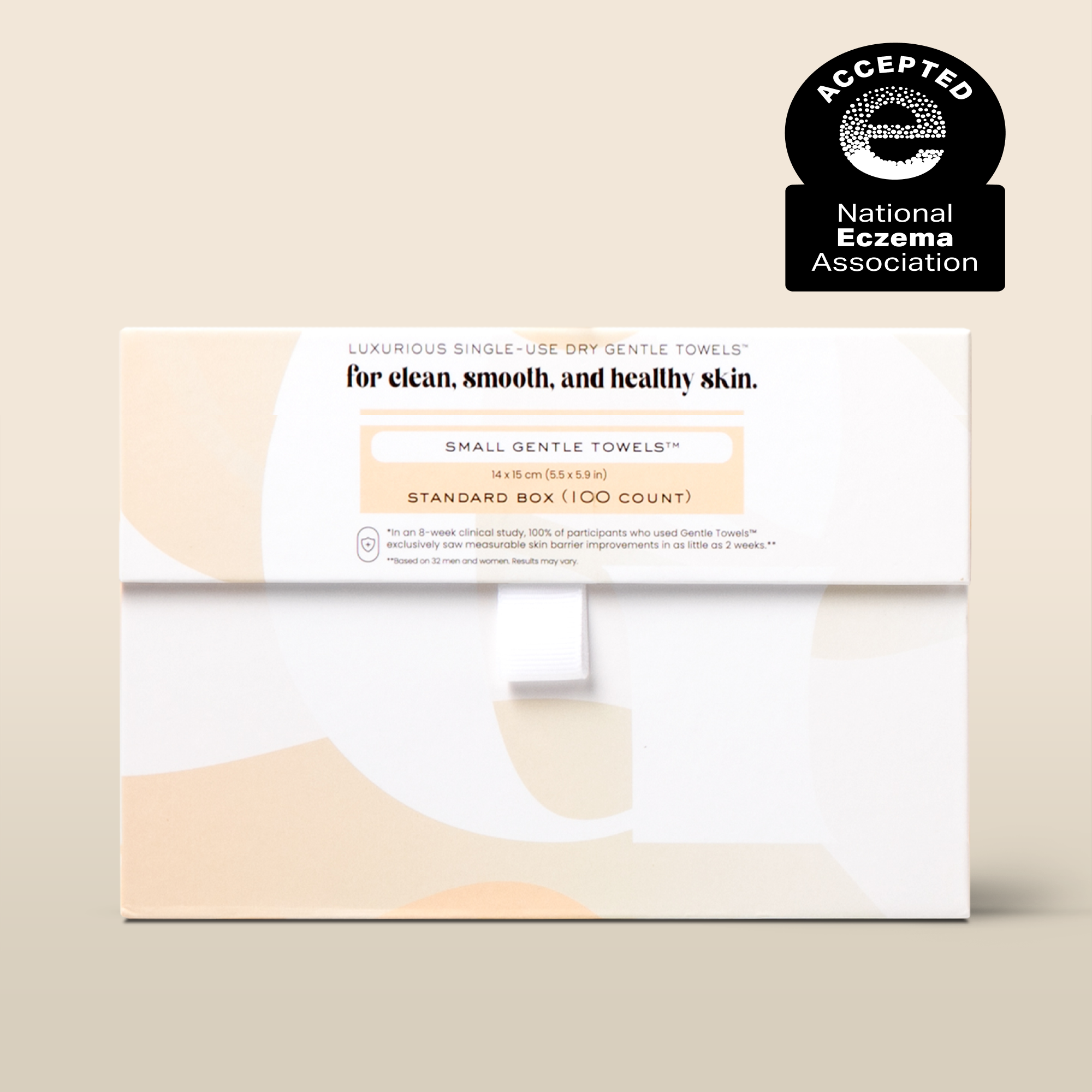
Yes. Cleansers with sodium lauryl sulfate and other strong surfactants can disrupt the stratum corneum, the outermost layer of skin. This damage increases transepidermal water loss, leaving skin dehydrated, irritated, and more sensitive to bacteria and allergens. Over time, a compromised barrier can worsen conditions like eczema and acne. Switching to a mild, pH-balanced cleanser and using soft, single-use facial towels instead of rough washcloths can help the barrier recover.
How can I tell if my facial cleanser is too stripping?
Watch for tightness, redness, flaking, or a papery texture right after washing. If your skin feels itchy or you need to apply moisturizer within seconds, the cleanser is too harsh. Another clue is visible cleanser residue or a squeaky, rubbery feel. Try a fragrance-free, cold-processed bar soap made with shea butter and no synthetic foaming agents. Give it two weeks; if your skin still feels uncomfortable, consult a dermatologist.
Is tight skin a sign of dehydration or dryness?
It can be either. Dehydrated skin lacks water, while dry skin lacks oil. Tightness after washing often points to dehydration from water loss through a damaged barrier. You may also see dullness, fine lines, and increased sensitivity. Drinking water helps, but the real fix is barrier repair: use lukewarm water, a gentle cleanser, and moisturizers with humectants like glycerin and emollients like shea butter to hold moisture in.